Can Dogs Eat Green Beans? What the Evidence Actually Supports
A board-certified veterinary neurologist walks through whether dogs can eat green beans safely, the sodium math on canned beans, and where the green-bean weight-loss diet helps or hurts joint health.
Yes, dogs can eat green beans, but the sodium in canned varieties and the portion size matter more than owners assume.
On this page
Picture a nine-year-old Labrador mix carrying six extra pounds she doesn’t need, standing at the counter while her owner debates whether to swap half her kibble for something lower in calories. The internet says green beans. The bag of kibble says nothing about it either way. The dog just wants dinner. That small, ordinary moment is where most owners actually meet this question, and it’s worth answering with more precision than “sure, dogs can have green beans.”
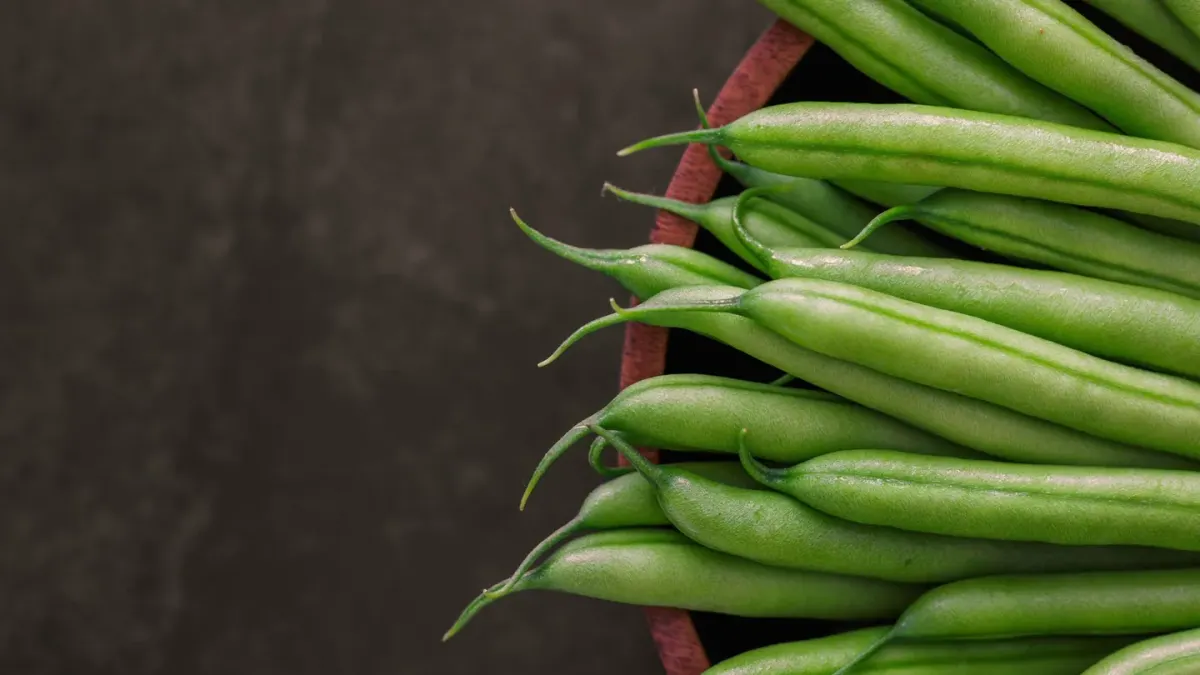
The short answer is yes. Plain green beans, fresh, frozen, or steamed, are safe for the overwhelming majority of dogs and show up on the AKC’s list of vet-recommended low-calorie treats. They’re a source of fiber, vitamin K, vitamin C, and modest amounts of iron and calcium, and the calorie density is low enough that a handful barely registers against a dog’s daily budget. That’s the uncomplicated part. The part owners get wrong more often involves sodium, portion size, and what a green bean can and can’t do for a dog’s weight.

The sodium math that trips owners up
Canned green beans are the version most households already have in the pantry, and that’s exactly where the trouble starts. Standard canned green beans are packed in salted brine, and a half cup can carry roughly 290 mg of sodium. That’s not acutely dangerous in a single serving for most dogs, but fed daily as part of a weight-loss routine, it adds up in a way that works against the goal. The fix is straightforward: buy no-salt-added canned beans and rinse them under water before serving, or skip the can entirely and use fresh or frozen. I don’t consider this a minor footnote. Sodium creep from well-intentioned treats is one of the more common, least-discussed diet errors I see referenced in general practice, and it’s entirely avoidable.
The green-bean diet for joint-friendly weight loss
The so-called green bean diet isn’t a formal veterinary protocol, but the mechanism behind it holds up. Owners gradually replace a portion of regular food, often starting around 10 percent, with plain green beans, increasing every few days until the ratio settles near half and half. Fiber and water add volume and promote satiety without adding many calories, so the dog feels fuller on fewer total calories. A 2020 feeding trial found dogs on vegetable-supplemented weight-loss diets lost comparable weight to calorie-restricted controls while showing fewer behavioral signs of hunger, which is the practical reason this approach has staying power.
Here’s where I land, and where the publication I write for makes this relevant: weight loss is one of the best-supported non-pharmacologic interventions for a dog already carrying osteoarthritis, because every extra pound is extra load an arthritic joint has to absorb on every step. The same instinct that has me reaching for both the imaging study and the acupuncture needle in a neurology case applies here in a diet context: pull the calorie-dilution data, but don’t ignore what food therapy has understood for a long time, that a neutral, easily digested vegetable like green beans is a gentle way to change intake without shocking the gut. I don’t recommend a full unsupervised swap, though. Green beans dilute calories; they don’t replace the protein, essential fatty acid, and mineral profile a complete diet provides, and dogs on chronic partial substitution without a vet’s input risk a subtly unbalanced diet that a scale won’t catch. PetMD makes a version of the same point: it’s a tool to run past your vet, not a standalone diet.
Where the fiber evidence is thin
Consider a dog whose owner, encouraged by early results, keeps increasing the green bean ratio well past 50 percent. This is where I start seeing loose stool, gas, or a drop in stool quality that has nothing to do with toxicity and everything to do with fiber load outpacing what that dog’s gut can process comfortably. That’s worth taking seriously, and it’s also a case where more isn’t better.
The gut microbiome side of this is genuinely mixed. A recent probiotic trial in dogs found that diversity metrics did not distinguish non-responders from responders, published in Frontiers in Veterinary Science, which tells us we still can’t fully predict which dogs will tolerate a fiber or microbiome shift well from stool testing alone. And it’s worth naming the counterargument directly: for dogs with real digestive disease, more fiber is sometimes the wrong direction entirely. A JAVMA review on exocrine pancreatic insufficiency notes that management for that condition leans on pancreatic enzyme replacement, cobalamin supplementation, and low-residue diets with moderate fat, the opposite of a high-fiber approach. That’s not a reason to avoid green beans in a healthy dog. It is a reason to loop in a vet before adding meaningful fiber to a dog with any known digestive disease, similar to the caution I’d apply before adjusting fiber intake generally, as covered in our piece on dogs getting too much fiber.
How I actually recommend feeding them
Cut fresh or frozen green beans into bite-sized pieces, especially for small dogs where a whole raw bean is a real choking risk. Steam or blanch them if a dog’s stomach runs sensitive; raw is fine for most dogs but harder to digest for some. Skip the seasoning entirely, no garlic, onion, or butter. And treat green beans the way I’d treat any single-ingredient add-in: a supporting player in a weight-management plan, not the plan itself, and not a substitute for a genuinely joint-supportive diet strategy. Owners weighing other produce swaps often ask the same question about sweet potato, and the same logic applies there. If a dog is already on a joint-support supplement, it’s worth checking that the label backs its claims the way we outline in our supplement label disclosure checklist, because a vegetable can help with weight, but it isn’t doing the job of a verified joint formula.
Going forward, I’d like to see more controlled feeding trials that isolate green beans specifically rather than vegetable blends generally, and better data on which dogs tolerate a fiber increase without GI upset. Until then, the practical guidance holds: plain, portioned, low-sodium, and paired with a vet’s read on the rest of the bowl.
Frequently asked questions
Are canned green beans as good as fresh for dogs?
Nutritionally they're close, but canned varieties are usually packed in salted brine. Choose no-salt-added canned green beans and rinse them, or default to fresh or frozen.
Can green beans replace my dog's regular food?
No. Green beans can substitute for a portion of caloric volume in a supervised weight-loss plan, but they don't supply the protein, fat, and mineral balance a complete diet does, so a vet should set the ratio.
How many green beans can a dog eat in a day?
There's no single verified number, and it depends on the dog's size and how the rest of the diet is structured. A reasonable, evidence-consistent approach is to introduce them gradually and watch stool quality rather than fixing on a fiber cap that isn't well established for every dog.
Do green beans help with joint pain?
Not directly. Their relevance to joint health is indirect, through weight management. Lower body weight reduces mechanical load on arthritic joints, which is a separate mechanism from any anti-inflammatory supplement.
Sources
- Can Dogs Eat Green Beans? — AKC
- Is the Green Bean Diet Good for Dogs? — PetMD
- Exocrine Pancreatic Insufficiency in Dogs and Cats: A Review — JAVMA
- Probiotic Response and Gut Microbiome Diversity in Dogs — Frontiers in Veterinary Science