How a Dog's Hip Joint Moves: A Plain-English Guide to Canine Anatomy
A veterinarian explains the canine hip joint in plain language — ball-and-socket structure, normal motion, and what changes from puppyhood to senior years.
Dog hips move as a deep ball-and-socket joint built for forward drive, steady balance, and spring.
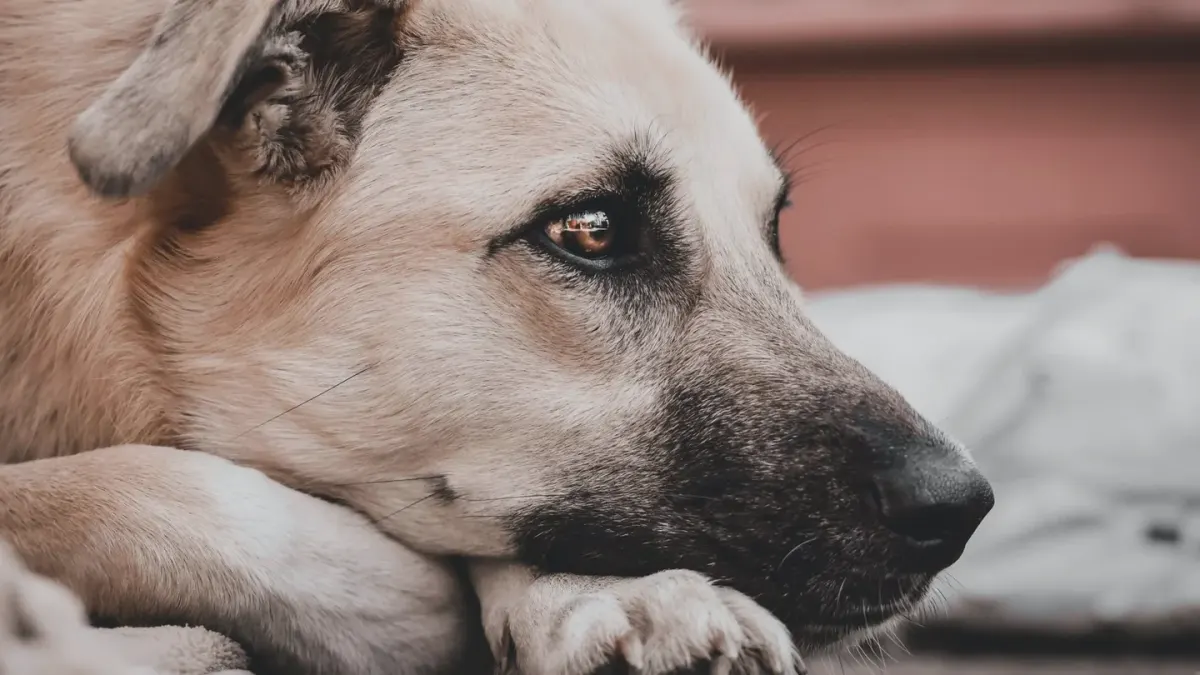
A seven-year-old Border Collie hesitates at the park gate where she used to sprint. She is 19 kg, lean and bright, but her first five steps are short and choppy before her stride lengthens on day three of a cooler week. Her owner wonders if it is soreness, age, or something in the hip itself. That question is best answered by starting with how the joint is built to move, then watching how movement changes across a life.
From a traditional lens, the hindquarters carry Kidney and Bladder channel pathways that support drive and resilience. When flow through those pathways is smooth, movement looks even and springy. When stagnation builds with age or strain, the gait shortens first. That picture maps closely to Western mechanics: restriction shows up as lost extension and shortened stride.
How the Hip Is Put Together
Think of the canine hip as a deep cup holding a ball. The cup is the acetabulum of the pelvis. The ball is the femoral head at the top of the thigh bone. A rim of cartilage called the labrum deepens the cup, a round ligament anchors the ball, and thick muscles around the pelvis power and steady the whole unit.
This design favors forward motion. In veterinary orthopedic descriptions summarized by Cornell University College of Veterinary Medicine, the normal hip functions as a stable ball-and-socket that permits flexion and extension for stride, with more limited abduction, adduction, and rotation. Extension pushes the leg behind the body for drive. Flexion folds it forward for reach.
What healthy motion looks like
A sound hip swings freely without clicking, shifting weight evenly left to right. The thigh extends well behind the body at a trot. The pelvis stays level rather than rolling. Single-sentence check: stride should look symmetrical from behind.
Cartilage and joint fluid keep that glide quiet. Cartilage coats both surfaces. Synovial fluid nourishes and lubricates. Muscles of the rump and thigh — gluteals, hamstrings, quadriceps, and deep stabilizers — control the arc so the ball stays centered in the cup.
From Puppy Looseness to Adult Strength
Puppies are born with soft tissues and shallow cups that deepen with growth. Some looseness is normal early on, which is why veterinarians assess conformation and family history over time rather than in one visit. Rapid growth, excess weight, and repetitive high-impact loading can shape a less congruent joint.
Consider a different picture. A ten-month-old Labrador Retriever, 32 kg and still leggy, learns to climb into the car with a bunny-hop when both hind legs push together. Over four weeks the owner counts 12 car rides with that same paired push, plus scuffed nails on the rear paws. The pattern points to weak hindquarter drive and poor hip extension rather than simple clumsiness. Early guidance focuses on weight control, measured exercise on traction-safe footing, and a veterinary exam for laxity before hard running or jumping becomes routine.
As the dog matures, muscle finishes the job bone started. Strong gluteal and thigh muscles center the femoral head during extension. This is the stage where steady walking, hill work at a walk, and controlled swimming often support even development. Explosive fetch, slick floors, and long weekends of overexertion followed by rest tend to work against it.
What Shifts in the Middle and Senior Years
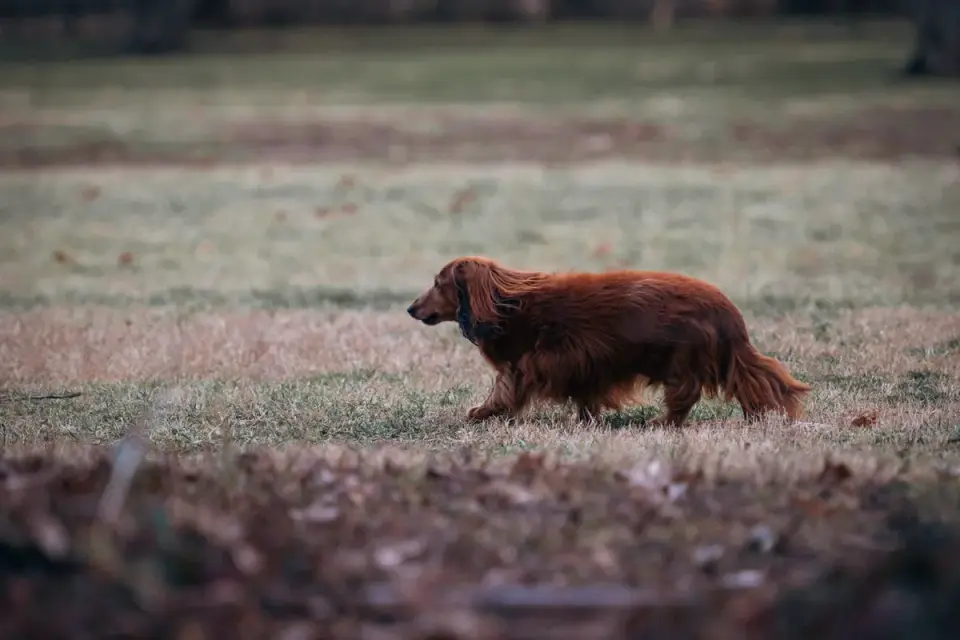
With years of loading, cartilage thins and the joint capsule can thicken. The first lost motion is usually full extension — the leg no longer reaches as far behind. Owners see slower rises, a narrower hind stance, reluctance on stairs, and a warm-up effect where the first minutes look stiff and later minutes look better.
A third scenario bends the usual advice. A 12-year-old mixed-breed dog with a known heart murmur cannot take the half-mile loop that once kept her hind legs strong. She manages only 180 meters before she pants and sits. Instead of pushing distance, her owner shifts to three short 60-meter sniff walks daily, five minutes of gentle hind-leg range-of-motion on a rug, and non-slip runners between bed and door. The total load drops while frequency and traction preserve extension. Clinical overviews such as those from VCA Hospitals note this same progression toward stiffness, muscle loss, and reduced range of motion in chronic hip disease, which is why preserving muscle matters as much as resting the joint.
When movement signals a veterinary visit
Persistent lameness, audible clicking with pain, loss of thigh muscle on one side, sitting with both legs slipped to one side every time, or reluctance to rise for more than a day or two deserves an exam. Puppies with marked bunny-hopping, older dogs with sudden worsening, and any dog with swelling, fever, or loss of appetite need prompt care. Imaging, gait analysis, and palpation for laxity or reduced extension clarify whether the issue is developmental shape, soft-tissue strain, or degenerative change.
To place hip motion in a fuller mobility picture, see The Complete Guide to Dog Joint Health and Mobility and Dog Hip and Joint Supplement: What Actually Matters Before You Buy One. For label reading if joint nutrition comes up later, How to Read a Dog Joint-Support Supplement Label keeps structure and function language in bounds.
Supportive care follows the same principle at any age: keep Qi and blood moving without overtaxing the joint. That means healthy weight, regular low-impact motion, warm-up walks before play, traction at home, and strength work matched to the dog in front of you. Supplements, bodywork, and acupuncture may help support comfort and mobility for some dogs, but they do not reshape the cup or replace muscle. The evidence is strongest for weight management and consistent movement, thinner for any single pill or procedure, and mixed where studies use different stages of disease.
Watch the arc of the hind leg over months rather than moments. A hip that still reaches behind, loads evenly, and recovers quickly after rest is doing its job.
Frequently asked questions
What kind of joint is a dog's hip?
A ball-and-socket joint where the femoral head fits into the pelvic acetabulum, built mainly for flexion and extension with limited rotation.
Why does my dog look stiff for the first few minutes then loosen up?
Reduced extension and thicker joint tissues often make the first steps short; gentle warm-up restores fluid movement unless pain or lameness persists, which needs a veterinary exam.
Does bunny-hopping always mean hip dysplasia?
No. Puppies and weak or painful dogs may push with both hind legs together, but repeated bunny-hopping, uneven thigh muscle, or ongoing stiffness should be evaluated.
Sources
- Hip Dysplasia in Dogs — VCA Hospitals