How a Dog's Hock Joint Works: A Plain-English Guide to Canine Anatomy
Learn what the hock joint does, how its bones and ligaments move, and what stiffness or swelling may mean for your dog's comfort.
Your dog's hock works like a sprung hinge that stores and returns every step.
On this page
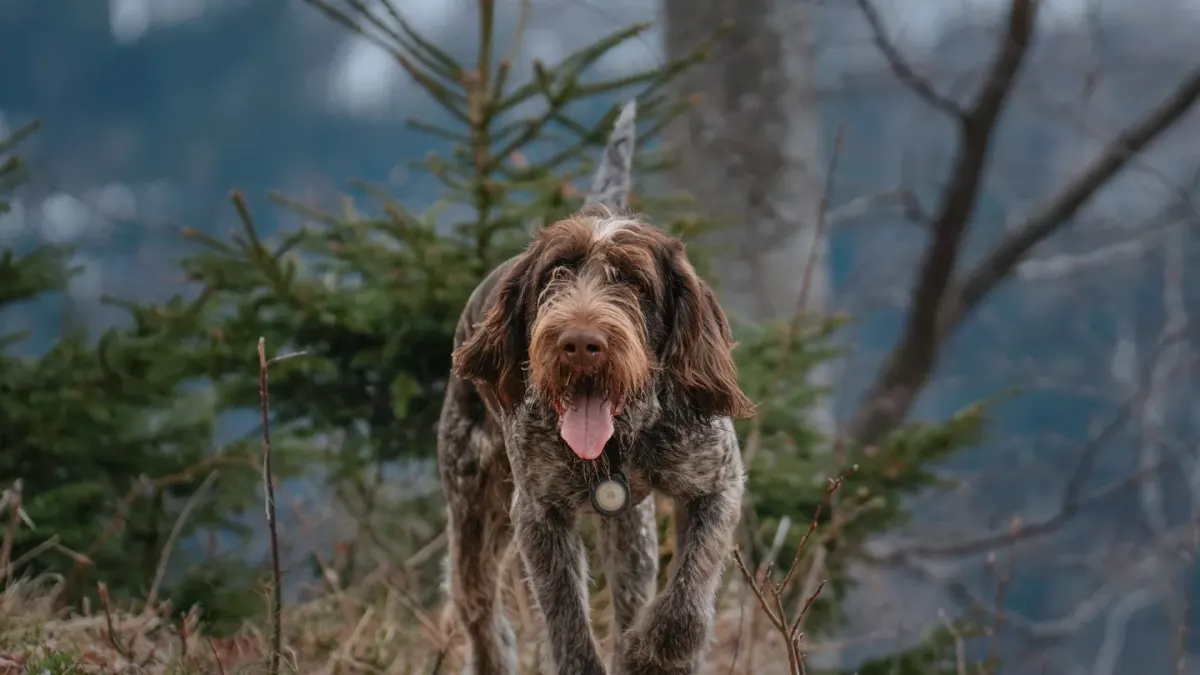
Watch an 11-year-old cattle-dog mix rise from her bed on a cold morning. She shifts weight forward, flexes both hind legs, then takes four short steps before her stride lengthens. By day 3 of this stiff-start pattern, her owner notices she skips the last two stairs on the way down and rests after a half-mile loop she once finished easily. The change points low, below the knee and above the foot, where the hind leg makes a sharp backward angle. That bend is the hock.
That backward bend confuses owners because it looks like a knee bending the wrong way. It is not. The canine knee, or stifle, sits higher and bends forward. The hock is closer to a human ankle, a compact stack of small bones and ligaments that transfers load between the shin and the foot while allowing spring and shock absorption.
My advice as a clinician is direct: learn normal hock structure and movement first, then protect normal function with weight control, steady activity, and prompt veterinary assessment when gait changes persist. That pairing of clear mechanism plus whole-patient support is what best preserves comfort and quality of life. It would be the wrong call only when a dog has acute injury, marked swelling, non-weight-bearing lameness, or fever — there, home observation has to bend toward same-day veterinary care.
Where to Find the Hock and What It Does
Stand beside your dog and trace the hind leg down. Hip to thigh to stifle, then a long shin segment, then a pointed bony prominence on the back of the leg about halfway to the ground. That point is the hock, anatomically the tarsus. Above it are the tibia and fibula. Below it are the metatarsals that form the rear foot.
Function follows form. The hock must be stable enough to carry push-off force and flexible enough to fold during swing-through. For a deeper overview of how joints balance stability and motion, the Merck Veterinary Manual outlines normal bone, joint, and muscle structure in dogs.
In practical terms, the hock does three jobs on every step. It absorbs impact at landing, stores elastic energy as tendons stretch, and releases that energy to help propel the next stride. Dogs with comfortable hocks move with even stride length behind, track straight, and turn without hopping.
Inside the Joint: Bones, Cartilage, and Ligaments
The hock is not one simple hinge. It contains several small tarsal bones arranged in rows, with most visible motion occurring at the upper tibiotarsal joint between the shin and the talus, one of the main tarsal bones. Lower joints shift only slightly to adjust to uneven ground.
Smooth hyaline cartilage coats the bone ends so they glide. A thin synovial membrane produces fluid that lubricates and nourishes that cartilage, a design described in general joint biology texts such as the NCBI Bookshelf review of articular cartilage structure and function. Ligaments run along the inner, outer, front, and back surfaces to limit side-to-side wobble. The Achilles, or common calcanean tendon, anchors behind the point of the hock and connects the calf muscles to the foot.
When the system works, load passes cleanly through aligned bones, cartilage spreads pressure, and tendons return energy. When alignment, cartilage health, or tendon integrity changes, the dog shortens stride, rests the toe lightly, or sits out turns.
A 6-year-old large herding breed offers a useful contrast. He competes in weekend agility, trains three evenings per week, and lands hard from an A-frame during a damp trial. He pulls up holding the left hind foot, then touches down toe-only for the next 20 minutes. On examination the hock is warm and slightly thickened on the front, with pain on deep flexion. Rest and controlled leash walks do not resolve the toe-touching within 48 hours. This failed wait-and-see approach shows the limit of general fitness advice: a suspected sprain or tendon strain needs hands-on assessment, not continued conditioning.
How the Hock Moves Through a Step
Break a walk into phases. As the foot lands, the hock flexes slightly to absorb load. As the body passes over the planted foot, the joint extends and the Achilles tightens. At push-off, stored energy helps lift the foot, then the hock folds sharply to clear the ground before reaching forward again.
Trot and gallop increase those forces. Uphill work asks for more flexion. Downhill and sudden stops ask for more controlled extension, which is why dogs with early hock irritation often manage a flat half-mile but hesitate on stairs or slick floors. Compare left and right from behind at a slow walk. Look for even hock height, symmetrical bend, and feet that leave the ground cleanly.
For context on how persistent stiffness relates to joint disease rather than simple fatigue, VCA Hospitals describes degenerative joint changes that may affect mobility and daily function.
What Stiffness, Swelling, or Skipping May Mean
Mild, brief morning stiffness that resolves within a few minutes often reflects normal aging or prior activity. Persistent signs point toward a problem that deserves diagnosis. Watch for heat or puffiness around the front or sides of the hock, a clicking sensation, carrying the leg around turns, licking at the joint, or reluctance to jump into the car.
Common contributors include sprains of the collateral ligaments, Achilles tendon injury, osteochondritis dissecans of the talus in young large-breed dogs, fractures of small tarsal bones after trauma, and progressive osteoarthritis after old injury. Infection and immune-mediated joint disease are less common but important, especially with multiple swollen joints or fever.
Do not try to grade these at home. Note duration, which leg, what activity provokes it, and whether weight bearing is normal. That record helps your veterinarian decide between rest and rehabilitation, radiographs or advanced imaging, joint fluid analysis, or surgical referral.
Consider a 13-year-old 68-pound retriever mix who has managed arthritis for two years. His owner keeps him lean, walks him twice daily for 15 minutes on soft paths, and uses rugs over hardwood. When his evening lag extends from one block to three blocks over six weeks, the usual steady-exercise plan has to bend. Instead of pushing through, the owner shortens walks to 8 minutes, adds a midday outing, schedules a veterinary recheck for pain assessment, and reviews home traction and bedding. The goal shifts from maintaining distance to preserving normal daily function and restful nights.
Owners exploring broader mobility support can read The Complete Guide to Dog Joint Health and Mobility and How to Read a Dog Joint-Support Supplement Label for structure and label literacy that complements, but never replaces, veterinary diagnosis.
Supporting Normal Hock Function Day to Day
Keep body condition lean so each step loads less force through small tarsal bones. Favor consistent, moderate exercise over weekend bursts. Warm up with five minutes of easy walking before faster play. Provide traction on stairs and slick floors, trim nails so the rear foot lands level, and keep a healthy weight with measured meals.
Supplements intended to support normal joint structure are sometimes discussed in this setting. Evidence varies by ingredient and study design, so frame them as support for normal function and quality of life rather than repair of cartilage or tendons. Any new routine, including activity changes or supportive nutrition, should be reviewed with your veterinarian, particularly for dogs receiving cancer care or other complex treatment where whole-patient priorities matter.
Seek prompt care for sudden non-weight-bearing lameness, rapidly enlarging swelling, a hock that looks angled or unstable, wounds near the joint, or lameness with fever or lethargy. For gradual stiffness, schedule a visit if the change lasts more than a few days, recurs weekly, or alters stairs, play, or sleep.
Frequently asked questions
Is a dog's hock the same as the knee?
No. The stifle is the knee and bends forward higher on the leg. The hock sits lower, angles backward, and functions more like a human ankle.
Why does my dog skip or hop on one hind leg?
Intermittent skipping can reflect patellar luxation, hock pain, or other hind-limb issues. Note frequency, duration, and triggers and ask your veterinarian for a gait examination.
Can I manage mild hock stiffness at home?
For brief, mild stiffness, maintain lean weight, steady low-impact walks, traction, and rest after heavy play. Schedule veterinary care if lameness persists more than a few days, recurs, or includes swelling or non-weight-bearing.
Sources
- Introduction to Bone, Joint, and Muscle Disorders of Dogs — Merck Veterinary Manual
- Articular Cartilage Structure and Function Review — NCBI Bookshelf
- Degenerative Joint Disease in Dogs — VCA Hospitals