How to Keep a Dog Calm During a Vaccine Shot or Blood Draw
A vet-informed, evidence-based guide to keeping a dog calm during a vaccine shot or blood draw, covering handling, scent, calming ingredients, and what actually helps versus what's folklore.
Keeping a dog calm during a vaccine shot or blood draw starts before you ever leave the house.
On this page
Most dogs don’t fear the needle itself. They fear the table, the smell of the clinic, the grip on their scruff, and the fact that a stranger is leaning over them. Keeping a dog calm during a vaccine shot or blood draw is less about a magic pre-visit snack and more about stacking several small, boring things in the dog’s favor before the syringe ever comes out.
The Checklist: What Actually Moves the Needle
- Practice the position at home. Get your dog comfortable being gently restrained in the same posture the vet team will use — standing or side-lying, with a hand on the shoulder and hip.
- Bring high-value treats and use them continuously, not just as an after-the-fact reward.
- Ask for a low-stress handling appointment if your clinic offers one, or request a quiet room instead of a busy lobby wait.
- Consider a calming aid started several days ahead, not the morning of, if your veterinarian agrees it’s appropriate.
- Keep your own affect flat. Dogs read tension in a leash hand faster than they read a syringe.
- Skip the car-ride adrenaline spiral — a short acclimation drive beforehand can help if car anxiety is part of the picture.
Each of those deserves a little more explanation, because “stay calm” is easy advice and hard practice.
Why Handling Matters More Than Most Owners Assume
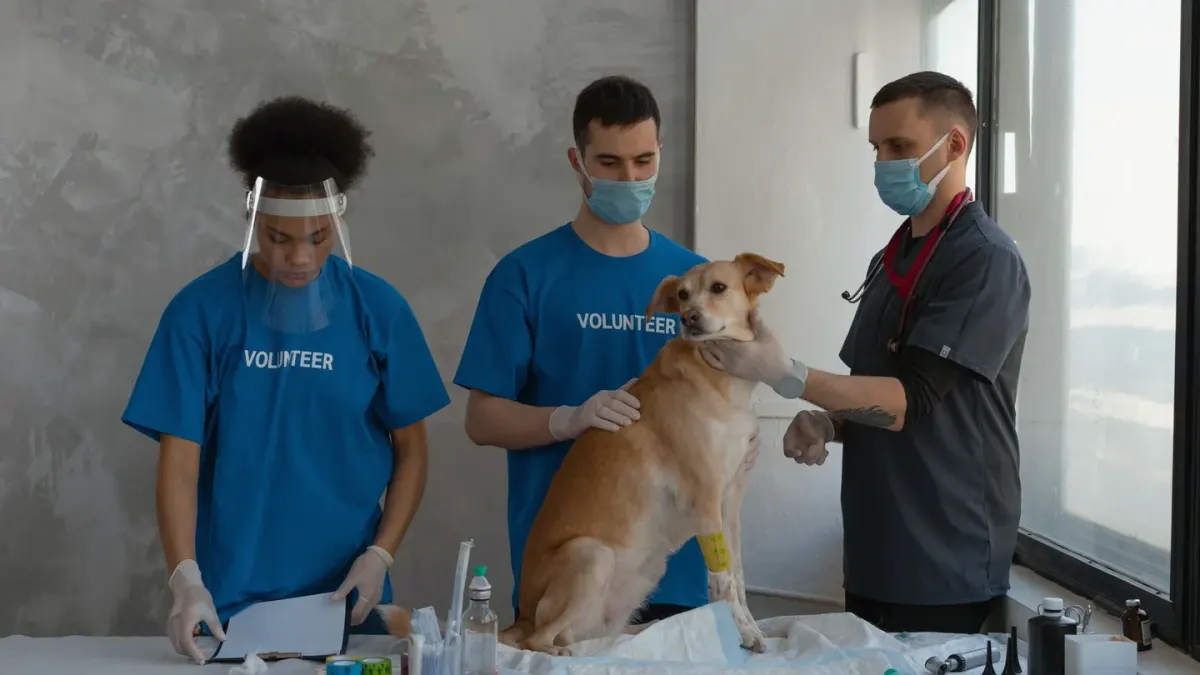
A dog braced against a table is fighting a losing, exhausting battle, and the fight itself raises cortisol and heart rate well before contact with the needle. Veterinary behaviorists who teach low-stress handling generally emphasize positioning that supports the dog’s own weight rather than pinning it — a dog who feels stable is less likely to escalate. This is a whole-patient issue, not just a behavior tip: a dog who is chronically over-restrained at every visit tends to arrive more reactive at the next one, which then makes the next blood draw harder still. Breaking that cycle usually means a slower first visit in exchange for calmer future ones.
What Calming Ingredients Can Realistically Do — and Where the Evidence Is Thin
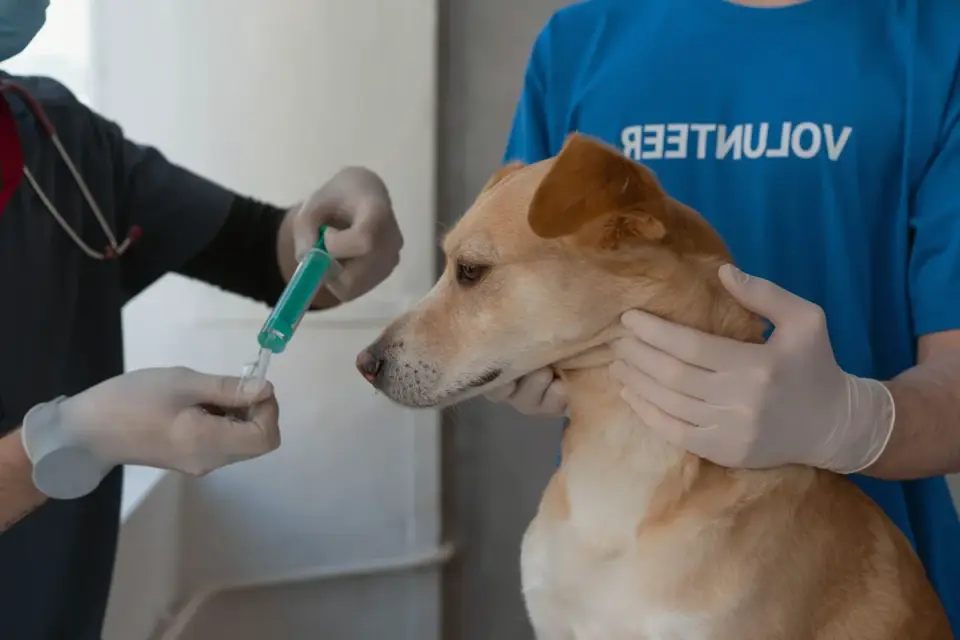
Owners often reach for a calming chew before a vet visit, and it’s a reasonable instinct, but it helps to know what the research actually supports. For Biomedicines: chamomile, a recent review notes that “for the remaining species, evidence is derived mainly from preclinical studies or traditional use,” which is a fair summary of where a lot of calming botanicals sit: promising, traditionally used, but not backed by large dog-specific trials. Ashwagandha has firmer human data behind it — a Cureus: systematic review of multiple randomized trials concluded that ashwagandha has a moderate positive impact on stress reduction and cognitive performance, though that’s human evidence extrapolated to dogs, not a canine trial. L-theanine’s picture is more mixed: a Molecular Psychiatry: meta-analytic review found benefit in most anxiety measures except for one study on psychotic anxiety (SMD = 0.54; 400 mg/day for 8 weeks), a dose and population that doesn’t map directly onto a dog getting a vaccine.
That’s the honest version: these ingredients may help support a calmer baseline over days of consistent use. None of them are sedatives, none of them will make a fear-aggressive dog safe to handle without a plan, and none replace a veterinarian’s judgment about whether a genuinely anxious patient needs a prescription option instead.
Same-Day Tactics Versus Longer-Term Prep
A short single-sentence version of the real answer: same-day tricks help around the edges, but the dogs who do best are the ones whose owners worked on the association for weeks beforehand.
Same-day, the highest-yield moves are physical: a calm car ride, a quiet check-in area, continuous treat delivery during the exam, and a handler who isn’t rushing. Longer-term, dogs who get occasional “happy visits” — stopping by the clinic just to get weighed and rewarded, with no procedure attached — tend to generalize the building itself as less threatening. If a supplement or chamomile-based calming aid is part of your routine, it fits best as one layer of that longer-term prep, not a substitute for it. And if you’re evaluating any calming product for quality, it’s worth knowing what a responsible label should disclose — our supplement label disclosure checklist walks through what to look for regardless of category.

When to Loop In Your Veterinarian Instead of Managing It Alone
A dog who freezes, whale-eyes, growls, or has previously bitten during handling isn’t a candidate for treats-and-patience alone. That dog needs a documented behavior plan, possibly a situational anti-anxiety medication prescribed for the visit itself, and a clinic willing to schedule accordingly. There’s no shame in that conversation — it’s the same instinct that leads a good clinician to slow down a fearful geriatric patient rather than push through a rushed exam. The goal on vaccine day isn’t to prove a dog can tolerate anything. It’s to get the blood drawn or the vaccine given with the least stress possible, and to leave the dog a little more prepared for next time. What would change about your next appointment if you planned for the dog’s stress the way you plan for the appointment itself?
Frequently asked questions
Should I give my dog a calming supplement the morning of a vaccine appointment?
Some owners do, but most calming ingredients work better with several days of lead time rather than a single dose an hour before the visit. Talk to your veterinarian about timing and whether it's appropriate for your dog's health history.
Is it normal for a dog to shake or whine during a blood draw?
Mild trembling, panting, or whining is common and doesn't necessarily mean the dog is in pain — it often reflects situational stress. A dog who freezes rigidly, growls, or tries to bite is signaling something a vet team needs to manage differently, not push through.
Can I use a thundershirt or similar wrap for a vaccine visit?
Many dogs tolerate swaddling-style wraps well and some handlers find them useful for blood draws specifically, since they limit squirming. They're not a substitute for good restraint technique, but they're a low-risk thing to try beforehand at home.
Sources
- Chamomile in Companion Animal Anxiety and Stress: A Narrative Review — Biomedicines
- KSM-66 Ashwagandha and Stress Reduction: A Systematic Review — Cureus
- L-Theanine and Anxiety Outcomes: A Meta-Analytic Review — Molecular Psychiatry