How to Prepare Your Dog for a Vet Visit to Reduce Fear
A working-vet's checklist for prepping a dog before an appointment, from carrier training to calming aids with real evidence behind them.
A few practical steps taken before the appointment can prepare your dog for a vet visit and meaningfully reduce fear.

On this page
A few practical steps taken before the appointment can prepare your dog for a vet visit and meaningfully reduce fear. Most of that work happens well before you pull into the parking lot, and none of it requires anything exotic.
The Checklist: What Actually Moves the Needle
- Practice carrier or car loading in short, reward-heavy sessions, days or weeks ahead
- Handle paws, ears, and mouth at home the same way a vet would
- Book a low-stakes “happy visit” with no exam, just treats and a scale weigh-in, if your clinic offers it
- Withhold food in the final hour or two so treats stay valuable, but don’t starve the dog beforehand
- Bring the highest-value treats you have, cut small, plus a favorite toy or blanket that smells like home
- Ask the front desk about a fear-free or low-stress handling protocol before you book
- Skip the busy waiting room when you can — wait in the car and text the front desk instead
Each of those gets expanded below, along with what the calming-supplement evidence does and doesn’t support.
Why Dogs Get Fearful at the Vet in the First Place
For most dogs, vet fear isn’t caused by one bad experience. It’s built the same way any learned response is built: repetition. A dog who’s handled roughly, restrained tightly, or rushed through a nail trim once or twice starts associating the whole environment — the smell, the exam table, the sound of the door — with something to brace against. By the third or fourth visit, the fear response can kick in before anyone even touches the dog.
That’s actually good news for prep work. If fear is learned through repeated small experiences, it can be softened the same way, through repeated small positive ones.
Building Fear-Reduction Into the Weeks Before the Visit
The single highest-leverage thing an owner can do is practice at home. That means loading into the carrier or car for a few seconds at a time, rewarding calm behavior, and stopping before the dog gets stressed. It means touching paws, lifting lips, and holding the collar the way a technician would, again in short sessions with treats attached. Dogs who’ve felt a hand on their belly or ears a hundred times at home don’t flinch as hard when a stranger in scrubs does it.
If your clinic offers a “happy visit” — walking in, getting weighed, getting a treat, and leaving without any poking — take it. Several fear-free-certified practices build this into new-puppy protocols specifically because it decouples the building from the exam. A single happy visit a month or two before a real appointment can blunt a lot of the anticipatory dread that builds in dogs who only ever go to the vet when something’s wrong.
For dogs already showing joint stiffness or mobility changes, the visit itself may involve more handling of sore areas, which raises the stakes on gentle prep. If mobility is part of what’s bringing you in, it’s worth reading The Complete Guide to Dog Joint Health and Mobility beforehand so you know what questions to ask.
What to Do the Day Of
Skip the full meal right before you leave, but don’t send your dog in hungry and irritable either — a light meal a few hours out, then treats withheld for the last hour or two, keeps food motivation high without an empty stomach making things worse. Get some exercise in that morning if your dog is physically able; a walk burns off some of the restless energy that turns into pacing and panting in the waiting room.
Bring treats your dog rarely gets anywhere else — cut small enough to deliver rapid-fire. Skip the busy waiting room if the clinic allows a call-from-the-car check-in; a hallway full of unfamiliar dogs is often the most stressful five minutes of the whole trip, worse than anything that happens in the exam room.
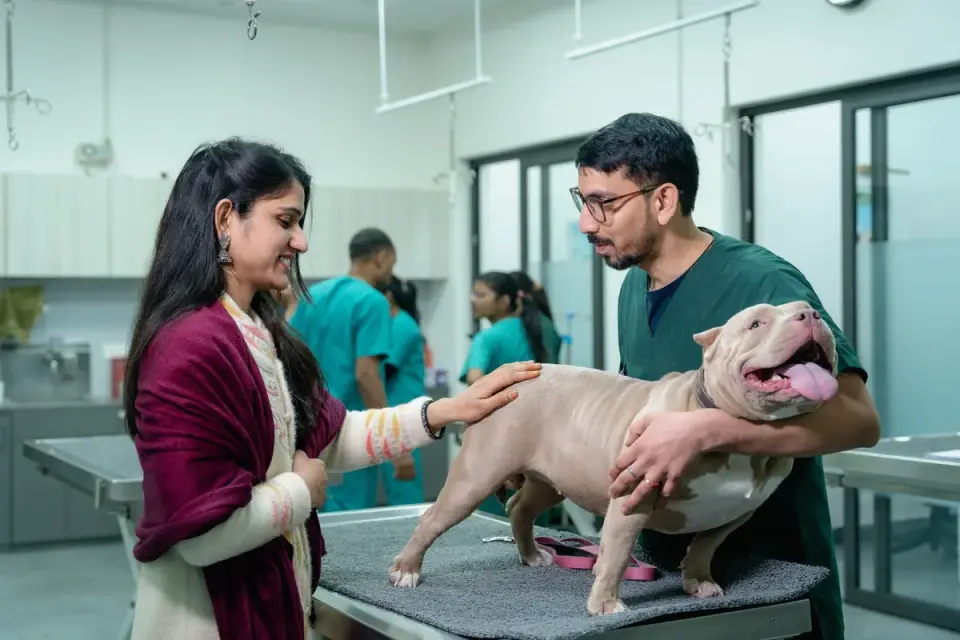
Calming Aids: What the Evidence Actually Supports
Owners often reach for a calming chew before a stressful appointment, and a few ingredients do have real research behind them — though none of it was run specifically on vet-visit anxiety in dogs, so expectations should stay modest.
Chamomile has a long history in traditional herbal use for relaxation, but the research base is thin. A recent review noted that “for the remaining species, evidence is derived mainly from preclinical studies or traditional use,” in Biomedicines — meaning most of what we know comes from animal-model or historical use rather than controlled canine trials.
Ashwagandha, particularly the KSM-66 extract, has a stronger human evidence base. A systematic review analyzing multiple randomized controlled trials “concluded that ashwagandha has a moderate positive impact on stress reduction and cognitive performance,” according to Cureus. That’s a human-focused finding, and it hasn’t been replicated in dog-specific trials, but it’s one of the better-supported calming ingredients on the market.
L-theanine, the amino acid found in tea, has more mixed human data. A review found benefit “except for one study on psychotic anxiety (SMD = 0.54; 400 mg/day for 8 weeks),” per Molecular Psychiatry — a dose and population studied in people, not dogs. Translate that cautiously: it suggests a real but narrow effect, not a guaranteed calming outcome at any dose in any species.
The honest takeaway is that these ingredients may help support a calmer baseline in the days around a stressful event, but none of them replace the handling and desensitization work above. If you’re evaluating a joint or calming supplement label for a senior dog and want to know what the ingredient order and dosing actually mean, How to Read a Dog Joint-Support Supplement Label and the Dog Joint-Support Supplement Label Disclosure Checklist both walk through what a trustworthy label discloses.
In the Exam Room
Stay close, keep your voice low and normal — not high-pitched reassurance, which can read as anxious energy to a dog reading your tone. Let the technician or vet set the pace, and speak up if your dog needs a break partway through. A ten-second pause with treats can reset a dog who’s starting to shut down or struggle, and most fear-free-trained staff will welcome the request rather than see it as a delay.
If nail trims or restraint are the specific trigger, ask whether those pieces can be split into a separate, shorter visit. Some dogs do dramatically better when the full exam and the nail trim aren’t stacked into the same fifteen minutes.
The Next Visit Starts Now
Fear built over several visits gets undone the same way — gradually, and mostly at home. Start the carrier and handling practice this week rather than the day before the next appointment, keep treats high-value and food timing loose, and loop in the front desk about a fear-free protocol if your clinic runs one. None of it needs to be perfect to help.
Frequently asked questions
How far in advance should I start prepping a fearful dog for a vet visit?
Start at least two to three weeks out if you can. Short, low-stakes handling and carrier sessions a few times a week build more tolerance than one long session the night before.
Should I feed my dog before the appointment?
A light meal several hours ahead is usually fine, but withhold food in the last hour or two so treats stay motivating in the exam room. Check with your clinic if bloodwork or sedation is planned.
Do calming chews actually work for vet-visit anxiety?
Some ingredients have decent supporting evidence for stress in general, but none of it is vet-visit-specific, and effects are modest. Treat a calming chew as one layer of prep, not a substitute for handling practice.