How to Change Food for a Senior Dog Without Wrecking Digestion
A board-certified veterinary nutritionist explains how to change food for a senior dog safely — the gut-aging science behind slow transitions, a step-by-step schedule, and warning signs that mean stop and call your vet.
To change food for a senior dog well, weigh digestibility and nutrient consistency, not just how many days you take.

On this page
To change food for a senior dog well, weigh digestibility and nutrient consistency, not just how many days you take.
The Problem: An Older Gut Doesn’t Reset the Way a Younger One Does
A senior dog’s digestive tract isn’t the same ecosystem it was at two years old. Research tracking Frontiers in Veterinary Science’s Age-Associated Changes in Intestinal Health Biomarkers in Dogs documents measurable shifts in gut microbial populations and intestinal biomarkers as dogs age — the resident bacterial community that breaks down a familiar diet is a different community than it was in middle age. Swap the protein source, the fat level, or the fiber blend abruptly, and that community doesn’t have time to adjust its enzyme output. The result is the classic transition mess: loose stool, gas, occasional vomiting, or a dog that simply turns its nose up.
Some older dogs are also managing a diagnosed digestive condition, not just a slower gut. In dogs with exocrine pancreatic insufficiency, JAVMA notes that management centers on pancreatic enzyme replacement, nutritional adjustment toward low-residue diets with moderate fat, and cobalamin supplementation — a reminder that “senior” isn’t one uniform digestive profile, and a dog with an underlying condition needs a plan built around that condition, not a generic transition schedule.
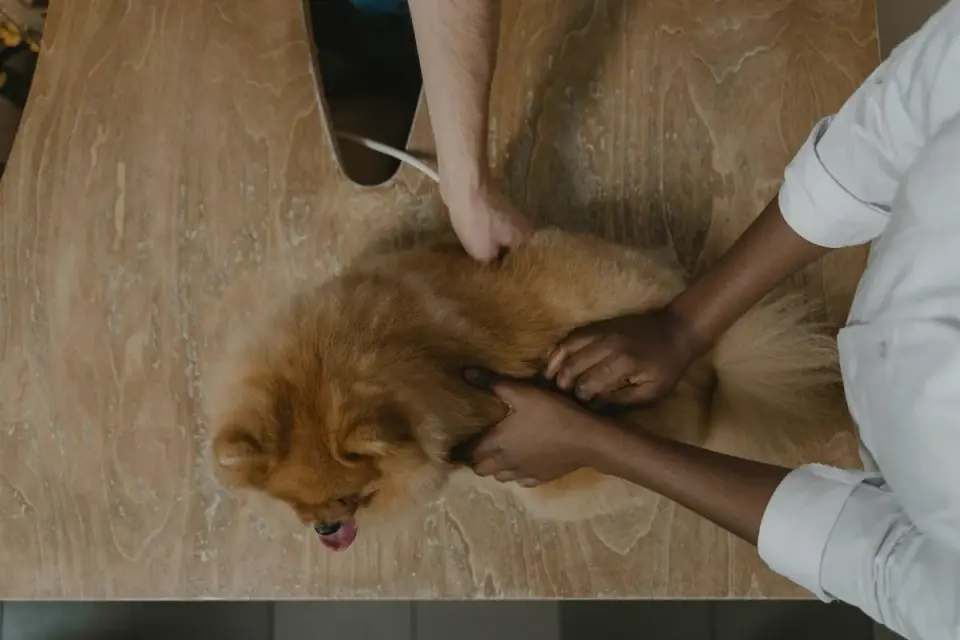
The Solution: A Step-by-Step Way to Change Food for a Senior Dog
Here’s the practical sequence I walk owners through in clinic.
Day 1–3: Mix roughly 25% new food with 75% old food. Watch stool consistency and appetite, not just whether the bowl gets emptied.
Day 4–6: Move to a 50/50 split. This is usually where mild loose stool shows up if it’s going to — don’t panic over one soft stool, but do track the trend.
Day 7–9: Shift to about 75% new food, 25% old. If your dog has a history of sensitive digestion, hold at this ratio a couple of extra days rather than rushing to 100%.
Day 10 onward: Full transition to the new food. For dogs with no history of GI trouble, this can land around day 7 to 10. For dogs with prior digestive disease, prior antibiotic courses, or general pickiness, stretching the whole process to 14 days is reasonable and often kinder.
A short note worth repeating on its own: weigh the food itself before you weigh the calendar. Swapping between two diets with wildly different fat or fiber content deserves a slower ratio shift than swapping between two nutritionally similar foods, even if both moves are labeled “senior.”
It also helps to know that “senior” isn’t a regulated category. As PetMD explains, there’s no official AAFCO nutrient profile for a senior life stage — foods marketed that way are generally formulated to adult maintenance standards, with the specific tweaks (calorie density, joint-support additions, protein level) left to the manufacturer. That variability is exactly why one senior formula to another can still represent a meaningfully different diet for the gut to adapt to, per the Merck Veterinary Manual’s overview of nutrient requirements across life stages.
What to Watch For During the Switch
Track four things daily: stool form, appetite, energy, and water intake. A slightly softer stool for a day or two is common and not automatically a reason to abandon the plan. Persistent diarrhea, repeated vomiting, or a dog that stops eating for more than a day is different — that’s a signal to pause the transition, hold at the last well-tolerated ratio, and call your vet before pushing further.
Probiotics come up often as a way to smooth this process, and the evidence here is genuinely mixed rather than settled. A recent RCT found that diversity metrics did not distinguish non-responders from responders, per Frontiers in Veterinary Science’s Probiotic Response and Gut Microbiome Diversity in Dogs — meaning a dog’s baseline microbial diversity alone doesn’t reliably predict whether a probiotic will help during a diet change. I still consider probiotic support a reasonable adjunct for a bumpy transition; I’m just careful not to promise it will smooth things out for every dog, because the research doesn’t support that promise yet. It’s worth weighing what a supplement can realistically do for a dog’s diet, mobility, and recovery here rather than treating it as a substitute for a well-paced transition.
When to Slow Down or Call Your Vet
Stop and reassess if you see: stool that stays loose past day 3–4 of any given ratio, repeated vomiting, a senior dog refusing food entirely for more than 24 hours, or new lethargy. Dogs with a known pancreatic, hepatic, or kidney condition should have their transition plan built with their vet from the start rather than following a generic schedule, since the “right” fat, protein, and fiber targets for those conditions can differ substantially from a healthy senior’s needs.
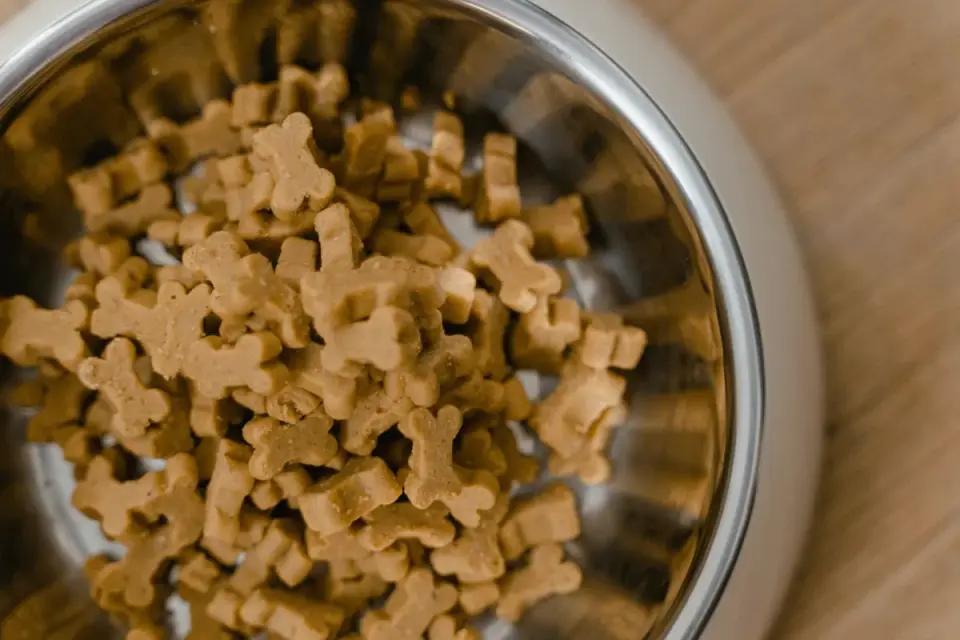
Brief recap: changing food for a senior dog is less about hitting a specific day count and more about matching pace to that individual dog’s gut history, watching stool and appetite honestly, and having a lower threshold to call your vet than you might for a younger, hardier dog.
Frequently asked questions
How long should I take to change food for a senior dog?
Most healthy seniors do fine over 7 to 10 days, but dogs with a history of sensitive digestion, prior GI disease, or chronic conditions often need 14 days or longer. Let your dog's stool and appetite set the pace, not the calendar.
Can I switch a senior dog's food faster if the new food is 'better'?
No. Even an objectively higher-quality diet still represents a new set of proteins, fats, and fiber sources the gut hasn't adapted to. A gradual swap matters regardless of how good the new food looks on paper.
What if my senior dog refuses to eat the new food at all?
Back up a step in the ratio, warm the food slightly to boost aroma, and give it a few more days before pushing forward again. Persistent refusal beyond a few days warrants a call to your vet rather than repeated forcing.
Do senior dog foods have different nutrient requirements than adult food?
Not by regulation. There's no official AAFCO nutrient profile for a 'senior' life stage, so foods marketed that way are typically formulated to adult maintenance standards with manufacturer-specific tweaks like lower calories or added joint ingredients.
Sources
- Review of Exocrine Pancreatic Insufficiency in Dogs — JAVMA
- Probiotic Response and Gut Microbiome Diversity in Dogs — Frontiers in Veterinary Science
- Age-Associated Changes in Intestinal Health Biomarkers in Dogs — Frontiers in Veterinary Science
- Nutritional Requirements of Small Animals — Merck Veterinary Manual
- What Is AAFCO and What Does It Do — PetMD