The Role of Articular Cartilage in a Dog's Joints
What articular cartilage does in canine joints, why it wears down, and how owners can support long-term mobility.
The role of articular cartilage is letting a dog's joints glide quietly without bone rubbing on bone.
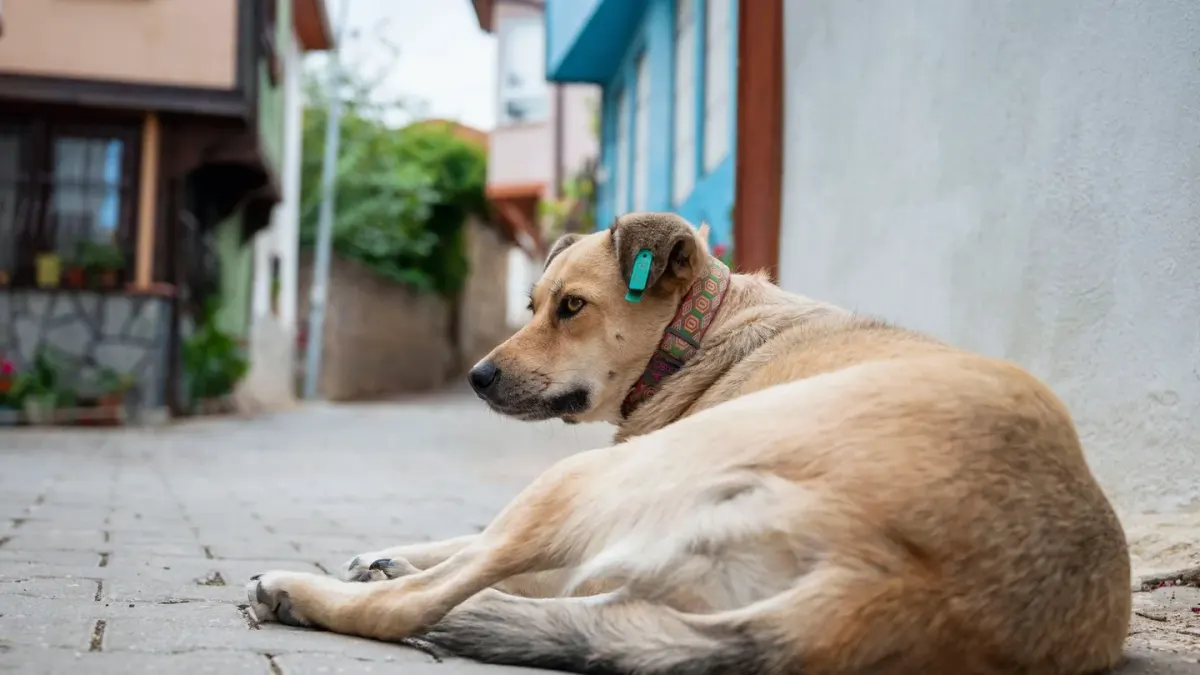
Early morning in a cool kitchen, a seven-year-old brindle pit mix hesitates at the baby gate before the three back stairs. She has always loved the yard at dawn. For the past six weeks her owner has noticed a short stiffness after naps that eases within five minutes once she walks it out, and last Tuesday she skipped her usual jump onto the low couch. The owner wonders whether this is normal aging or the first sign that the smooth padding inside her joints is starting to thin.
That padding is articular cartilage. It coats the ends of bones where they meet in synovial joints like the hip, elbow, stifle, and shoulder. In a healthy joint the surface is slick and bluish white, only a few millimeters thick, yet it lets bones glide with almost no friction while spreading load across the whole joint. When it works, movement looks effortless.
Articular cartilage has no blood vessels and no nerves. It is maintained by chondrocytes, the sparse living cells buried in a dense matrix of collagen and proteoglycans that hold water. Nutrition arrives by diffusion from synovial fluid during movement, which is why gentle motion nourishes the tissue and prolonged stillness does not. The National Center for Biotechnology Information describes this avascular, water-rich structure as central to low-friction gliding and load distribution.
Cartilage Is the Joint’s Quiet Gliding Surface
Think of articular cartilage as both an ice rink and a sponge. The collagen network gives tensile strength and shape. The proteoglycans attract water, creating a pressurized cushion that resists compression with every step. Together they keep joint forces from concentrating on one point of bone.
Starting from a compound like chondroitin sulfate helps explain why that matters. Chondroitin sulfate is a natural glycosaminoglycan building block within that water-holding matrix. From the matrix outward, adequate hydration and intact collagen mean the surface stays smooth and load spreads evenly. When proteoglycans are lost, the tissue holds less water, softens, and roughens. Friction rises and the underlying bone feels more of every stride.
Cartilage cannot call for help in the usual way because it has no nerve endings. Pain in early joint disease often comes from surrounding tissues like synovium, joint capsule, and bone rather than the cartilage itself. By the time limping is obvious, the surface has usually been changing for months.
Why This Thin Layer Wears Down
Cartilage is durable but not regenerative in any practical sense. Chondrocytes divide slowly and the tissue has limited repair capacity. Age, conformation, excess weight, prior injury, and developmental conditions like hip or elbow dysplasia all increase wear.
Once the surface frays, the joint enters a cycle that veterinarians recognize as osteoarthritis. Small cracks catch and release more inflammatory mediators into synovial fluid. The synovium thickens. The joint may lay down bony spurs at the margins to stabilize itself. VCA Hospitals notes that stiffness after rest, reluctance to climb, and reduced play are common early signs of that cycle in dogs.
A stocky four-year-old bulldog mix shows how that tradeoff sneaks up. He weighed 54 pounds in spring and lived for two daily walks around the block plus weekend wrestling with a housemate. After a rough play session he limped for two evenings, then seemed fine, so his family kept the same routine of two hard walks plus off-leash sprinting. Over eight weeks the morning starts grew slower and he began sitting sideways to avoid folding one elbow. Radiographs later showed joint remodeling that no supplement could polish smooth again.
That story does not mean exercise caused the disease alone. It means damaged cartilage heals poorly, so repeated impact on an irritated joint can outpace the tissue’s quiet maintenance.
What Support Looks Like When You Cannot Regrow It
No food or chew rebuilds articular cartilage to a youthful surface. The honest goal is to protect what remains and keep the whole joint system moving comfortably. Weight control matters most because every extra pound multiplies load on hips, stifles, and elbows.
Low-impact movement helps pump synovial fluid. Short leash walks, controlled sniff walks, ramps instead of jumps, and non-slip rugs reduce shear without giving up activity. Warm-up matters for older dogs.
Nutrition and joint-support ingredients may help support normal joint structure and everyday mobility, though evidence is mixed and largely supportive rather than curative. Glucosamine and chondroitin are among the most studied building blocks, and omega-rich sources like green-lipped mussel have been explored for joint comfort. The research does not show regrowth of cartilage, and responses vary by dog and stage of disease.
This is where my botanical lens stays narrow. I favor ingredients with a traceable mechanism in the matrix or synovial environment and a history of use in dogs, then I watch the dog. If stiffness after rest shortens and willingness to move holds steady over four to six weeks, that routine is worth keeping. If not, the plan needs revision with the veterinarian rather than a higher dose of hope.
An eleven-year-old shepherd mix who still patrols a half-mile loop illustrates when to bend the usual advice. The standard counsel says keep her walking daily, but on damp mornings she plants her front feet and refuses the first 200 yards. Her owner learned to split the half-mile loop into two shorter outings with a warm indoor pause between them, add a ramp to the car, and move play to midday when she is loosest. The total distance stayed similar while the pattern changed to fit the joint.
For dogs already on prescription joint care, supplements are companions rather than replacements. Tell the veterinarian everything offered, including treats and toppers, so interactions and calorie creep do not undermine the plan. For a deeper look at one synovial-fluid component, see Does Hyaluronic Acid Actually Work for Dog Joints? What the Research Shows and for label reading, see Dog Joint-Support Supplement Label Disclosure Checklist.
Practical next step: watch how your dog rises, climbs, and settles for two weeks, note weight and activity, and bring those observations to your veterinarian to shape a joint plan around cartilage you want to keep.
Frequently asked questions
Does articular cartilage grow back in dogs?
No meaningful regrowth occurs once it is lost. Care focuses on supporting surrounding joint function, maintaining healthy weight, and keeping comfortable movement.
What are early signs cartilage is wearing?
Brief stiffness after naps, slower rises, reluctance on stairs, shorter play sessions, and shifting weight. A veterinary exam can distinguish joint disease from muscle or neurologic causes.
Sources
- Articular Cartilage Injury — National Center for Biotechnology Information
- Arthritis in Dogs — VCA Hospitals