The Role of Tendon and Ligament Tissue in a Dog's Joints
What tendons and ligaments do in canine joints, how they fail, and what supports healthy connective tissue.
Tendons move the joint, ligaments stabilize it, and both decide how comfortably your dog ages.
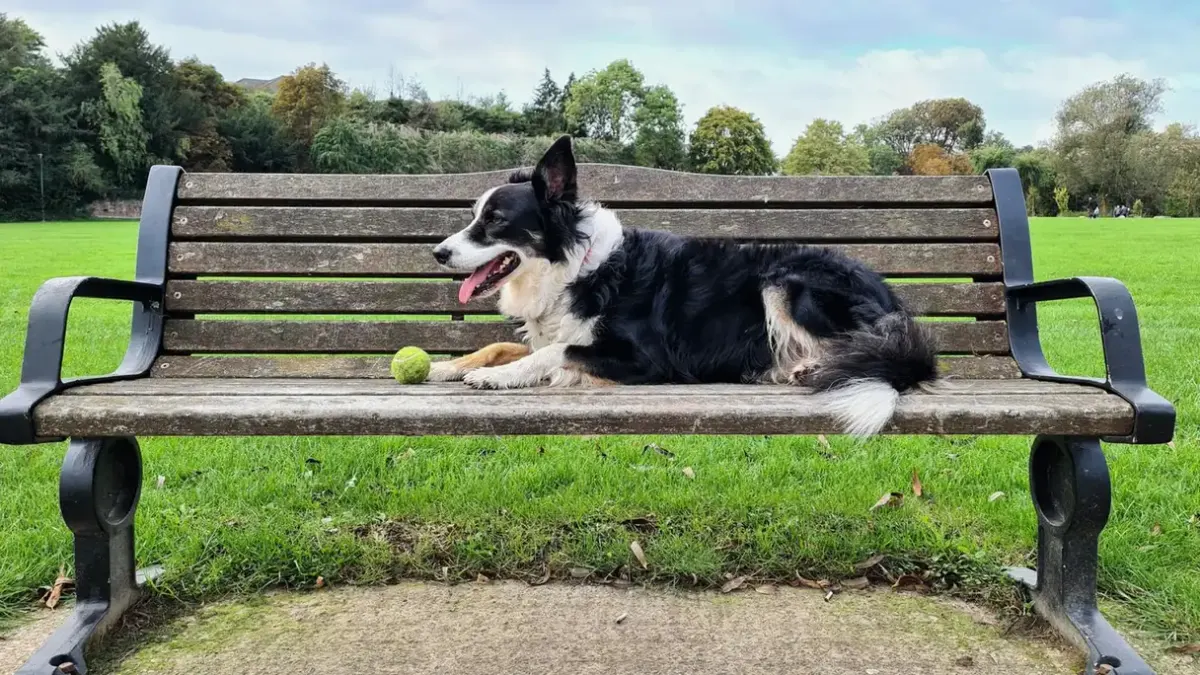
An eight-year-old Border Collie still begs for one more throw at the park, but after three fetch sessions in four days she starts bunny-hopping up the two back steps and hesitates before jumping into the car. Her owner worries about arthritis in the hips, yet on palpation the muscles feel tight through the hindquarters and the stifle feels subtly unstable on one side. The choice being weighed is rest plus pain medication versus a plan that also protects the tendons and ligaments that guide that joint. In Traditional Chinese Veterinary Medicine I would read this stiffness after exertion as Liver Blood deficiency with local Qi and Blood stagnation — in plain terms, the connective tissues are undernourished and not gliding well.
What do tendons and ligaments actually do in the joint?
Tendons connect muscle to bone and transmit force. Ligaments connect bone to bone and limit excess motion.
That division matters for owners. When the quadriceps fires, the patellar tendon pulls the tibia forward. When the cranial cruciate ligament is intact, it stops that forward slide and controls rotation, as described by VCA Hospitals. Collateral ligaments check side-to-side wobble. The joint capsule and its lining manage lubrication, while tendons and ligaments set the track the bones move on.
Checklist for a stable joint:
- controlled load that keeps collagen organized without overload
- healthy body condition that lowers daily strain on ligaments
- warm-up and footing that limit slips and sudden pivots
- balanced muscle strength front to back and left to right
- veterinary assessment when lameness lasts more than a day or recurs
Tendon is built for pull. Most of it is aligned type I collagen with small amounts of elastin, proteoglycans, and water. Ligament is similar but arranged to resist in more than one direction. Both tissues have poor blood supply compared with muscle, which explains the slow healing owners notice.
The cell biology is well summarized by the National Library of Medicine, which details how collagen fibrils assemble into fibers that carry tensile load.
Healthy tissue glides. Fascia, tendon sheaths, and bursae reduce friction where structures pass over bone.
Why do these tissues fail in active and aging dogs?
A four-year-old, 68-lb Labrador Retriever had been swimming twice weekly through July and then tore across a wet deck after a ball. He came up holding the right hind leg for six strides, then walked it off, then limped again that night for about 10 hours. The owner had previously tried six weeks of rest alone after a similar episode, with no strength work and no weight plan, and the limp returned on the first off-leash sprint. That failed approach is common: rest calms inflammation but leaves the surrounding muscle weaker and the collagen less prepared for the next load.
Degeneration often precedes rupture. In many dogs the cranial cruciate ligament frays over months before a final tear. Age, conformation, excess weight, and repetitive pivoting all raise risk. A sudden yelp may look like the whole injury, but the tissue was often weakening quietly.
Expectations stay realistic here. Supplements, bodywork, and exercise may help support normal connective-tissue function and comfort, but none rebuilds a fully ruptured ligament.
How can owners support tendon and ligament health?
A 12-year-old, 42-lb mixed-breed dog with early kidney changes cannot take daily anti-inflammatories, so her owner needs a joint plan that bends around that limit. They switch from a 2-mile weekend hike to four 15-minute sniff walks per week on grass, add a ramp for the SUV, and use Tui-na style gentle compressions along the hind limbs for five minutes before walks. She still stiffens on cold mornings, but she rises in under a minute instead of three.
Support rests on load management first. Keep the dog lean enough to feel ribs easily. Favor traction, short warm-up walks, and gradual mileage changes over weekend bursts. Ask your veterinarian about physical rehabilitation, targeted strengthening, and footing or brace options where appropriate.
Nutrition supports the whole patient. Adequate protein, balanced minerals, and omega-3–rich feeding plans may help support normal inflammatory balance and tissue maintenance. Evidence for oral joint ingredients centers on cartilage and comfort measures rather than direct ligament repair, so view them as one part of care. For broader background on label reading and ingredient evidence, see The Best Joint Supplement for Dogs: What Holds Up to an Orthopedic Read and Dog Hip and Joint Supplement: What Actually Matters Before You Buy One.
Watch for red flags. Non–weight-bearing lameness, swelling inside the joint, clicking with instability, or pain that worsens after 48 hours deserves prompt examination.
Frequently asked questions
What is the difference between a tendon and a ligament in dogs?
A tendon links muscle to bone and transmits movement force, while a ligament links bone to bone and stabilizes the joint against excess motion.
Can a supplement repair a torn ligament?
No. Nutrition and rehabilitation may help support comfort and function, but a complete cruciate rupture or unstable joint needs veterinary diagnosis and often surgical stabilization.
Sources
- Cruciate Ligament Rupture in Dogs — VCA Hospitals
- Molecular Biology of the Cell, Collagen and Elastin — National Library of Medicine