Why an Old Dog Startles at Sounds He Used to Ignore
A veterinary rehab specialist explains why senior dogs suddenly flinch at familiar noises, what to check first, and how to help without misreading the behavior as stubbornness.
Most of the time a newly jumpy old dog isn't losing his nerve — he's losing input, and an aging brain fills sensory gaps with alarm instead of calm.

On this page
Most of the time a newly jumpy old dog isn’t losing his nerve — he’s losing input, and an aging brain fills sensory gaps with alarm instead of calm. That’s the short answer. The longer answer is that a startle response is a symptom with several possible sources, and working through them in order gets you to the real cause faster than guessing.
Start With Pain, Not Behavior
Check for physical discomfort before anything else. In my rehab practice, I pair TCVM pattern-thinking with hands-on rehab exam findings, because a dog guarding a sore hip or an arthritic spine often reacts to sudden sound the same way he’d react to being bumped unexpectedly — with a whole-body flinch. A Frontiers in Veterinary Science qualitative study found distinguishable differences in how dogs with musculoskeletal pain express noise sensitivity compared to dogs without it, which is a strong argument for a full orthopedic and neurologic exam before assuming the ears or brain are solely to blame. Palpate along the spine, hips, and shoulders yourself between visits, and note any flinch, muscle guarding, or reluctance to move a certain way.
Screen for Hearing and Vision Changes
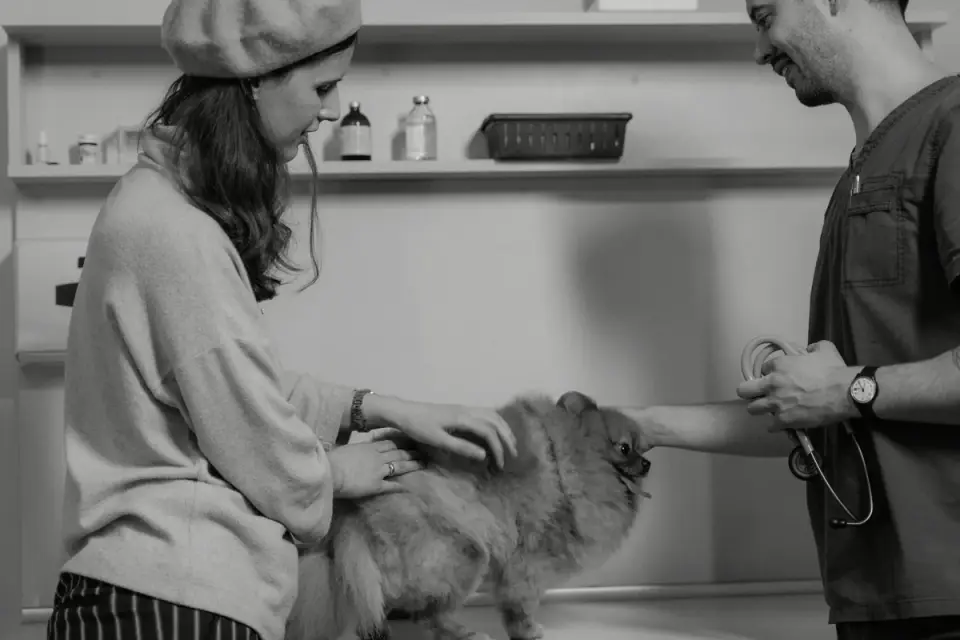
Ask your vet to check both systems at the same visit. Age-related degeneration of the inner ear’s nerve cells is a common cause of gradual hearing loss in senior dogs, and it doesn’t always look like deafness from the outside. A dog with partial, uneven hearing loss may miss the early, quiet part of a sound and only register the loud middle of it — which reads as a sudden, out-of-nowhere event even though nothing about the noise itself changed. VCA Animal Hospitals notes that senior dogs developing a new fear of noises should be examined to screen for an underlying medical condition, and that partial hearing loss specifically can change how sound is perceived and drive a fear response. Vision matters too. Lens changes like nuclear sclerosis are near-universal in aging dogs and can blur peripheral motion, so a sound now arrives paired with a startling, half-seen movement instead of a clear visual cue. The AKC has documented this overlap between sensory decline and an increased startle response in older dogs.
A quick home check helps you describe the pattern accurately to your vet. Clap or drop a soft object outside your dog’s field of view and watch for a delayed or partial response. Do it once, not repeatedly — this isn’t a test to run daily, just a data point.
Watch for the Cognitive Picture
Anxiety is one of six recognized domains of canine cognitive dysfunction, tracked clinically with the DISHAA framework — Disorientation, Interaction changes, Sleep-wake shifts, House-training lapses, Activity changes, and Anxiety. The AAHA senior care guidelines list increased anxiety, including new noise reactivity, as one of the earliest and most commonly reported signs owners bring up. A dog in early cognitive decline may startle not just because he heard something oddly, but because his brain is slower to file the sound as familiar and safe.
That single line is worth sitting with: reduced processing speed can turn an ordinary noise into an unresolved threat.
Keep a simple log for two weeks — what startled him, time of day, and whether it followed a nap, a meal, or being alone. Bring that log to the appointment. It does more for your vet’s diagnosis than a general “he’s been jumpy lately.”
Build a Support Plan Around the Cause
Once pain, hearing, vision, and cognition have been assessed, layer in practical management rather than waiting for a single fix. Manage identified pain with your vet’s plan, since a comfortable dog startles less. Approach your dog from his visible side and use a light touch or floor vibration cue before sudden sounds when possible. Keep furniture and walking paths consistent if vision is declining, since memory-based navigation depends on a stable layout. None of these steps depend on which cause turns out to be primary — they’re additive, not competing.
When to Call the Vet Now, Not Later
A startle response that appears suddenly, worsens over days, or comes with stumbling, head tilt, or disorientation needs same-week attention rather than a wait-and-see approach. Those signs can point to vestibular disease, a pain flare, or a neurologic issue that benefits from early intervention. A gradual increase in noise sensitivity over months is still worth mentioning at the next routine visit, but it’s less urgent than an acute change.
A senior dog’s startle isn’t him being difficult, and it isn’t something to correct with a firmer voice. It’s information moving through a body that’s processing the world differently than it did a few years ago, and finding out how — one system at a time — is what actually helps him settle back down.
Frequently asked questions
Is a startle response in an old dog always a sign of hearing loss?
No. Hearing loss is common, but vision changes, cognitive dysfunction, and pain from arthritis or spinal discomfort can all produce the same flinch. A veterinary exam is the only reliable way to sort out which factor, or combination, is driving it.
Should I stop making noise around my senior dog to avoid startling him?
Reducing sudden, sharp sounds around a dog with new sensitivity is reasonable, but avoiding all normal household noise isn't practical or necessary. Focus on predictable routines and letting your dog see or feel you approach, rather than eliminating sound entirely.
Can this behavior change be reversed?
It depends on the cause. Pain from arthritis can often be managed to reduce reactivity. Age-related hearing and vision decline generally isn't reversible, but dogs adapt well with consistent cues and a stable environment. Cognitive dysfunction is managed, not cured, through structure/function support and environmental enrichment.
Sources
- Managing Cognitive Dysfunction and Behavioral Anxiety — AAHA
- Fear of Noises and Places in Dogs — VCA Animal Hospitals
- Age-Related Vision and Hearing Loss in Dogs: What to Know — AKC
- Noise Sensitivities in Dogs: An Exploration of Signs in Dogs With and Without Musculoskeletal Pain — Frontiers in Veterinary Science