Can Dogs Eat Avocado Safely? What the Fat, the Pit, and the Persin Actually Mean
A veterinary nutritionist walks through what happens when a dog eats avocado flesh, pit, or skin — the real risk from fat and the pit, why persin worries dogs less than birds or horses, and how to decide.
Avocado flesh isn't the emergency most owners fear, but the pit and the fat load deserve more respect than a slice on a cutting board suggests.
On this page
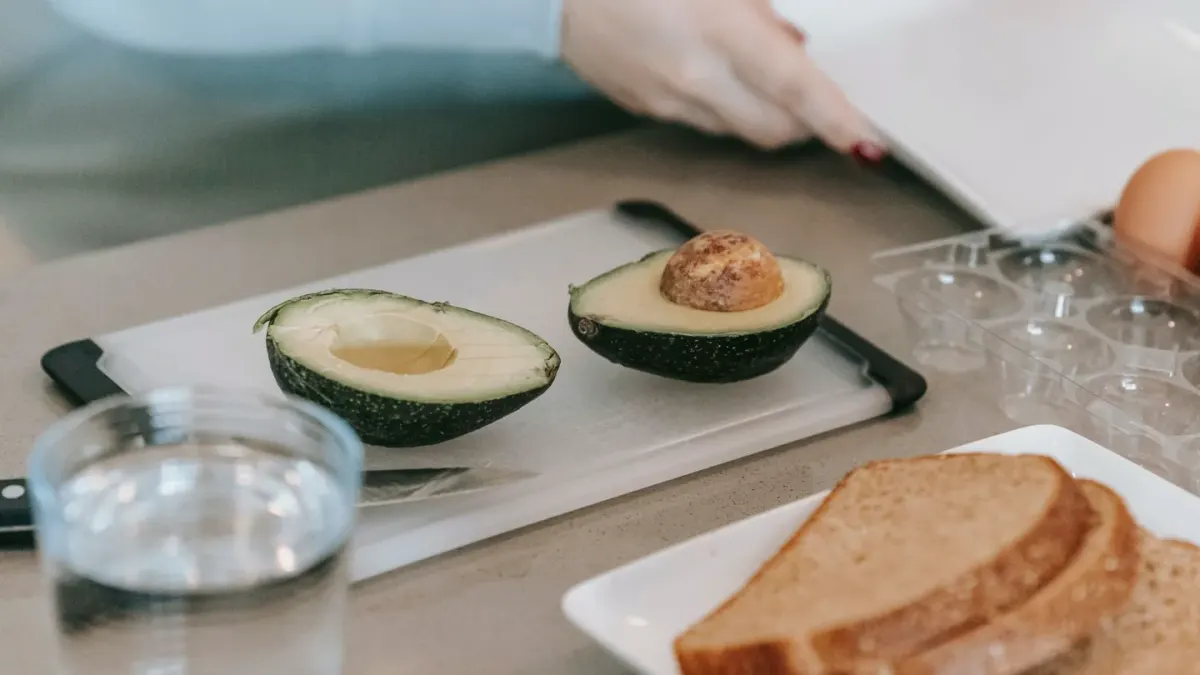
A friend of mine keeps a bowl of guacamole ingredients on the counter every Sunday — avocado halves, a squeeze of lime, a dish of diced onion set well out of reach. Her seven-year-old Lab mix, built like a barrel and always working an angle, has learned that a dropped avocado skin is fair game the second her back is turned. She’d asked me, half-joking, whether she needed to guard the compost bin like it was rat poison. That’s really the question underneath most avocado questions: is this a genuine emergency ingredient, or a food that just needs the same portion sense you’d apply to bacon grease? The honest answer sits between those two poles, and the details matter more than the headline.
Start with what you should actually do, not the biochemistry. If your dog eats a small piece of plain avocado flesh — no pit, no skin — watch for vomiting or loose stool over the next day and otherwise don’t panic. If your dog swallows or chews on the pit, or eats the skin or a large quantity of flesh, call your veterinarian or an animal poison control line the same day; don’t wait for symptoms, because pit obstructions and fat-triggered pancreatitis both have a lag time before they look serious. If your dog has a history of pancreatitis, is on a fat-restricted therapeutic diet, or is a breed with known pancreatic sensitivity, skip avocado entirely rather than testing the margin.
The persin question dogs mostly dodge
Avocado’s reputation as a universal pet toxin comes from persin, a fungicidal compound concentrated in the leaves, bark, skin, and pit of the plant. According to the Merck Veterinary Manual, persin is genuinely dangerous to birds, rabbits, horses, and ruminants, producing myocardial damage and, in caged birds, sometimes fatal heart failure from small amounts. Dogs are a different story. Case reports of clinical persin toxicity in dogs exist, but they’re rare, and most dogs that get into avocado — flesh, and even some skin — end up with nothing worse than a sour stomach. That asymmetry is worth sitting with: the same plant compound that can kill a parakeet in two days is, in a dog, usually a GI inconvenience. The ASPCA still recommends treating avocado as an off-limits food for dogs and cats, and that’s the right conservative default for a general audience — but it’s a caution grounded in uncertainty and species variability, not in documented lethal dose data for dogs the way it exists for birds.
Where the real risk actually lives
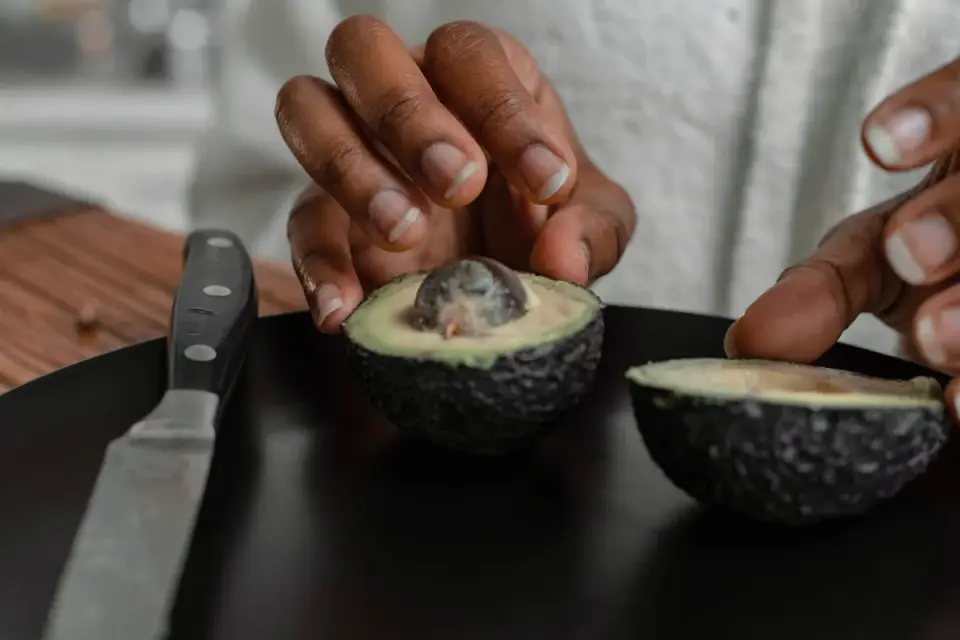
The two hazards I take seriously in practice aren’t persin at all. First, the pit. It’s smooth, dense, and roughly golf-ball sized in a full-grown fruit — exactly the geometry that lodges in a stomach outlet or a loop of small intestine rather than passing. Pet Poison Helpline lists gastrointestinal obstruction from the pit as a primary concern in dogs, and unlike a mild GI upset, an obstruction usually resolves only with surgery. Second, the fat. Avocado flesh runs around 15% fat by weight, which is unremarkable for a treat here and there but becomes a real trigger in a dog that’s already pancreatitis-prone, overweight, or eating a large amount at once — a whole fruit, not a spoonful. Dogs recovering from or managing exocrine pancreatic insufficiency are a useful comparison case: the standard management for EPI leans on low-residue diets with moderate fat content and enzyme replacement, according to a review published in JAVMA, which underscores how much fat load matters for a compromised pancreas even when the fat source itself isn’t toxic. That’s the same lens I’d apply to a dog with any history of pancreatitis: the avocado itself isn’t the poison, the fat spike is.
I think about this the way I think about most trendy superfood additions to a dog’s bowl — weigh what the food or supplement can realistically do for diet, mobility, and recovery, not what the marketing implies. Avocado oil and avocado-derived ingredients show up in some joint and skin-coat products marketed for their monounsaturated fat and vitamin E content, and there’s a reasonable nutritional case for those fats supporting a healthy coat as part of a complete diet. There is not a comparable case for the whole fruit doing anything for a dog’s joints that a properly formulated omega-3 source doesn’t do better and with a known dose. Don’t let a single ingredient’s health halo in human nutrition talk you into treating it as a supplement for your dog.
A second scene worth describing: a client once brought in a young mixed-breed after she’d counter-surfed an entire avocado, pit included, while the family unpacked groceries. The dog looked completely normal that evening — bright, eating, no vomiting — which is exactly the deceptive part. Pit obstructions can take 24 to 72 hours to produce obvious signs, and by the time a dog is reluctant to eat or is straining without producing stool, the obstruction has often already progressed to where surgery is the only option. We radiographed early, found the pit sitting at the pylorus, and removed it endoscopically before it moved further and became a surgical case instead of a same-day procedure. The lesson isn’t that avocado is secretly dangerous; it’s that the pit specifically earns a same-day call to your vet, even in a dog acting fine.
If a dog has loose stool afterward
Owners often reach for probiotics after any dietary indiscretion, avocado included, and that instinct isn’t unreasonable — a balanced gut microbiome is a legitimate piece of digestive health. But the evidence on which dogs actually respond to a given probiotic and why is thinner than the marketing suggests. A Frontiers in Veterinary Science study on probiotic response in dogs found that diversity metrics did not distinguish non-responders from responders, meaning we still can’t reliably predict, from a stool sample alone, which dogs will improve on a given strain. Mild transient loose stool after a small avocado exposure will usually resolve with a bland diet and time regardless; that’s a more honest recommendation than promising a supplement fix. For dogs with fiber-sensitive guts more broadly, Can Dogs Get Too Much Fiber? covers the flip side of digestive overcorrection, and if a dog’s stomach is already unsettled from something else, Can Probiotics Be Given With Antibiotics for Dogs? walks through timing that owners frequently get wrong.
Where this leaves an owner slicing avocado on a Sunday
Plain avocado flesh, in a small amount, without the pit or skin, is a low-stakes food decision for most healthy dogs — closer to don’t make it a habit than treat it as poison. The pit is the genuine hazard and deserves the same respect as a corn cob or a peach pit: keep it out of reach, and if it’s gone missing, assume it’s inside the dog until a vet tells you otherwise. If you’re rethinking your dog’s diet more broadly around digestibility and consistency, Can Dogs Eat Sweet Potato? is a useful comparison for how a starchy produce item earns a more forgiving verdict than avocado does.
Most avocado questions resolve the same way: portion and preparation decide the outcome far more than the fruit’s reputation does.
Frequently asked questions
How much avocado is too much for a dog?
There's no established safe dose because persin sensitivity and fat tolerance both vary by dog. A few small bites of plain flesh occasionally is a reasonable ceiling for a healthy adult dog; dogs with a history of pancreatitis or a fat-restricted diet shouldn't get any.
My dog swallowed an avocado pit — what now?
Call your veterinarian before you decide anything else. Pits don't break down and can lodge in the stomach or intestine; the giveaway signs (vomiting, straining, loss of appetite, lethargy) can take a day or more to show up.
Sources
- Avocado (Persea spp) Toxicosis in Animals — Merck Veterinary Manual
- The Scoop on Avocado and Your Pets — ASPCA
- Avocado Is Toxic To Dogs — Pet Poison Helpline
- Exocrine pancreatic insufficiency: nutritional management and dysbiosis review — JAVMA
- Probiotic response variability in dogs — Frontiers in Veterinary Science