Can Probiotics Be Given With Antibiotics for Dogs? Timing, Strains, and What the Evidence Shows
A vet-informed guide to giving probiotics alongside antibiotics in dogs — dosing windows, which strains have data behind them, and when loose stool needs more than a supplement.
Yes—probiotics can be given with antibiotics for dogs, though timing and strain choice affect how well they work.
On this page
Yes—probiotics can be given with antibiotics for dogs, though timing and strain choice affect how well they work. That’s the short answer. The longer answer, the one worth understanding before you open both bottles, has to do with how bacteria and drugs behave in the same gut at the same hour.
Quick-Reference Checklist Before You Combine Them
- Space the doses. Give the probiotic at least two hours apart from the antibiotic dose, not with it.
- Favor a yeast-based strain during treatment. Saccharomyces boulardii isn’t a bacterium, so most antibiotics don’t neutralize it.
- Don’t stop at the last antibiotic pill. Many vets carry the probiotic one to two weeks past the antibiotic course.
- Watch fecal quality, not just frequency. A slightly soft stool is common; blood, black tarry stool, or repeated vomiting is not.
- Bring EPI on the differential if diarrhea persists. Chronic soft stool that doesn’t track with the antibiotic timeline can point toward exocrine pancreatic insufficiency rather than simple dysbiosis.
Each of those lines earns its own explanation, and the reasoning tends to make more sense laid out in the order a course of antibiotics actually unfolds — before, during, and after.
Before You Start the Antibiotic Course
A gut, in TCVM terms, is a kind of soil. Antibiotics till that soil indiscriminately, clearing pathogens along with a good share of the beneficial residents. If your dog is starting a course for a skin infection, a UTI, or a bout of colitis, this is the moment to think ahead rather than react. A dog whose stool is already loose or whose Spleen qi (in the Chinese medicine framing) runs weak going in tends to show more digestive disruption once the antibiotic starts working. Starting a probiotic on day one, rather than waiting for soft stool to appear, is the more conservative path many integrative practitioners favor, though it isn’t mandatory for every dog on every antibiotic.
During Treatment: Spacing Probiotics and Antibiotics
A Simple Timing Rule
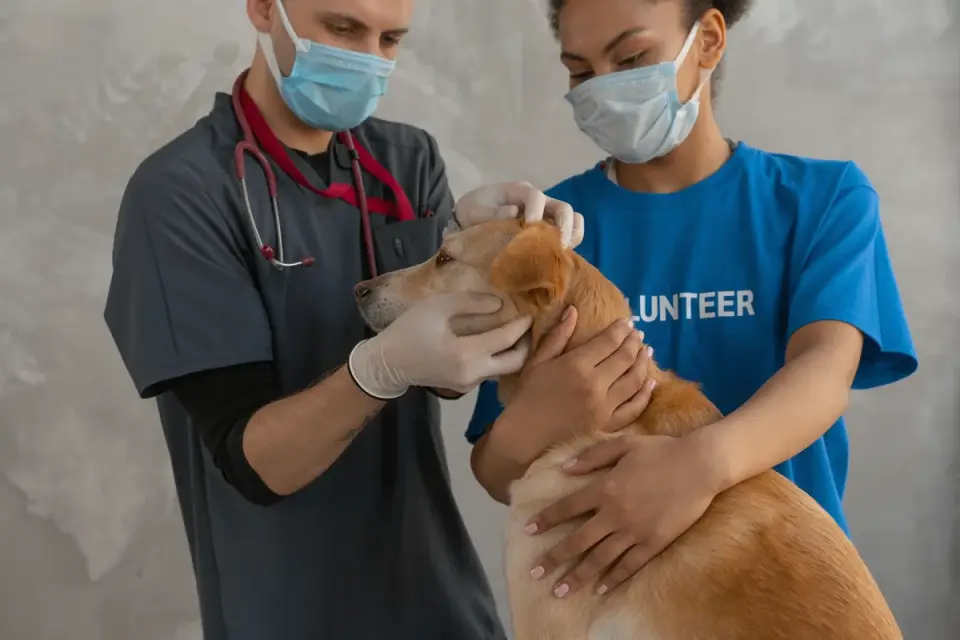
The mechanism here isn’t mysterious. Antibiotics work by killing or disabling bacteria, and a probiotic capsule is, at its core, a payload of live bacteria (or, in some formulas, yeast). Swallow both together and the antibiotic gets a running start on organisms it wasn’t prescribed to fight. A roughly two-hour gap between doses gives the probiotic organisms a window to reach the gut and begin adhering before the next antibiotic dose arrives. It’s a small logistical habit, not a complicated protocol, and it’s the single most actionable piece of this whole topic.
Which Strains Have Some Evidence Behind Them
The research picture in dogs is real but thinner than most owners expect, and the International Scientific Association for Probiotics and Prebiotics (ISAPP) has written specifically about this gap, noting that far less canine-specific work exists compared with the human antibiotic-associated diarrhea literature. Saccharomyces boulardii has drawn particular interest because it’s a yeast rather than a bacterium, meaning it isn’t a direct target of most antibiotic classes, so it doesn’t need the same careful spacing that bacterial strains do. That’s a mechanistic advantage, not a promise — a Journal of Veterinary Internal Medicine systematic review of probiotic trials across GI conditions in dogs found the studies varied widely in design and risk of bias, and concluded the pooled clinical benefit was modest at best. A more recent RCT looking at dogs receiving probiotics found something worth sitting with too: diversity metrics in the gut microbiome did not distinguish the dogs who responded clinically from the ones who didn’t, per the Frontiers in Veterinary Science study. In plain terms, a more diverse gut sample on paper didn’t reliably predict a happier stool. The lesson isn’t that probiotics don’t matter. It’s that we don’t yet have a clean biomarker for who benefits.
If your dog’s antibiotic course intersects with a food transition too, the layered stress on the gut compounds, and it’s worth reading how that separate scenario tends to unfold in Dog Stomach Upset After Switching to Raw Food: What’s Normal and What Isn’t.
After the Antibiotics Are Done
Here the picture shifts from damage control to rebuilding. A gut community disturbed by a ten-day antibiotic course doesn’t necessarily snap back the day the prescription bottle empties. Many vets, this one included, favor continuing the probiotic for one to two weeks past the final antibiotic dose, layering in a gentle fiber source if the stool is still finding its footing. Western reasoning calls this restoring the microbiome. Chinese medicine would call it tonifying Spleen qi so the transformation and transportation of food resumes properly. Both frames point toward the same practical move: don’t stop cold the moment the antibiotic does. Fiber has its own upper limit worth knowing before you add it to a recovering gut, which is covered in Can Dogs Get Too Much Fiber? Signs, Causes, and How to Dial It Back.
This is one of the shorter points in this guide, but it deserves its own line: more probiotic is not automatically better recovery.
When Loose Stool Signals Something Other Than Antibiotic Disruption
Not every case of soft stool during or after antibiotics is simple dysbiosis. Chronic, recurring diarrhea, especially with weight loss or a ravenous appetite that doesn’t translate into body condition, can point toward exocrine pancreatic insufficiency, a distinct diagnosis. EPI is treated with pancreatic enzyme replacement, low-residue moderate-fat nutritional management, and cobalamin supplementation rather than probiotics alone, a point worth sitting with if a dog’s digestive trouble isn’t tracking cleanly with the antibiotic timeline. Even after that enzyme therapy starts, researchers note that further study is needed to understand why some dogs with EPI show persistent dysbiosis and how to correct it, which underscores that gut recovery after any disruption, antibiotic or otherwise, isn’t always a straight line.
The Bottom Line
Probiotics and antibiotics aren’t adversaries in a dog’s gut so much as two forces that need a little separation to coexist productively — a couple of hours apart, a strain that can survive the crossfire, and a week or two of follow-through once the prescription ends. What’s less settled, and what the newer research keeps circling back to, is why some dogs’ guts bounce back easily and others don’t, even on paper-identical protocols. Isn’t that the more interesting question to ask your vet at the next recheck?
Frequently asked questions
Can I give my dog a probiotic on the same day as an antibiotic?
Yes. The concern isn't the same day, it's the same hour. Giving both within a few minutes of each other lets the antibiotic hit the live probiotic organisms before they can colonize, so most vets suggest spacing the two doses by at least two hours.
Do probiotics stop antibiotic-associated diarrhea in dogs?
They may reduce the odds or shorten the course of it, but a systematic review in the Journal of Veterinary Internal Medicine found the overall clinical effect across dog studies was small and the evidence base uneven, so think of probiotics as a reasonable adjunct, not a guarantee.
How long should a dog stay on probiotics after finishing antibiotics?
There's no single validated number, but many integrative and conventional vets extend probiotic support one to two weeks past the last antibiotic dose to give the gut community more time to re-establish before the supplement stops.
Is Saccharomyces boulardii better than bacterial probiotics during antibiotics?
It has a practical edge because it's a yeast, not a bacterium, so most antibiotics don't touch it. That doesn't make bacterial strains useless, it just means S. boulardii doesn't need the same careful timing around doses.
Sources
- Fido Needs an Antibiotic: Are There Strategies to Maintain Gut Integrity and Restore Gut Microbiota? — International Scientific Association for Probiotics and Prebiotics (ISAPP)
- Clinical effect of probiotics in prevention or treatment of gastrointestinal disease in dogs: A systematic review — Journal of Veterinary Internal Medicine
- Probiotic response study in dogs — DOI: 10.3389/fvets.2025.1720932 — Frontiers in Veterinary Science