Can Dogs Eat Bread? What the Evidence Says About Risk and Nutrition
A veterinary nutritionist explains when plain bread is a harmless bite for dogs, why raw dough and xylitol change the calculus entirely, and what bread actually offers a dog's diet.
Yes, dogs can eat plain bread in small amounts, but it offers little nutrition and some loaves hide real danger.
On this page
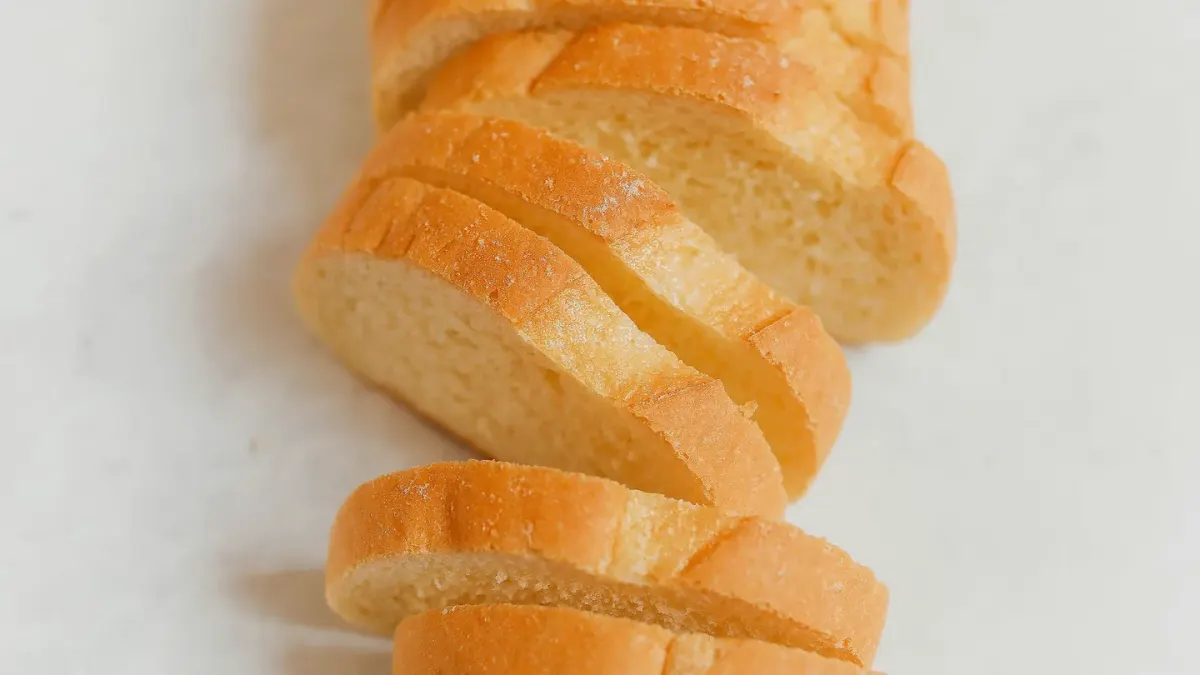
Picture a kitchen at the end of a long day: the heel of a sandwich loaf sits on the counter, a dog parked directly underneath it, tail going. The owner tears off a corner, plain, no butter, and hands it over. Nothing happens. No vomiting, no soft stool, nothing dramatic — which is exactly why the question “can dogs eat bread” gets answered so casually online, and why the answer that actually matters lives in the exceptions, not the average case.
My short answer: plain, fully baked bread in small amounts is not a hazard for most healthy dogs. My longer answer, the one I’d actually stand behind in an exam room, is that bread earns almost nothing nutritionally, and two forms of it — raw dough and anything sweetened with xylitol — are not “avoid if possible” items. They’re emergencies. I’d rather an owner remember that distinction than memorize a blanket rule.
What a Slice of Bread Actually Puts on a Dog’s Plate
Strip bread down to its ingredients and there isn’t much dog-relevant nutrition left. Flour, water, yeast, salt, maybe a little sugar or oil. It supplies digestible carbohydrate energy and not much else — negligible protein quality, thin micronutrient content, and far less fiber than owners tend to assume. A slice or two occasionally functions like a low-value treat: rarely harmful, never a nutritional contributor. That matters for weight management especially, since bread calories add up quickly in a small dog and displace better food without offering anything in return.
The Two Hazards That Matter More Than the Bread Itself
This is where I get specific, because vague warnings don’t change behavior and specific ones do.
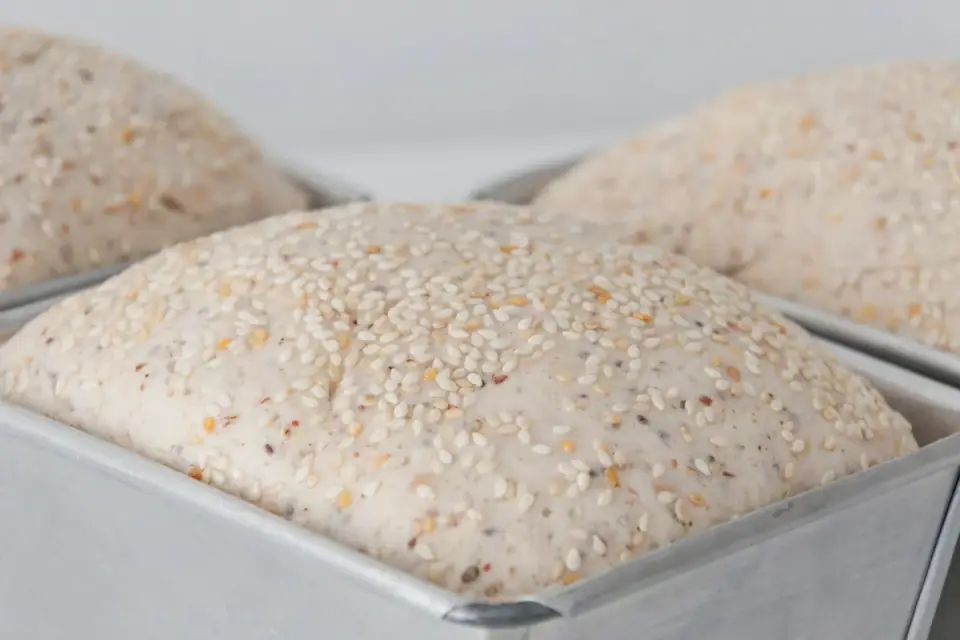
Raw yeast dough is the one I’d flag hardest. Live yeast doesn’t stop working once it’s swallowed; a warm stomach is, if anything, a better environment for it than a countertop. The Merck Veterinary Manual describes the resulting risk as twofold — continued expansion of the dough mass, which distends the stomach and can compromise circulation, alongside ethanol produced by ongoing fermentation, which is absorbed and can cause genuine alcohol toxicosis. A dog that gets into rising dough left on a counter or a proofing basket isn’t a “watch and see” situation; it’s a call-the-vet situation.
Xylitol is the second hazard, and it’s become more common as sugar-free and low-carb breads have moved into mainstream grocery aisles. The ASPCA has repeatedly warned that xylitol triggers a disproportionate insulin surge in dogs, and the amount needed to cause dangerous hypoglycemia is small relative to what a dog might get from a couple of slices of a xylitol-sweetened loaf. I check labels on anything marketed as “diabetic-friendly” or “keto” bread before I’ll call it fine to share, and I’d encourage any owner to do the same rather than assume bread is bread.
Garlic, Onion, and the Fillers Baked Into Modern Loaves
Plain sandwich bread is one thing; the artisan and specialty breads that have taken over bakery cases are another. Garlic bread, onion rolls, and focaccia studded with alliums carry their own separate toxicity profile, unrelated to the dough itself. Some enriched or specialty loaves also run high in sodium, added fats, or dried fruit like raisins baked into the crumb. None of that shows up if you’re only thinking about “bread” as a single category, which is part of why I push owners to read what’s actually in the loaf rather than answer the question in the abstract.
Consider a household managing a dog with a sensitive gut, maybe one recovering from a bout of pancreatitis or on a therapeutic low-fat diet. A slice of buttery brioche or a garlic knot looks harmless sitting on the table, but it’s exactly the kind of food that can push a vulnerable digestive system past its margin. For dogs with exocrine pancreatic insufficiency, management already depends on a fairly narrow diet; JAVMA notes that treatment centers on pancreatic enzyme replacement, nutritional management with low-residue diets of moderate fat content, and cobalamin supplementation, which leaves very little room for fatty, enriched breads even as an occasional extra. That’s a case where I’d say skip it entirely rather than negotiate a small amount.
Fiber, Gut Health, and Why Bread Isn’t the Answer
Owners sometimes reach for bread thinking it will settle a dog’s stomach, the way plain toast is sometimes offered to people. Dogs don’t get the same benefit. Bread’s fiber content is minimal compared to foods actually chosen for digestive support — a dog getting real fiber from a vegetable source like pumpkin or sweet potato is getting something structurally different from what a slice of white bread provides. If a dog’s stool has been inconsistent, I’d rather investigate the microbiome directly than reach for bread as a home remedy; even well-designed probiotic trials in dogs show real variability in who responds, with one Frontiers in Veterinary Science study finding that diversity metrics did not distinguish non-responders from responders. That’s a reminder that gut health interventions need to be chosen deliberately, not improvised with whatever’s in the bread box. Owners navigating fiber questions more broadly may also find it useful to read about how much fiber is too much for a dog, and anyone adjusting a dog’s diet around a course of medication should look at how probiotic timing interacts with antibiotics before assuming any food change is neutral.

The Line I Draw in Practice
Here’s where I land, and I’ll defend it: an occasional bite of plain, fully baked bread is a low-stakes indulgence for a healthy dog, not a food worth building into a routine. The counterargument I hear most is that bread is “just carbs,” no different from the rice or oats already in a lot of commercial diets. That’s fair as far as it goes, but rice and oats arrive with fiber and a known nutrient profile; bread arrives with salt, added sugar, and, depending on the loaf, ingredients that range from irrelevant to genuinely toxic. The category is too inconsistent to treat as a single yes-or-no answer, which is exactly why I’d rather owners learn the two real hazards, raw dough and xylitol, than memorize a blanket rule about bread in general.
If a dog gets into rising dough or a xylitol-sweetened loaf, treat it as urgent and call a veterinarian or a pet poison control line rather than waiting for symptoms. For everything else, plain bread is a footnote in a dog’s diet, not a food group worth defending.
Frequently asked questions
Is a small piece of plain bread okay for a dog?
For most healthy adult dogs, an occasional bite of plain, fully baked white or whole-wheat bread is unlikely to cause harm. It's not nutritionally useful, so it should stay an occasional bite, not a habit.
What makes raw bread dough so much worse than baked bread?
Live yeast in raw dough keeps working after it's swallowed. Warm stomach conditions let it continue rising and fermenting, which the Merck Veterinary Manual describes as producing both gastric distention and ethanol, a combination that can become an emergency quickly.
Can bread with xylitol hurt a dog?
Yes, and disproportionately to the amount eaten. Xylitol, used in some sugar-free and 'keto' breads, triggers a sharp insulin release in dogs; the ASPCA has issued repeated warnings about how little it takes to cause dangerous hypoglycemia.
Does bread have any nutritional value for dogs?
Very little beyond calories. It supplies some carbohydrate energy but negligible fiber, protein quality, or micronutrient density compared to vegetables commonly used in dog diets.
Sources
- Bread Dough Toxicosis in Animals — Merck Veterinary Manual
- Updated Safety Warning on Xylitol: How to Protect Your Pets — ASPCA
- Exocrine Pancreatic Insufficiency in Dogs and Cats — JAVMA
- Probiotic Response Variability in Dogs — Frontiers in Veterinary Science