Can Dogs Eat Broccoli? What the Isothiocyanate Evidence Actually Supports
Dogs can eat broccoli in small amounts, but the isothiocyanates in the florets set a real ceiling. Here's the evidence-based line, floret vs. stalk, raw vs. cooked.
Dogs can eat broccoli safely in small amounts, but the florets carry a compound that punishes anyone who ignores portion size.
On this page
Imagine a nine-year-old Border Collie whose owner steams a head of broccoli for dinner most nights and, out of habit, tosses a few extra florets into the dog’s bowl because the dog begs and the vegetable seems harmless. Multiply that habit by a year and you have a dog who has eaten several pounds of a cruciferous vegetable that most owners assume is simply healthy, full stop. It usually is fine. The question worth answering carefully is when it stops being fine, and why.
The short answer: yes, dogs can eat broccoli, cooked or raw, in small amounts. The American Kennel Club frames it as safe as long as it stays under roughly 10% of a dog’s daily food intake, because the florets carry isothiocyanates, a sulfur compound that in low doses passes through without incident and in higher doses irritates the gastrointestinal lining. The ASPCA lists broccoli alongside carrots, celery, and green beans as an acceptable low-fat snack, raw or cooked, without seasoning. Neither position treats broccoli as risky by default. Both treat dose as the variable that actually matters.
Florets vs. Stalk: The Isothiocyanate Math That Actually Matters
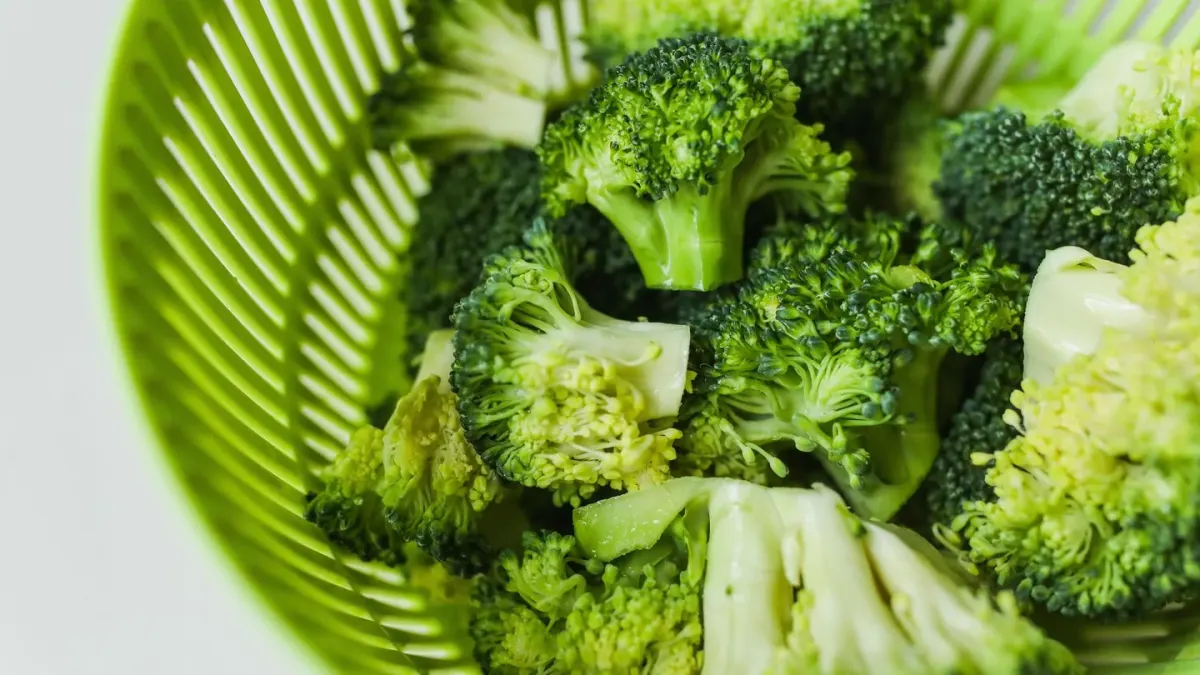
Most of the isothiocyanate content concentrates in the floret, not the stalk, which changes the calculus depending on which part of the plant ends up in the bowl. A small dog reaches a meaningful fraction of its daily intake after one or two florets; a large-breed dog has more room but still has a ceiling, not a blank check. The stalk brings a different problem entirely. It’s dense, fibrous, and genuinely hazardous as a choking or obstruction risk if it’s tossed to a dog whole rather than peeled and diced. I treat floret dose and stalk texture as two separate risk conversations, not one.
Raw and cooked broccoli both carry isothiocyanates, and cooking does not reliably neutralize the compound the way it deactivates some other plant toxins. What cooking changes is texture and digestibility, which matters more for a dog with an already sensitive gut than for isothiocyanate exposure itself. A softened, steamed floret is easier on the GI tract than a raw one of the same size, largely because the fiber matrix breaks down and moves through more predictably.
Where I Land, and Why the Counterargument Doesn’t Move Me
Here is where I land: a few small, cooked florets, offered occasionally, are a reasonable addition for a healthy dog, and I don’t lose sleep over an owner who shares a bite off their plate. The counterargument I hear most is that broccoli is a whole food, nutrient-dense, and therefore should be encouraged more liberally, the same logic that gets applied to blueberries or sweet potato. I don’t buy it as written. Isothiocyanate exposure is dose-dependent and cumulative in a way that fruit sugars and starches generally aren’t, and the margin between a harmless floret and a gastritis flare is narrower than most feeding guides admit. Reach for both the imaging study and the acupuncture needle when you’re building a dog’s plan: the same discipline that keeps me from overstating what a joint supplement can do keeps me from treating a cruciferous vegetable as a free pass just because it’s popular in human nutrition circles.
When Broccoli Overlaps With Digestive and Gut-Support Questions
Broccoli’s fiber content is where the joint-and-gut-science lens actually earns its keep, and where I stay most cautious about overselling a mechanism. Dogs with diagnosed digestive disease are a different population than the healthy dog stealing a floret off the counter. In dogs with exocrine pancreatic insufficiency, management already leans on pancreatic enzyme replacement therapy and low-residue, moderate-fat diets, according to a review in JAVMA; adding a fiber-dense vegetable on top of that regimen works against the low-residue goal, not with it. For dogs without a diagnosed condition, fiber from vegetables like broccoli can support normal stool quality, but I stay skeptical of broader gut-microbiome claims attached to any single food. A study in Frontiers in Veterinary Science on probiotic response in dogs found that diversity metrics did not distinguish responders from non-responders, a reminder that gut outcomes in dogs are individually variable even under controlled study conditions, let alone from a few florets added to dinner. If an owner is managing a sensitive-stomach dog and wants a gentler fiber source, our guide on how to change food for a senior dog without wrecking digestion covers the transition math in more detail, and the comparison in can dogs eat sweet potato is worth reading alongside this one for a lower-irritant alternative.
Consider a Labrador recovering from a mild bout of pancreatitis, cleared by her vet for a bland, low-fat home diet during recovery. Her owner, trying to add variety, considers steamed broccoli because it’s what’s in the fridge. This is precisely the scenario where I’d say no, not because broccoli is dangerous in the abstract, but because a recovering GI tract doesn’t need extra fiber and sulfur compounds competing for digestive bandwidth while it’s already working to normalize. The right food, in TCVM food-therapy terms, is the one matched to the patient’s current state, not the one that tested well in a general feeding guide.
What to Actually Do at the Kitchen Counter
Steam or lightly cook florets, chop them small, skip the stalk unless it’s peeled and diced, and hold the total serving to a bite or two for a small dog and a small handful for a large one. Watch for loose stool, gas, or reluctance to finish a meal in the hours after a new vegetable, and back off if any of those show up. Owners managing a dog with any diagnosed digestive condition should treat broccoli as optional at best and run it past their vet first, particularly if the dog is also on a joint-support regimen where GI tolerance affects compliance; our supplement label disclosure checklist is a useful companion read for anyone auditing what else is going into the bowl. None of this makes broccoli special. It makes it exactly what it is: a reasonable vegetable with a real, evidence-backed ceiling, worth respecting rather than ignoring.
Frequently asked questions
Can dogs eat broccoli every day?
Occasional small amounts are generally considered fine, but daily broccoli as a meal topper adds up isothiocyanate exposure and fiber load faster than most owners realize. I'd rotate it with other low-glycemic vegetables rather than making it a daily habit.
Is the broccoli stalk more dangerous than the florets?
The florets carry the higher concentration of isothiocyanates, but the woody stalk brings its own problem: it's a genuine choking and obstruction risk, especially in small or greedy eaters. Peel and dice it small if you use it at all.
What does broccoli actually do for a dog's joints?
There's no clinical evidence that broccoli treats joint disease in dogs. Any plausible mechanism runs through general gut and inflammatory pathways, not a direct cartilage effect, so I don't present it as a joint-support food.
Sources
- Can Dogs Eat Broccoli? — American Kennel Club
- Sharing is Caring: Foods You Can Safely Share with Your Pet — ASPCA
- Exocrine Pancreatic Insufficiency: Management Review — JAVMA
- Probiotic Response Variability and Gut Microbiome Diversity in Dogs — Frontiers in Veterinary Science