Can Dogs Eat Popcorn? A Neurologist's Take on the Real Risks
Plain popcorn isn't the problem for most dogs — hulls, unpopped kernels, and butter or salt are. Here's what the evidence actually supports, and where it gets thin.
Plain, air-popped popcorn is a low-risk treat for most dogs, but hulls and toppings, not the corn itself, cause the real trouble.
On this page
Picture a fairly ordinary Friday night: the couch, a movie nobody’s really watching, and a big bowl of popcorn getting passed around while a middle-aged terrier mix sits at the edge of the rug hoping for a share. Someone tosses down a few kernels without thinking twice about it. An hour later the dog’s gone quiet, pawing at his own mouth, refusing the next piece entirely. Nothing dramatic — just a tough hull wedged sideways between two molars, uncomfortable enough to end the evening early. Nobody in that room thought popcorn was dangerous. It’s the most ordinary snack in the house, tossed down without a second thought while the credits roll. That’s exactly why this topic deserves a careful look: the risk here isn’t exotic, it’s the kind that hides inside something completely familiar.
So, can dogs eat popcorn? In most cases, yes, in small amounts, plain. That’s my verdict, and I’ll defend it. But I don’t stop at yes or no, because the real question is which popcorn, how much, and which dog. I reach for both the imaging study and the acupuncture needle in my own practice, and this topic asks for the same two-track thinking: look hard at the mechanical and metabolic evidence before you decide, then apply it to the animal actually standing in front of you.
What’s actually in a kernel
Popcorn is corn, and corn isn’t a toxin or an allergen risk for the overwhelming majority of dogs. It’s a source of fiber and a modest amount of carbohydrate, nothing more dramatic than that. The idea that corn is inherently bad for dogs doesn’t hold up against what we know about canine digestion — dogs handle cooked corn starch reasonably well. That’s not where I’d focus your attention, and it’s not where the evidence points either.
Where the real risk actually lives
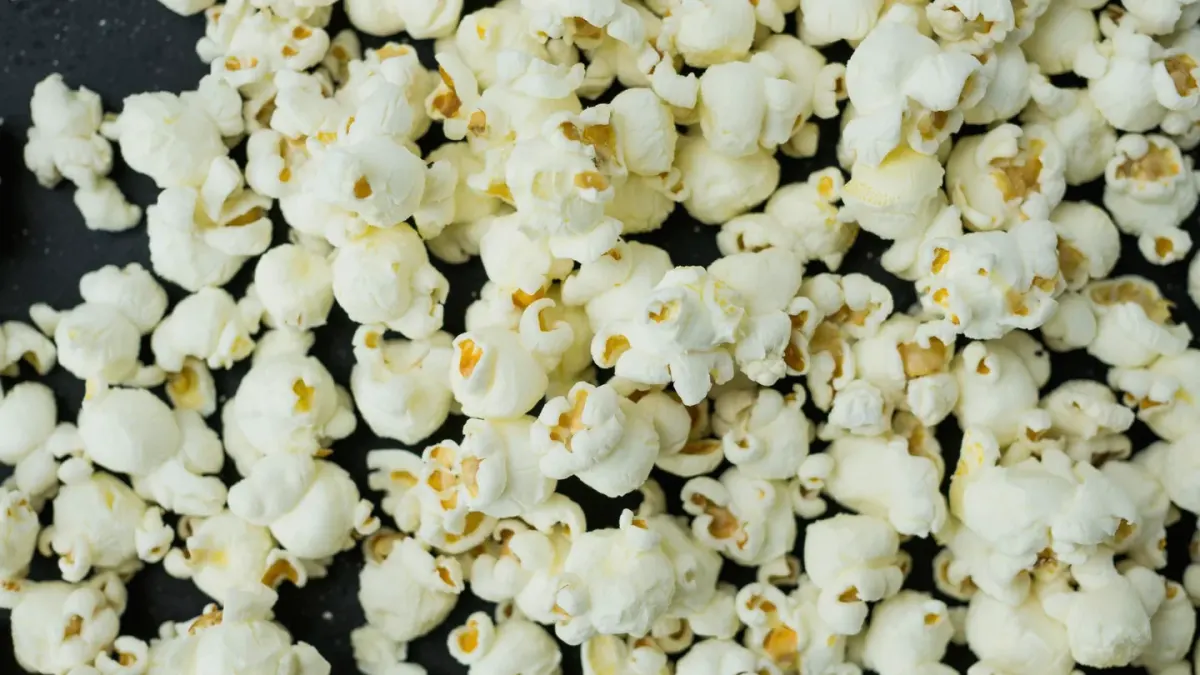
Unpopped and partially popped kernels are hard, small, and irregularly shaped — a combination that makes them a legitimate choking hazard and a plausible cause of intestinal obstruction if a dog swallows several without chewing. The hull, that thin husk that catches in your own teeth after a bowl of popcorn, does the same thing to a dog’s gums and between molars, sometimes triggering exactly the kind of oral discomfort described above. None of that shows up on a bag of butter or salt. It shows up in the kernels themselves.
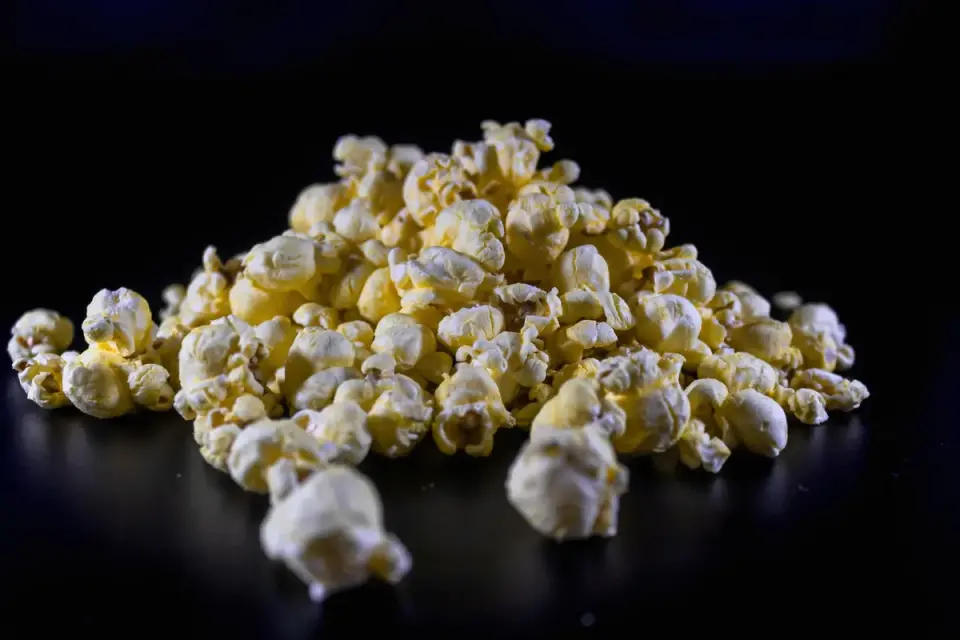
Then there’s what we pour on it. Butter, oil, and salt convert a low-calorie snack into a fat- and sodium-dense one, and that matters more for some dogs than others.
Where this intersects with real diagnoses
This is where I get more conservative, not less. Dogs with a history of pancreatitis, or those diagnosed with exocrine pancreatic insufficiency, live on a narrower nutritional margin than a healthy adult. In dogs with JAVMA-documented EPI, management leans on pancreatic enzyme replacement, cobalamin supplementation, and, critically, “nutritional management (low-residue diets with moderate fat content).” A buttered handful of popcorn works directly against that plan. It isn’t a dramatic risk for a healthy dog, but it’s a real one for a dog whose GI tract is already compromised.
Gut resilience matters here too, and it’s more individual than owners often assume. Research on probiotic response in dogs with GI disease found that “diversity metrics did not distinguish non-responders from responders,” per a 2025 study in Frontiers in Veterinary Science — a reminder that we can’t always predict which dogs will tolerate a dietary curveball well and which will land in a flare. If your dog has a history of chronic loose stool, unexplained GI flares, or a diagnosed dysbiosis pattern, popcorn is a variable worth removing rather than testing. For owners managing that kind of sensitivity long-term, our guide on how to change food for a senior dog without wrecking digestion covers the same underlying caution about introducing anything new to a fragile gut.
The counterargument, and why I still land where I do
The pushback I hear most often goes something like this: corn is already in half the commercial kibble on the shelf, so why would popcorn, the same plant, just popped, be treated with any real caution at all? It’s a fair point about the corn itself, and I don’t dispute it. But it misses what actually causes the emergency-room visits and the dental chips I see: not the ingredient, the format. A kibble kernel is ground, cooked, and extruded into something a dog’s gut is built to process. A popcorn kernel that didn’t fully pop is none of those things. The counterargument treats corn as the variable that matters. The evidence says the variable that matters is mechanical shape and added fat, and those don’t move just because the base ingredient is nutritionally unremarkable.
Consider a second, equally ordinary scene: a senior Lab mix out for her evening walk, her owner mentioning almost in passing that the family started sharing plain popcorn on movie nights because a friend swore corn was basically a vegetable. That reasoning gets the ingredient right and the risk wrong. If the popcorn is air-popped, unbuttered, unsalted, and checked kernel by kernel before it hits the bowl, and if the dog has no pancreatic or GI history, that’s a genuinely defensible habit, not one worth interrupting. Swap in butter, skip the kernel check, or add a dog with a sensitive gut, and the same bowl becomes a different decision entirely. That’s usually the shape a good answer takes here: not a blanket ban, not a green light, but a specific, checkable set of conditions.
What I’d want you watching for going forward
If you’re going to share popcorn with your dog, air-pop it, skip the butter and salt, check for unpopped kernels before it goes in the bowl, and keep the portion to a handful, not a shared bucket. Watch for pawing at the mouth, gagging, or reluctance to close the jaw fully afterward — early signs of an oral or pharyngeal problem worth a same-day look. If your dog has any history of pancreatitis or a GI diagnosis, reach for something gentler instead; owners managing sensitive digestion often do better with a fiber source like the one discussed in our piece on whether dogs can get too much fiber, which walks through how much is actually appropriate, or in the prep guidance covered in Can Dogs Eat Sweet Potato?. I’ll keep watching what the research says as more of it accumulates, and I’d rather adjust this guidance later than overstate it now.
Frequently asked questions
Can dogs eat popcorn kernels that didn't pop?
No. Unpopped or partially popped kernels are hard, sharp-edged, and small enough to lodge in the esophagus, airway, or intestine. This is the single biggest risk in the whole topic, and it's worth screening every handful before you offer it.
Is movie-theater butter popcorn bad for dogs?
It's a poor choice. The added fat load can trigger GI upset or, in susceptible dogs, contribute to a pancreatitis flare, and the salt content is far higher than anything a dog needs. Plain, air-popped is the version worth offering, if any.
Can dogs eat caramel corn or kettle corn?
Better to skip both. Sugar-coated and candy-coated popcorn adds calories and, in some recipes, ingredients like xylitol that are genuinely dangerous for dogs. Read the bag before you assume popcorn means the same thing across every product.
How much popcorn is safe for a dog to eat?
There's no established clinical dose here, because this is a treat, not a food. A small handful of fully popped, plain kernels, offered occasionally, is a defensible amount for a healthy adult dog with no history of GI or pancreatic disease.
Sources
- Exocrine pancreatic insufficiency in dogs and cats — JAVMA
- Fecal microbiota transplantation outcomes in dogs — Frontiers in Veterinary Science