Can Dogs Eat Strawberries? The Nutrition Case, the Risks, and Where Portion Really Matters
A board-certified veterinary neurologist explains what strawberries actually offer a dog's diet, when fresh fruit differs from processed strawberry products, and why fiber portioning matters more than the fruit itself.
Yes, dogs can eat strawberries safely in small, sliced portions — the real question is how much, and why.

A ten-year-old Cavalier I picture often refuses to jump onto the couch anymore, and her owner has started slicing strawberries into her bowl every morning because a friend swore antioxidants “help with the achiness.” That’s the scene that belongs at the front of this piece, because it’s the one I run into constantly: a genuine mobility problem, and a fruit bowl standing in for a diagnosis. So let’s separate the two questions clearly. Can dogs eat strawberries? Generally, yes. Should a strawberry habit change how you think about a stiff, slowing dog? Only at the margins, and I’ll say plainly where.
Fresh strawberries are not on any list of toxic produce for dogs. The American Kennel Club describes them as a low-calorie treat that’s rich in fiber and antioxidants, and notes the natural enzyme malic acid that some owners use as a mild teeth-whitening bonus. PetMD frames them similarly — a nutrient-dense fruit containing fiber, vitamins, and antioxidants that can be a healthy addition in moderation. Neither source treats strawberries as medicine. Both treat them as a reasonable snack with a ceiling.
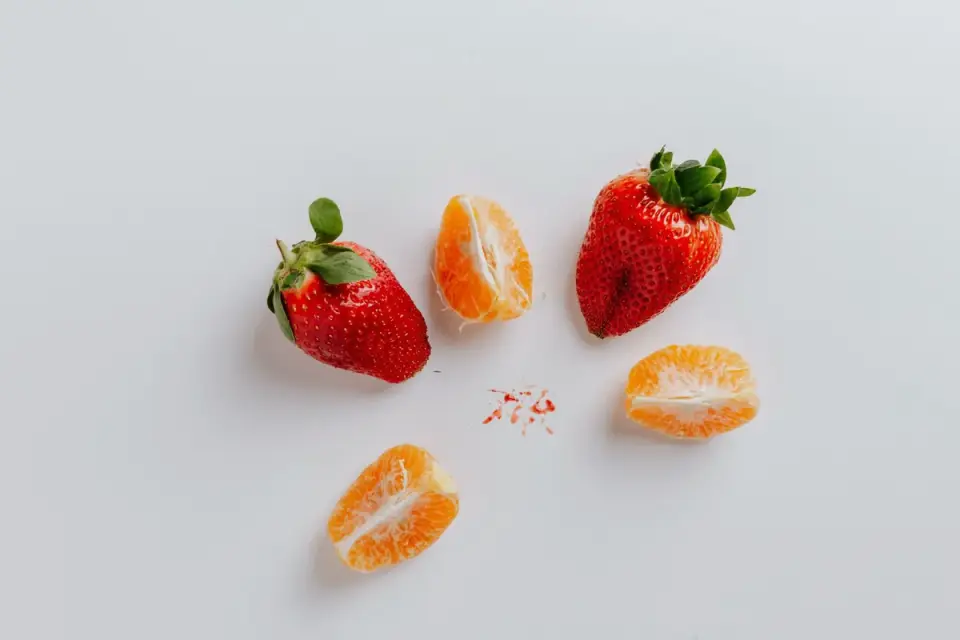
The distinction that actually matters is fresh fruit versus everything shaped like it. A whole, washed strawberry and a spoonful of strawberry-flavored yogurt are not the same food. The ASPCA doesn’t flag fresh strawberries as toxic, and there’s no documented case of a serious systemic reaction from a dog eating a normal quantity of plain fruit — worst case is temporary digestive upset from the sugar and fiber load. Canned strawberries in syrup, sweetened strawberry preserves, and some flavored dairy products are a different story, because they can carry added sugar or, in a smaller subset of products, xylitol. Xylitol toxicity is a real emergency in dogs and has nothing to do with the strawberry itself; it’s a manufacturing additive that happens to ride along in certain packaged foods. If you’re feeding fruit, feed the fruit — skip the aisle products built around its flavor.
Fiber is where I want owners to slow down, because this is the part that gets waved off as harmless. Strawberries carry meaningful soluble and insoluble fiber, which is generally a good thing for a dog with a resilient gut and a bad idea to stack on top of an already compromised one. Dogs with exocrine pancreatic insufficiency are the clearest example: a JAVMA review notes that “EPI is treated by pancreatic enzyme replacement therapy, nutritional management (low-residue diets with moderate fat content), and supplementation of cobalamin” — which is a direct argument against loading a high-fiber fruit onto that kind of digestive system, however innocent the fruit looks in isolation. The same logic extends more loosely to dogs recovering from pancreatitis, dogs with inflammatory bowel disease, and dogs mid-transition on a new senior diet, where any new fiber source is best introduced in small test amounts rather than a generous handful.
A useful comparison here is sweet potato, another produce-aisle favorite that owners assume is automatically fine because it’s a vegetable. It isn’t automatically fine either — preparation, portion, and the individual dog’s baseline digestion decide that, not the food group. Strawberries follow the same rule. If you’re already watching a dog’s fiber intake because of loose stool or gas, a fruit that adds more fiber on top of a fiber-forward kibble is worth skipping rather than defending on principle.
Here’s where I’ll be direct about the joint angle, since that’s the lens this publication exists to apply. Strawberries contain anthocyanins and vitamin C, compounds that food-therapy frameworks — including the traditional Chinese veterinary medicine tradition I draw from alongside Western neurology — associate with reducing oxidative stress in tissue. That’s a real, mechanism-grounded idea, and it’s one reason a cooling, antioxidant-rich fruit shows up in some integrative feeding plans for older dogs. It is not, under any read of the current evidence, a treatment for osteoarthritis, a disc problem, or a stiff hip. When an owner tells me their dog’s mobility has changed, my answer is never a fruit bowl. It’s imaging to see what the joint or the spine is actually doing, paired — where it fits the case — with acupuncture, because needle placement can influence pain signaling in ways a plate of berries simply can’t reach. Food therapy earns a seat at that table as a supporting layer, not as the diagnosis or the plan.
That’s also the line I’d draw for any owner reading this because their dog seems achy and someone recommended fruit as the fix. Strawberries are a fine treat. They are not a substitute for finding out what’s actually wrong, and if your dog’s stiffness is new, worsening, or paired with reluctance to jump, climb stairs, or rise after resting, that’s a conversation for imaging and an exam — not a bigger portion of berries. For dogs already on a joint supplement regimen, a few strawberries as an occasional treat won’t interact with anything meaningful; they simply aren’t doing the supplement’s job.
Where does that leave the practical answer? Fresh, washed, sliced strawberries in small quantities are a reasonable treat for most healthy dogs. Skip the syrup, skip the flavored dairy, watch the fiber load in dogs with digestive disease, and don’t let antioxidant food-therapy logic drift into treating a joint problem you haven’t actually diagnosed. The fruit is fine. The reasoning behind why you’re feeding it is what needs to hold up.
Frequently asked questions
How many strawberries can a dog eat?
Most sources suggest treats stay under about 10% of daily calories, which in practice means one to a few sliced strawberries for an average-sized dog, scaled down further for small breeds.
Are strawberry leaves or stems dangerous?
They aren't considered toxic, but the fibrous, slightly tannic texture can cause mild GI upset in some dogs, so trimming them before serving is a reasonable habit.
Can dogs eat frozen strawberries?
Plain frozen strawberries, cut into manageable pieces, are generally treated the same as fresh ones — the concern is choking size for small dogs, not the freezing itself.
Do strawberries help with joint inflammation?
Strawberries contain antioxidant compounds that food-therapy frameworks associate with reducing oxidative stress, but no clinical evidence supports treating a diagnosed joint condition with fruit alone.
Sources
- Can Dogs Eat Strawberries? — American Kennel Club
- Can Dogs Eat Strawberries? Benefits and Risks — PetMD
- Toxic and Non-toxic Plants: Strawberry — ASPCA
- Exocrine pancreatic insufficiency in dogs and cats — JAVMA