Fetch vs. Structured Walks: Which Actually Serves a Dog's Joints Better?
A veterinary nutritionist compares the joint mechanics of fetch and structured walking, and explains which one deserves the bigger share of a dog's week.
Fetch and walking aren't rivals; one loads the joint, one conditions it, and most dogs need both in the right ratio.
On this page
A three-year-old Vizsla named Penny used to arrive at my clinic limping every few weeks, always after the same thing: a Saturday morning at the dog park where her owner threw a tennis ball forty or fifty times in a row. Penny wasn’t unfit. She was, if anything, one of the leaner, more muscled dogs on my schedule that spring. But she was doing high-speed, high-torque stops and pivots on a body that had had almost no lower-intensity conditioning to prepare it. Her owner had assumed that because Penny “loved” fetch and came home tired, it counted as her exercise for the week. It counted as exertion. It didn’t build the tissue that was absorbing the impact.
That distinction is really the whole question. Is fetch or walking better exercise for a dog? The honest answer is that they’re not doing the same job, and treating them as interchangeable is where a lot of the soft-tissue and joint complaints I see in exam rooms actually start.
What each one actually asks of a joint
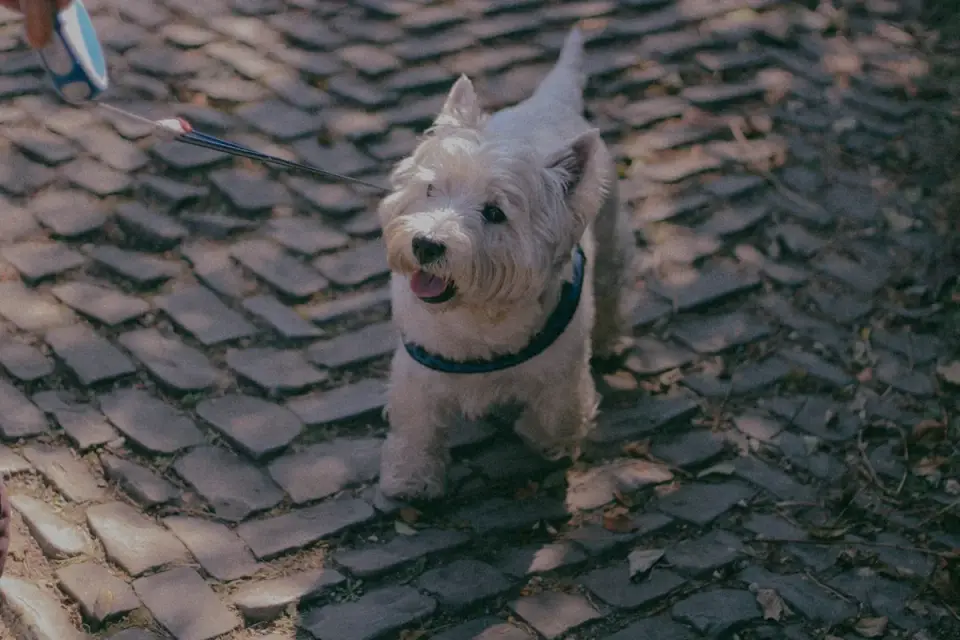
Structured walking is a low-impact, largely linear activity. The dog moves forward at a controlled pace, load passes through the limbs in a predictable, repeating pattern, and there’s time between strides for muscles to stabilize the joint before the next one lands. It’s the closest thing to controlled conditioning that most owners can do without equipment.
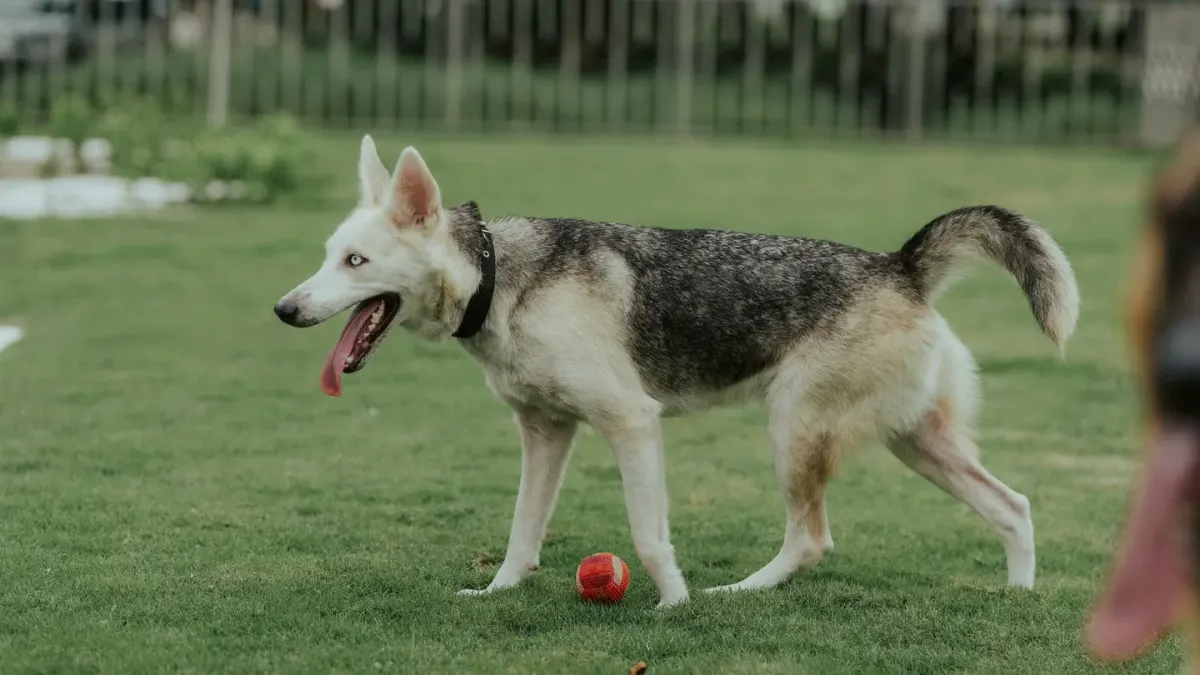
Fetch is a different physiological event. A full sprint-stop-pivot-retrieve cycle involves rapid acceleration, an abrupt deceleration that can load the stifle and hip several times body weight, and a tight turn on a joint that hasn’t had time to warm up through the motion. None of that is inherently bad — sport and working dogs do explosive movement all the time. The issue is volume and preparation: forty consecutive throws on a cold, unconditioned dog is a very different stimulus than an occasional retrieve worked into a longer, easier session.
Where I land, and the counterargument I take seriously
My view: structured walking should be the backbone of a dog’s weekly activity, with fetch used as a shorter, deliberately limited addition rather than the main event. The counterargument I hear most from owners is that their dog is clearly more engaged by fetch — tail up, fully focused — and that engagement matters for a dog’s overall wellbeing, not just its joints. I don’t dismiss that. Mental stimulation and drive satisfaction are real welfare considerations, and a dog that never gets to run and chase is missing something a slow walk can’t replace.
But wellbeing and joint mechanics are two different ledgers, and I think owners conflate them. You can protect both by keeping walking as the daily default and treating fetch as a bounded session — five to ten retrieves, on a surface with traction, ideally after the dog has already warmed up on a walk — rather than the whole outing. That’s a compromise position, not a ban on fetch, and it’s the one I actually give clients.
Where joint-support ingredients fit, and where they don’t
Exercise choice and joint-support nutrition are addressing different parts of the same problem: one manages mechanical load, the other supports the tissue absorbing it. Glucosamine and chondroitin are among the most studied joint support ingredients for dogs, and there’s real mechanistic evidence behind both. A review published in the Journal of Veterinary Medical Science describes how glucosamine HCl can help prevent experimentally induced cartilage degradation in vitro — evidence from the lab bench, not a guarantee of outcome in a walking or fetch-playing dog. Separately, research published in Frontiers in Veterinary Science found that chondroitin supports healthy synovial fluid homeostasis, which is relevant to any joint under repeated mechanical stress, whether that stress comes from a mile of walking or a dozen hard stops chasing a ball.
Green-lipped mussel has drawn interest for its combination of omega-3 fatty acids and glycosaminoglycans. A study in Nutrients found that mussel-derived compounds alleviated paw swelling in an animal model and reduced serum markers of inflammation, including TNF-α and IL-17 — again, findings from an inflammatory-arthritis model, not a clinical trial in exercising dogs. I bring this up not to suggest a supplement offsets bad exercise habits — it doesn’t — but because owners often ask me whether a joint product can “cover” a high-impact activity like fetch. It can’t. What a supplement can realistically do is support the underlying tissue over time; it isn’t a substitute for choosing lower-impact activity when a dog’s joints are already compromised or aging.
The dog I keep thinking about
There was a nine-year-old Labrador, Baxter, sixty-two pounds, whose owner switched him almost entirely from fetch to leash walking after he started hesitating at the bottom of the porch steps in early spring. Nothing dramatic — no yelp, no obvious injury — just a pause before committing to the last step down, and a slower pace on the walk back from the mailbox that his owner hadn’t noticed until she compared it to a video from the previous fall. Over about six weeks of consistent, unhurried walks instead of ball-throwing sessions, the hesitation at the steps became less frequent. I can’t tell you that swap was the reason — dogs change for lots of reasons, and this is one case, not a study. But it’s the kind of pattern that makes me ask, before recommending fetch to any owner of a middle-aged or senior dog, what the rest of that dog’s week already looks like.
Practical next step
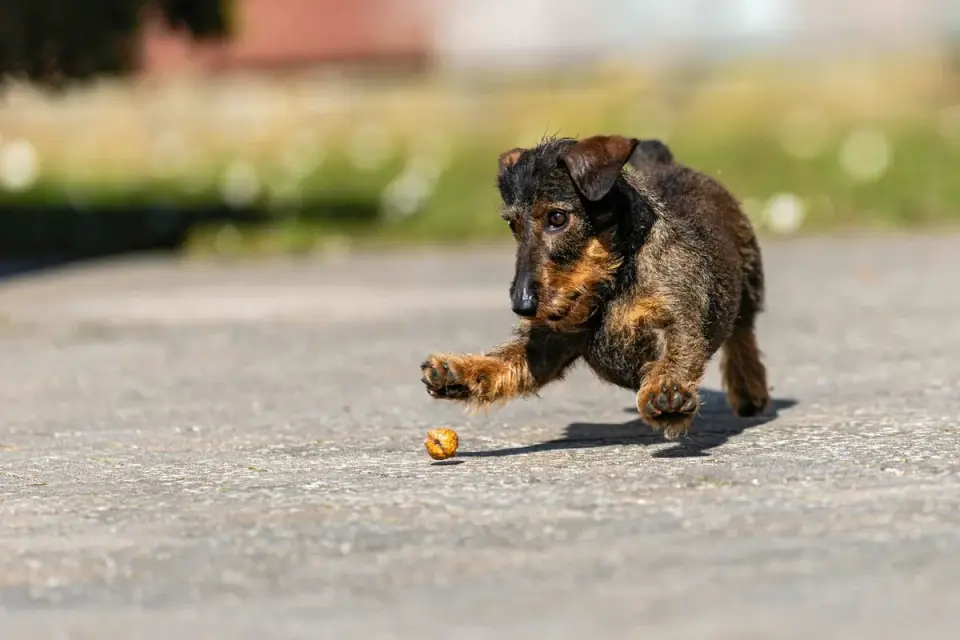
If your dog already has a diagnosed joint issue, is a giant or heavy breed, or is past middle age, I’d lean the week heavily toward structured walking and keep fetch occasional and short. If your dog is young, lean, and well-conditioned, a bounded round of fetch layered onto a walking routine is reasonable. Either way, the walking itself matters more than most owners assume — for related reading, see Dog Treadmill vs. Outdoor Walking: What Actually Protects the Joints and How Long Should a Dog’s Walk Be?. Owners of small dogs should also look at Exercise Ideas for Toy and Small Breeds: A Joint-Smart Guide, since a ten-pound dog’s fetch mechanics aren’t the same as a Labrador’s. And if your dog already shows stiffness, Swimming vs Walking for an Arthritic Dog: What Actually Protects the Joint covers a lower-impact alternative worth discussing with your vet.
Where this is going, in my view, is toward owners thinking of “exercise” as a portfolio rather than a single activity — walking as the steady base, fetch as an optional, deliberately dosed addition, and joint-support ingredients as a piece that helps the tissue underneath it all, not a workaround for either one.
Frequently asked questions
Is fetch bad for a dog's joints?
Not inherently, but a high volume of hard stops and pivots without warm-up or conditioning is more mechanically demanding than steady walking, so it's better used in short, bounded sessions than as a dog's main daily exercise.
Can walking alone keep a dog fit enough without fetch?
Yes, for most dogs. Consistent structured walking builds and maintains cardiovascular and musculoskeletal conditioning; fetch adds intensity and mental engagement but isn't required for baseline fitness.
Do joint supplements let a dog play fetch safely?
No supplement offsets high-impact activity. Ingredients like glucosamine, chondroitin, and green-lipped mussel are studied for supporting joint tissue and synovial fluid, not for neutralizing mechanical stress from a specific activity.
Sources
- Glucosamine and Chondroitin Sulfate Effects on Cartilage Degradation — Journal of Veterinary Medical Science
- Chondroitin and Synovial Fluid Homeostasis — Frontiers in Veterinary Science
- Blue Mussel Oil and Green-Lipped Mussel Extract in Adjuvant-Induced Arthritis — Nutrients