Helping a Dog Who Is Afraid of Car Rides
A practical, evidence-grounded plan for a dog scared of car rides — what to change first, what calming ingredients can and can't do, and when to call a trainer.
A dog scared of car rides usually needs desensitization first, calming support second — reverse that order and you're just medicating a training gap.
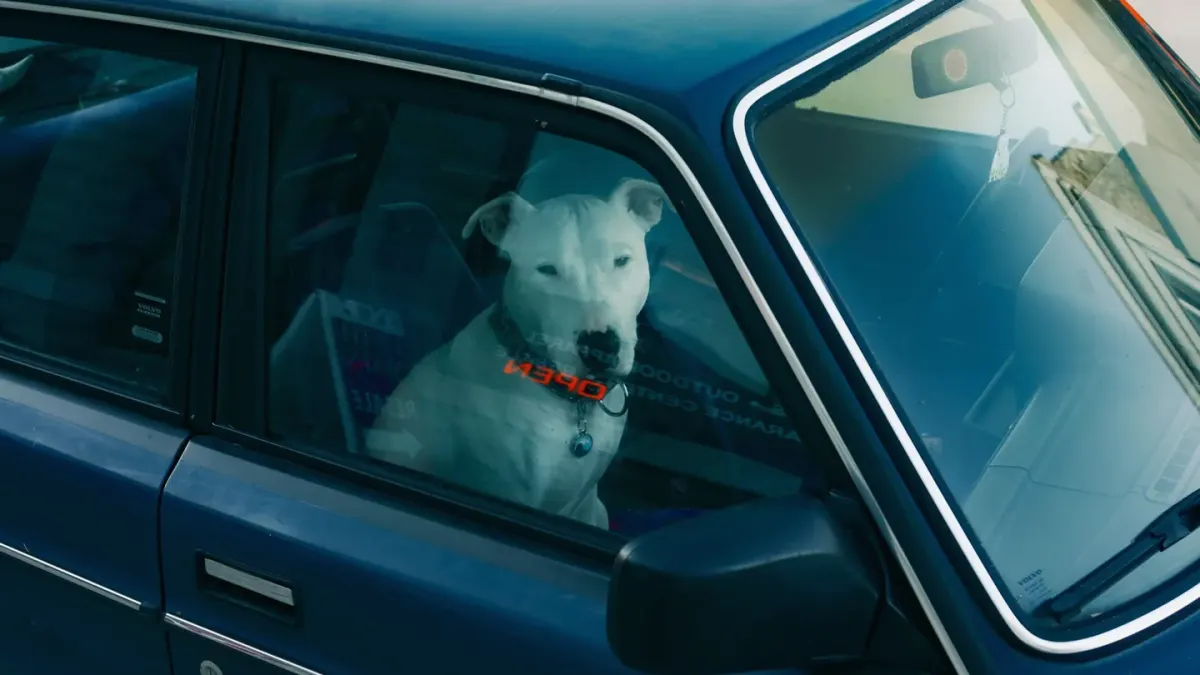
On this page
Otis was a five-year-old beagle mix, thirty-one pounds, who’d ridden in cars fine as a puppy. Then, at around age three, his owner told me, he started drooling the second the garage door opened. By the time they pulled out of the driveway he was pacing the back seat, panting hard, and once — on a hot July afternoon — he vomited before they’d gone two miles. Nothing traumatic had happened that anyone could point to. It had just crept in, ride by ride, until the car itself became the trigger. That’s the pattern I see more often than the classic “one bad car accident” story: gradual, learned, and reversible if you catch it early.
The short version: retrain the association before you reach for calming support. A dog scared of car rides is telling you the car predicts something unpleasant — motion sickness, a vet visit, a single scary noise — and now anticipates it every time. Desensitization and counterconditioning fix that association. Calming ingredients can lower the baseline arousal enough for training to work, but they don’t undo the learned fear on their own, and treating them as if they would is where I see owners lose months.
What car fear actually looks like versus generalized anxiety
Not every anxious-in-the-car dog has a car-specific phobia. It helps to separate the two before you build a plan, the same way it’s worth separating boredom from separation anxiety before treating either one. A dog with true travel-specific fear is usually fine at home, fine on walks, and only shuts down at the sight of the car door or the sound of the engine. A dog with broader generalized anxiety tends to show the same drooling, pacing, and panting in the car, at the vet, during thunderstorms, and sometimes even during normal daily transitions. The first dog needs targeted counterconditioning to the car. The second needs a broader behavioral plan, and the car is just one symptom of it.
Watch for lip licking, yawning out of context, whale eye, tucked tail, refusal to jump in, excessive drooling before the car even starts moving, and vomiting or diarrhea tied specifically to travel. Some of this overlaps with plain motion sickness, which is worth ruling out with your veterinarian before you assume it’s purely behavioral — a dog who’s nauseated every single ride isn’t going to respond to desensitization alone.
The step-by-step plan I actually give owners
Start with the car parked, engine off, door open. Feed meals or high-value treats near it, then in it, over several days — no driving involved yet. Once your dog climbs in voluntarily and settles, add the engine running while still parked. Only after that stays calm for multiple sessions do you add movement: down the driveway and back, then around the block, gradually lengthening trips and always ending before the dog gets worked up, not after.
Keep every session short. Five relaxed minutes beats twenty stressful ones, and ending on a calm note matters more than covering distance. If your dog is car-sick as well as anxious, talk to your vet about timing meals and whether an anti-nausea medication makes sense before training sessions — a nauseated dog can’t learn a calm association no matter how good the technique is.
Restraint matters here too, both for safety and for how contained a dog feels. A properly fitted crate or a crash-tested harness can make a fearful dog feel more secure than free-roaming the back seat, and picking the wrong one can undercut training progress. If you haven’t settled on a setup, it’s worth comparing the tradeoffs in Dog Car Seat Belt vs Crate vs Barrier: Which Restraint Is Safest? before you start — retrofitting a calmer dog into new gear later just adds another adjustment.
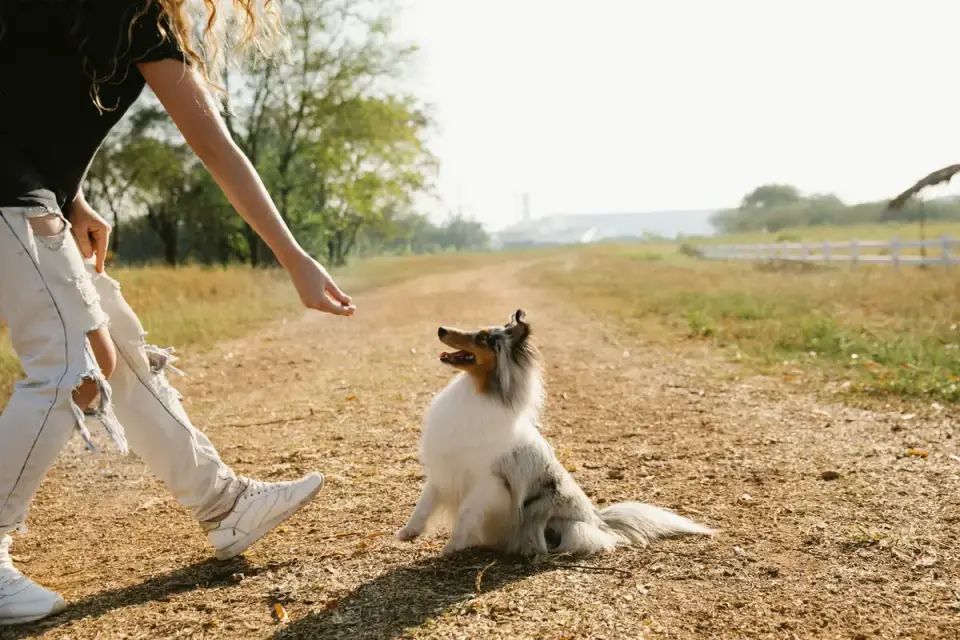
Where calming ingredients genuinely fit — and where the evidence is thin
This is where I want to be precise, because owners often want a single supplement to solve what’s really a training problem. A few ingredients have real support behind them for general anxiety and stress, even though none of them are studied specifically for canine car phobia.
L-theanine, the amino acid found in tea, has been studied for its calming properties, and a review in Molecular Psychiatry found a meaningful effect in one human trial using 400 mg/day over eight weeks — notably, that’s a human dosing study, not a canine one, so it tells us the mechanism is plausible rather than giving us a dog-specific dose. Ashwagandha, specifically the KSM-66 extract, has more consolidated support: a systematic review in Cureus covering multiple randomized controlled trials concluded it has a moderate positive impact on stress reduction and cognitive performance. Chamomile sits at the weaker end of the evidence — a review in Biomedicines notes that for most species, evidence is derived mainly from preclinical studies or traditional use, which is a fair way of saying: plausible, traditionally used, not yet proven the way ashwagandha’s human trials are.
None of that adds up to “give a supplement and skip the training.” It adds up to: these ingredients may help support a calmer baseline while you do the actual behavioral work, and the strength of that support varies a lot by ingredient. I tell owners to think of calming support as lowering the volume on background anxiety, not as an off switch for a specific learned fear.
Where I land with owners
I worked with a lab mix named Piper, four years old, sixty-four pounds, whose owner had tried giving her a calming chew before every drive for nearly two months with no real improvement — Piper still froze at the car door. We stopped the drives entirely for a week, started feeding meals in the parked car, and by week three she was climbing in on her own for treats. The calming support went back in once we started adding movement, and it seemed to take the edge off enough that she could actually focus on the training instead of just reacting. That ordering — behavior first, support layered in once the plan is working — is what I’ve watched hold up again and again, and it’s a different problem entirely from the leash reactivity I see mislabeled as aggression; if you’re trying to sort that out too, the distinctions in Barrier Frustration vs Aggression: What’s the Difference in Dogs on Leash? are a useful parallel for how specific the trigger usually is.
If a dog is still panicking after several weeks of consistent, gradual exposure, or if the fear is paired with aggression, self-injury, or full shutdown, that’s the point to bring in a certified trainer or veterary behaviorist rather than push further on your own. Most car-fear cases don’t need that level of intervention, but the ones that do benefit from it early rather than after months of reinforced dread.
Frequently asked questions
How long does it take to help a dog get over car fear?
Mild cases often improve within two to four weeks of short, consistent desensitization sessions; dogs with a longer history of car-related fear or genuine motion sickness can take several months, and progress isn't always linear.
Can calming chews alone fix a dog scared of car rides?
Not reliably. Ingredients like L-theanine and KSM-66 ashwagandha have evidence for general stress support, but none are studied specifically for travel phobia, and they work best alongside — not instead of — gradual retraining.
Sources
- Chamomile × Anxiety & Stress — Biomedicines
- KSM-66 Ashwagandha × Anxiety & Stress — Cureus
- L-Theanine × Anxiety & Stress — Molecular Psychiatry