Dog Car Seat Belt vs Crate vs Barrier: Which Restraint Is Safest?
A vet compares dog seat belts, crates, and cargo barriers using actual crash-test data, and explains which restraint category she recommends and why.
For most dogs, a crash-tested crate secured with tie-down straps outperforms a seat belt harness or a cargo barrier alone.
On this page
A ten-year-old Labrador named Gus came into my exam room three days after his owner slammed the brakes to avoid a merging truck. Gus had been riding loose in the back seat, and the sudden stop threw him into the console hard enough to bruise his shoulder and leave him limping for a week. Nothing was broken. But watching an older dog with already-stiff joints absorb an impact he never saw coming is the kind of thing that changes how you counsel the next owner who sits across from you.
That’s the conversation I have on repeat: seat belt, crate, or barrier? Owners want a simple answer, and I give them one — but only after I explain what the actual crash data shows, because the differences between these three categories are bigger than most people expect.
The verdict, stated plainly
If your dog rides in the back seat, a crash-tested hard-sided crate anchored with its own tie-down straps is the restraint category with the strongest independent testing behind it. A well-fitted crash-tested harness is a reasonable second choice, especially for dogs too large to crate comfortably or for owners who need to also load cargo. A cargo barrier is the weakest option of the three on its own — it stops a dog from becoming a projectile toward the front seats, but it does very little to protect the dog itself.
That’s my starting point with clients, and then we talk about why.
Why “crash-tested” is doing most of the work
Here’s the mechanism problem: a 50-pound dog moving at 30 mph generates roughly the same force in a sudden stop as the dog’s weight multiplied many times over. A flimsy harness or a plastic carrier with weak latches simply cannot absorb that load. It buckles, the clip shears off, or the zipper fails, and the restraint stops functioning at the exact moment it matters.
This is why independent crash testing exists at all. There is no federal requirement in the US that pet crates, carriers, or harnesses be crash-tested before they’re sold. The Pet Carrier & Crate Crash Test Research: Center for Pet Safety has run the most rigorous independent testing program on the market, using a certified crash-test-dog surrogate and simulated frontal-impact sled tests through an NHTSA-contracted lab. Their 2013 Harness Study Results: 2013 Harness Study found major differences in performance among popular harnesses on the market at the time, with several failing catastrophically under load — meaning the harness released the dog, or broke apart, during the test.
Subaru of America funded a related round of crate and carrier crash testing with CPS, and the resulting Subaru U.S. Media Center: press release described the results as both promising and, in places, genuinely shocking — some carriers held up well under simulated impact, while others failed structurally. The takeaway for owners isn’t “buy any crate” or “buy any harness.” It’s that the label “crash-tested” only means something when it’s backed by a named, repeatable, independent protocol — not a manufacturer’s internal claim.
Where each restraint category actually wins
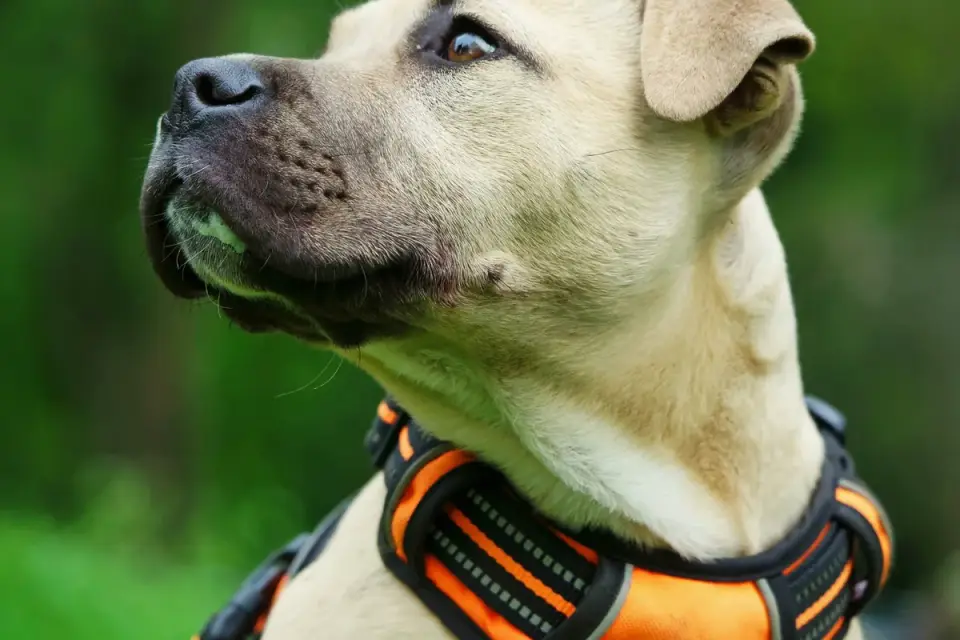
Seat belt harnesses. A properly fitted, crash-tested harness clips into the vehicle’s existing seatbelt buckle, so it doesn’t require extra hardware. That makes it the most practical option for large dogs who can’t comfortably fit a crate in a mid-size sedan, and it lets a dog sit upright rather than being confined. The tradeoff is fit: a harness that’s loose at the chest strap can allow the dog to be flung forward even if the buckle itself holds, and a harness sized for a Labrador will not properly restrain a Chihuahua no matter what the packaging says.
Crates and carriers. A rigid, well-anchored crate limits how far a dog can travel during a sudden stop and protects against being ejected from the vehicle entirely — a real risk in rollover crashes. The Center for Pet Safety test results consistently show that crate performance depends heavily on how it’s anchored: a crate simply placed on the seat, unsecured, offers little more protection than no crate at all, because the whole unit becomes a projectile. Tie-down straps that lash the crate to the vehicle’s frame or seat anchors are what make the difference.
Cargo barriers. A barrier keeps a dog contained to the cargo area or back seat and out of the front of the vehicle, which matters because a loose dog thrown into the front seat during a crash can seriously injure the driver or a passenger, and airbag deployment can be fatal to a pet positioned near the dash. But a barrier does nothing to stop the dog from being thrown around inside the space it’s confined to. It’s a containment tool, not a restraint, and I tell owners not to treat it as a substitute for one.
What the AVMA actually says, and where the evidence is still thin
The American Veterinary Medical Association takes the position that it is unsafe for pets to ride loose in a vehicle, and recommends that dogs travel in the back seat, properly restrained in a crate, carrier, or harness — never in the front seat, where airbag deployment can seriously injure or kill a pet even while restrained. That guidance is squarely supported by the evidence. Where the evidence gets thinner is in ranking specific restraint types against each other in real-world crash conditions, rather than a controlled sled test. The AVMA itself notes that development of evidence-based crash testing for kennels and harnesses remains an ongoing need, which tells you the science, while directionally clear, is not yet exhaustive.
I’ve watched this play out with an eleven-year-old dachshund named Biscuit, whose owner switched from a soft carrier to a crash-tested hard crate after we talked through the CPS results together. The dog had mild intervertebral disc changes on imaging, and the owner’s biggest worry wasn’t the crash risk in the abstract — it was that Biscuit’s back genuinely could not tolerate being thrown around during ordinary hard braking on the highway commute they made twice a week. We picked a crate sized so he could stand and turn but not slide, anchored it with the tie-down straps behind the driver’s seat, and the owner reported back weeks later that the ride itself seemed calmer, not just safer. That’s not data. It’s one dog. But it’s the kind of tradeoff — space, cost, a dog’s tolerance for confinement — that the crash-test numbers alone don’t capture, and it’s why I walk owners through both.
What I tell owners in the exam room
For most healthy adult dogs riding in a sedan or SUV back seat, I lead with the crash-tested crate, anchored properly, every time — it’s the category with the clearest independent testing behind it. For dogs with joint disease, disc disease, or any condition where sudden jarring is a real concern, I weigh that even more heavily, because an unsecured or poorly fitted restraint doesn’t just risk a crash injury, it risks daily micro-jarring on ordinary stops. A crash-tested harness is my second recommendation, mainly for large dogs or owners who need the cargo space a crate would take up. A cargo barrier is fine as an add-on, never as the only restraint.
If you’re setting up for a first road trip or flight, our guides on how to fly with a dog and airline-approved carriers cover the fit and structural questions that matter beyond the car. And if car rides reliably end in vomiting rather than injury, that’s a separate issue worth reading about in why a dog vomits every time it goes for a car ride — motion sickness and restraint safety are two different problems that owners often lump together.
Where the evidence is strong, and where it isn’t
Strong: unrestrained pets are a real risk to themselves and to vehicle occupants, and independent crash testing shows meaningful, measurable differences between products marketed as “safe.” Thin: head-to-head data comparing harness, crate, and barrier outcomes in actual real-world crashes, rather than laboratory sled tests, is limited, because that data would require tracking crash outcomes across thousands of real incidents with known restraint types — which nobody has done yet. Until that exists, independent lab testing is the best evidence available, and it points toward anchored crates as the strongest single category.
Frequently asked questions
Is a dog seat belt harness enough on its own, or does it need a crate too?
A crash-tested harness alone can be sufficient for many dogs, particularly larger ones, as long as it clips into the vehicle's seatbelt system and fits snugly at the chest and shoulders. It does not need to be combined with a crate, but a loose or poorly fitted harness offers little real protection.
Does a cargo barrier protect my dog in a crash?
Not on its own. A barrier mainly protects the people in the front seat by keeping the dog contained to the back or cargo area. It doesn't limit how far the dog moves within that space during a sudden stop, so it's best used alongside a crate or harness, not instead of one.
How do I know if a crate or harness is actually crash-tested?
Look for a named, independent testing protocol, such as the ones run by the Center for Pet Safety, rather than a manufacturer's own marketing claim. There's currently no federal requirement that pet restraints be crash-tested, so "crash-tested" on packaging isn't regulated language.
Sources
- Pet Carrier & Crate Crash Test Research — Center for Pet Safety
- 2013 Harness Study Results — Center for Pet Safety
- Subaru of America and Center for Pet Safety Studies Showcase Promising and Shocking Crash Test Results of Pet Crates and Carriers — Subaru U.S. Media Center
- Safe non-commercial transport of pets in motor vehicles — American Veterinary Medical Association