How Articular Cartilage Changes as a Dog Ages
A plain-spoken guide to thinning cartilage, proteoglycan loss, and stiffness in aging dogs, plus supportive care.
Aging cartilage thins and dries out, so I pair steady movement with hands-on support to protect comfort.
On this page
Maya, a seven-year-old 72-pound Golden Retriever, started pausing at the top of the two back-deck stairs after her morning walk around Green Lake. Her owner counted it first: three hesitations in one week in October, then a slow rise from her bed that took a full eight seconds instead of two. The rear legs were not lame, just deliberate. On my table her hips moved freely, but the stifles felt thick and her paraspinals were ropy under my thumbs. That pattern is the classic cartilage story, where the smooth gliding surface inside the joint begins to lose water and resilience long before X-rays look dramatic.
Cartilage does not have to be perfect to be comfortable, but it does need support.
What does healthy articular cartilage do for a dog?
Think of articular cartilage as a dense, wet sponge bonded to the ends of bones. It is mostly water held in a mesh of collagen and large cushioning molecules called proteoglycans. That structure spreads load and lets the femur glide on the tibia with almost no friction.
Blood vessels do not feed this tissue. Nutrition arrives by diffusion from synovial fluid during loading and unloading, which is why gentle motion matters. The Merck Veterinary Manual describes osteoarthritis in dogs as a progressive loss of that cartilage matrix with secondary bone and soft-tissue change, a useful frame for aging even before formal arthritis is diagnosed.
Chondrocytes, the lone resident cells, maintain the mesh. They respond to pressure, rest, and inflammation.
How does that sponge change with age?
With age, proteoglycan content falls and collagen fibers loosen. Water content drops, the surface frays, and the tissue stiffens instead of rebounding. Load that once spread evenly now concentrates on small patches.
I explain it to owners as grooved ice after a public skate. The rink still works, but the glide is gone.
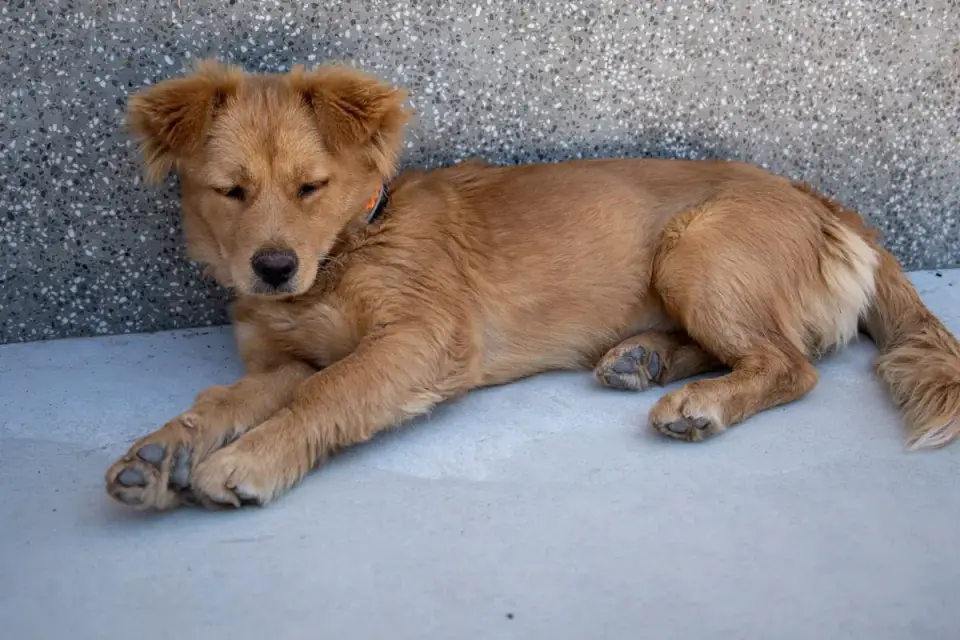
A 10-year-old 48-pound Border Collie mix I followed through a Portland winter showed the tradeoff clearly. His owner had added a 2-mile off-leash run every Saturday to “keep him young,” plus fish-oil chews from the grocery aisle. For six weeks he looked brighter, then the Monday stiffness arrived and stayed for three mornings in a row. On palpation his quadriceps were corded, his lumbars guarded, and his sit was shifted left. We cut the long run to four brisk 15-minute leash walks per day, added Tui-na compression along the hind-limb channels, and kept acupuncture alongside his veterinarian’s weight and NSAID plan. Within 18 days his morning rise shortened, yet the lesson held: more impact had accelerated irritation in thinning tissue.
Rest alone would not have fed that joint either.
Why does stiffness show up first after rest?
Synovial fluid thickens with disuse and thins with movement. When cartilage is young and wet, one or two steps re-lubricate the joint. When it is older and drier, the owner sees the “warm-up walk,” that first-minute shuffle that smooths by the end of the block. VCA Hospitals notes this age-related stiffness, reduced activity, and difficulty rising as common early signs owners notice at home.
Inflammation amplifies the loop. Frayed fragments can irritate the synovium, the synovium releases mediators, and chondrocytes slow repair. My manual read often finds the secondary muscle guarding before the joint itself looks swollen.
Targeted touch may help support local circulation and comfort around that guarded tissue, not rebuild cartilage.
Where do supplements and hands-on care fit?
No chew regrows cartilage. That limit shapes my counsel. Conventional care — weight control, tailored exercise, flooring, ramps, veterinary pain assessment — carries the plan. Alongside it, I use acupuncture, gentle chiropractic mobilization where appropriate, and Tui-na bodywork to address compensation, plus nutritional tools that may help support joint structure and mobility.
Evidence is uneven across ingredients, so I stay inside structure/function language. For background on comparing options, see The Best Joint Supplement for Dogs: What Holds Up to an Orthopedic Read and the label questions in the Dog Joint-Support Supplement Label Disclosure Checklist. For ingredient-specific context, owners often ask about Glucosamine for a Dog Struggling With Stairs at Night: What the Evidence Actually Supports.
A PubMed: peer-reviewed review of canine cartilage biology details how chondrocyte activity and matrix turnover decline with age and load, which is why I prioritize consistent low-impact loading over weekend bursts.
When should the usual exercise advice bend?
A 13-year-old 19-pound Dachshund mix changed my standard talk about “more walks.” She lived in a second-floor walk-up with 22 stairs, slept through two of three daily meals, and yelped when lifted under the chest. Her owner worried she needed longer outings to protect muscle. We did the opposite for two weeks: carried her down those stairs in a sling, swapped one half-mile loop for three 5-minute sniff walks on grass totaling 140 yards, and added warm compresses plus light acupressure before bedtime. Night restlessness dropped from four wake-ups to one, and she chose the ramp on day nine without coaxing. Older spines and thin cartilage sometimes need less distance and more frequency, traction, and warmth.
Watch the dog in front of you, then adjust the formula.
That is the throughline as cartilage ages: thinner padding, drier glide, slower recovery. Steady weight, predictable motion, sure footing, prompt veterinary assessment, and calm manual support give that aging sponge its best chance to keep working.
Frequently asked questions
Does aging cartilage heal on its own?
Very slowly. Cartilage has no blood supply and chondrocytes turn over matrix gradually, so management focuses on protecting the remaining tissue, maintaining mobility, and veterinary pain control rather than regrowth.
What early signs suggest cartilage change rather than injury?
Short warm-up stiffness after rest, slower rising, reluctance on stairs or slick floors, and reduced willingness to jump, without sudden non-weight-bearing lameness, often points to age-related joint change worth a veterinary exam.
Sources
- Arthritis in Dogs — VCA Hospitals
- Age-related changes in articular cartilage — PubMed