How Synovial Fluid Changes as a Dog Ages
What happens to synovial fluid with age in dogs, why joints stiffen, and which daily habits may help support mobility.
Aging thins joint fluid and weakens its cushion, which is why steady movement and weight matter so much.

On a damp October morning, a 12-year-old shepherd mix pauses at the back door, front feet planted, hind legs slow to follow, while his owner watches the three seconds it now takes him to unfold from his bed. He is not limping exactly, just deliberate, and the first dozen steps look creaky before his gait smooths on the sidewalk. That morning stiffness is often where owners first meet synovial fluid, the small volume of viscous liquid that lubricates every diarthrodial joint, because what that fluid does well in youth it does less well with age.
In a young joint, synovial fluid behaves like a smart oil. Hyaluronan and lubricin give it thickness and slip, phagocytes and hyaluronan help keep debris low, and the fluid shifts between lubricating and shock-absorbing as load changes. A useful overview of that baseline physiology is summarized in StatPearls, which describes synovial fluid as an ultrafiltrate of plasma plus locally produced lubricating molecules. With years of load, low-grade inflammation, and cartilage wear, that recipe changes.
The clearest shift is in hyaluronan. Chains become shorter and less concentrated, so viscosity falls and the fluid thins. Less elastic fluid means more friction between cartilage surfaces, slower nutrient exchange to chondrocytes, and less cushioning during impact. Protein content often rises as permeability increases, inflammatory mediators linger longer, and clearance slows. The result is a joint that starts cold and warms with motion, exactly the pattern that shepherd mix showed on his first 40 yards to the corner.
Layering support around that aging fluid, rather than chasing one fix, is what I return to after decades of whole-patient work. Gentle daily motion circulates fluid, lean body condition lowers load, and nutrition that may help support normal joint structure deserves a steady trial. Evidence here is uneven, and plain language matters, so I favor may help support over promises.
By middle age the volume and feel of the fluid can shift as well. Some arthritic joints hold more fluid but of poorer quality — thinner, less stringy, with more white cells — while long-quiet joints may feel drier and tighter. Owners notice the second 5-minute warm-up that was once unnecessary, a reluctance to rise after a two-hour nap, or clicking on stairs. None of those signs diagnoses arthritis alone, but together they reflect a joint environment that no longer recovers overnight the way it did at three.
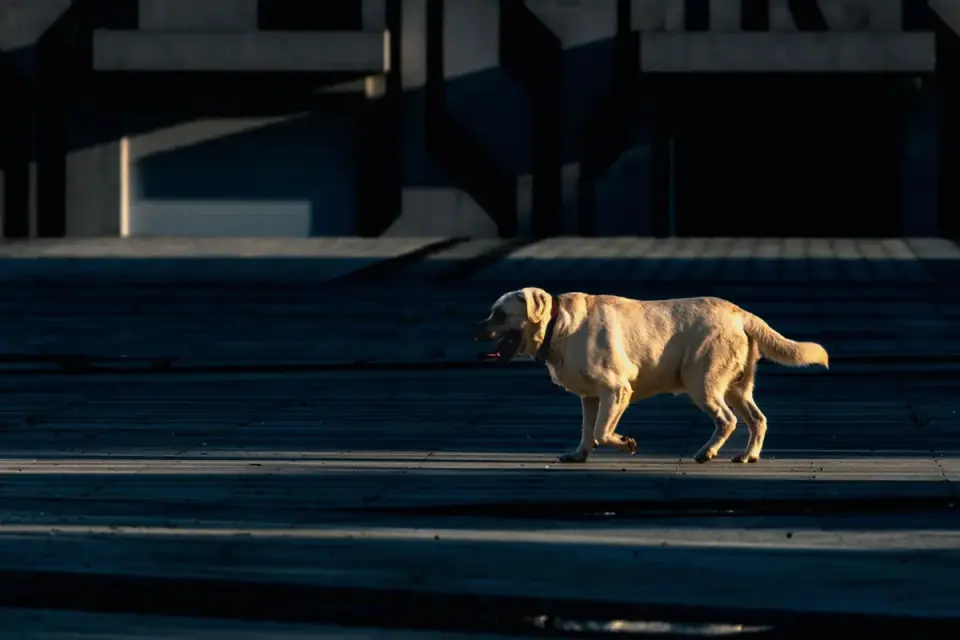
A 7-year-old Labrador Retriever who swims on weekends came in moving short behind after a winter of couch time and skipped walks. Her owner had tried a bargain joint chew for six weeks, then stopped when nothing changed, then blamed the stairs. The tradeoff was familiar: sporadic support plus deconditioning had left the joints stiffer than either factor alone would explain. Once she resumed four short leash walks per week and kept weight at 68 lb instead of drifting upward, the morning lag shortened, though damp days still slowed her first rise from the rug.
That gap between expectation and physiology is worth naming. Oral ingredients do not simply refill the joint like topping oil in a car. Glucosamine and chondroitin are among the most studied joint support ingredients for dogs, yet much of the cartilage work remains laboratory or mixed clinical evidence, and effects on fluid quality are indirect at best. One 2026 canine study, Frontiers in Veterinary Science, reported that chondroitin supports healthy synovial fluid homeostasis in the context described in Protective effects of turmerosaccharides rich extract of Curcuma longa L. in osteoarthritic dogs. That is structure and function language, not repair or cure, and it fits how I counsel owners to judge any routine.
What actually moves fluid health is unglamorous. Daily low-impact movement bathes cartilage, because cartilage has no blood supply and depends on compression and release to exchange nutrients with synovial fluid. Strength behind the joint matters as much as the joint itself. Ramps, rugs on slick floors, and measured walks preserve range without pounding, a theme explored further in Glucosamine for a Dog Struggling With Stairs at Night: What the Evidence Actually Supports and Does Hyaluronic Acid Actually Work for Dog Joints? What the Research Shows.
The usual advice has to bend for the stiff senior who cannot walk far enough to warm up. An 11-year-old beagle mix with a heart murmur could manage only one block before tiring, so her owner split movement into three 6-minute hallway sessions with rest between and added a low 14-inch ramp at the porch. After 21 nights of that pattern, the owner reported rising in two attempts instead of four, and the veterinarian kept the rest of the plan medical. Small circulation often beats occasional long effort.
Supplements sit inside that layered plan, not above it. Ingredients such as green-lipped mussel, glucosamine, and chondroitin have been studied for joint support, with stronger data for comfort and mobility markers than for direct fluid restoration. Label clarity helps owners compare honestly, as outlined in Dog Joint-Support Supplement Label Disclosure Checklist and Dog Hip and Joint Supplement: What Actually Matters Before You Buy One.
Thinning fluid is normal with age. Keeping it moving is a daily practice.
What would change if you measured progress in rises, walks, and weight rather than in good days and bad days?
Frequently asked questions
Why is my older dog stiff in the morning but better after a walk?
Aged synovial fluid is often thinner and less elastic after rest, so friction is higher until gentle movement circulates fluid and warms soft tissues. Persistent lameness, swelling, or crying out warrants a veterinary exam.
Can a supplement restore synovial fluid?
No supplement has been shown to refill or rebuild fluid directly in dogs. Some ingredients may help support normal cartilage and joint environment alongside weight control, exercise, and veterinary care.
Does more joint fluid mean a healthier joint?
Not necessarily. Arthritic joints can hold more fluid of lower quality, with lower viscosity and more inflammatory cells. Your veterinarian judges fluid by analysis and the whole joint, not volume alone.
Sources
- Synovial Fluid — StatPearls
- Protective effects of turmerosaccharides rich extract of Curcuma longa L. in osteoarthritic dogs — Frontiers in Veterinary Science