How To Help An Anxious Dog Through Fireworks Without Medication
A sports-medicine vet explains how to help an anxious dog through fireworks without medication using movement, safe space, sound, and calming ingredients.
Helping an anxious dog through fireworks without medication means planning movement, shelter, sound, and support early.

On this page
The garage door rattles with the first distant pop, and a 6-year-old, 68-pound Labrador mix shifts his weight from hip to hip, panting, pacing the hallway, nails clicking on hardwood. His owner watches his gait shorten, his back round, his whole body brace like he is preparing for a hard landing that never comes. That bracing is the decision point: load travels badly through a stiff, frightened frame, and the goal for the night is to keep movement loose, footing secure, and arousal low without reaching for prescription medication.
My verdict, plainly stated: layer the environment first, then add gentle structure/function support if you wish. The evidence for calming ingredients in dogs is thin or borrowed from other species, so they may help support relaxation as part of a whole-patient plan, never as a fix alone.
The Checklist That Actually Moves The Needle
- Unload the day early: long sniff walk, light play, and meals finished well before dusk so the gut and joints are settled.
- Build a den, not a crate trap: interior room, non-slip mat or bed, door left open, water nearby, leash and collar on for bolters.
- Mask sound and light: white noise or box fan, closed blinds, TV low, and stay home or arrange a calm sitter.
- Keep handling rhythmic: slow chest rubs, Tui-na style strokes along the ribs, paired with easy down-stay reps and food rewards.
- Consider calming nutrition early: chamomile, valerian, ashwagandha, or L-theanine formulas may help support calm, given on schedule, not mid-panic.
- Protect movement: non-slip runners, trimmed nails, ramps or gates to prevent frantic jumps off furniture.
- Know your exit line: trembling that will not break, escape attempts, vomiting, or possible injury means calling your veterinarian that night.
How the dog moves tells me how frightened he is. A loose trot to the water bowl is different from crabbing sideways with tucked hind limbs and a lowered head. Gait, load, and breath rate are my monitors through the evening, more honest than barking or hiding alone.
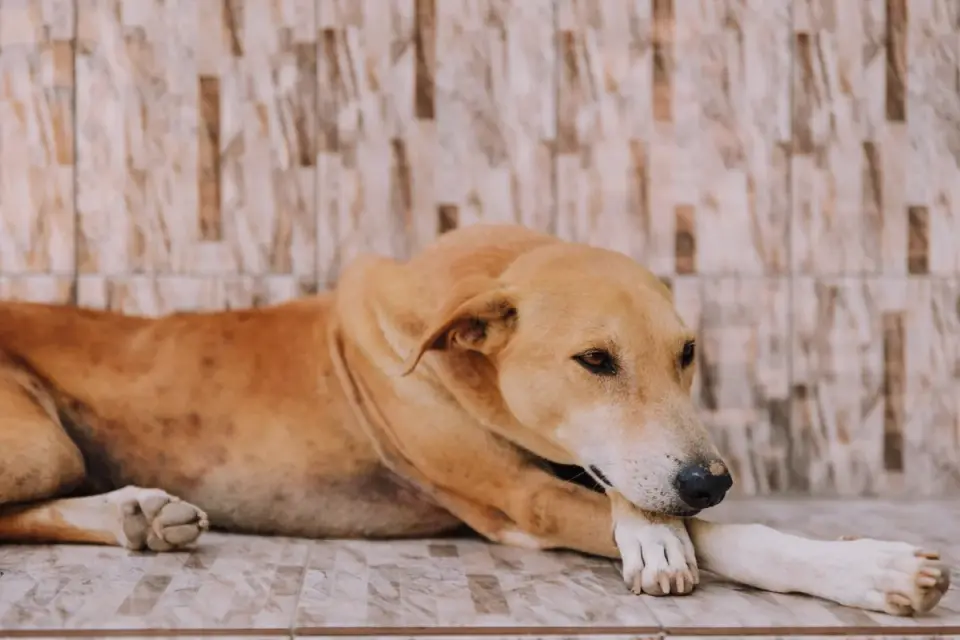
Why Fireworks Hit Body And Brain Together
Noise phobia is not disobedience. Sudden booms trigger sympathetic arousal, muscle tension rises, stride shortens, and a stiff dog loads shoulders and lumbar spine poorly. That is why I reason from the biomechanics of movement outward: a relaxed posture absorbs startle better, while a braced, pacing dog fatigues faster and risks slips, claw tears, or crashing through doors.
Owners often ask about Melatonin for Dogs: What the Mechanism Actually Supports (and Where Owners Overreach) and whether a chew can carry the night. My answer sits in Dog Calming Chews: What the Ingredients Actually Do, and Where I Draw the Line: useful layering, limited proof.
What Calming Ingredients May Help Support, And Where Evidence Stops
Chamomile and valerian root have a long traditional history for restlessness. In plain language, “Chamomile and Valerian Root have been used in traditional herbal care to support relaxation.” That framing matters, because as the review in Biomedicines notes, “For the remaining species, evidence is derived mainly from preclinical studies or traditional use.”
Ashwagandha is better studied in people than in dogs. “A systematic review analyzed multiple RCTs and concluded that ashwagandha has a moderate positive impact on stress reduction and cognitive performance,” according to the analysis in Cureus. That does not transfer directly to a Labrador under a table on July 4th, but it is why I place ashwagandha in the may-help-support category rather than dismissing it.
L-theanine follows the same pattern. It is described simply as an amino acid from tea studied for calm, and the human psychiatry literature is narrow: “except for one study on psychotic anxiety (SMD = 0.54; 400 mg/day for 8 weeks),” as summarized in Molecular Psychiatry. No dog fireworks dose follows from that sentence.
The strongest counterargument I take seriously is that none of this beats desensitization and environment. True. Sound conditioning over weeks, plus a safe den, does more than any chew. I still layer modalities into a whole-patient plan for comfort and performance because fireworks are unpredictable, neighbors do not follow schedules, and a small nutritional nudge plus handling plus footing may help support a softer landing for that night.
A second scenario shows the tradeoff. A 4-year-old, 42-pound cattle-dog mix did beautifully with a frozen lick mat and white noise during early pops, loose body, sighing into her bed by 8 p.m. Her owner then added a new herbal chew at 9 p.m. right as the finale started, hoping for fast help. By 9 p.m. the dog was drooling, refusing chicken, and pacing between rooms, not because the ingredient harmed her but because timing and novelty worked against her. New taste plus peak noise raised arousal instead of lowering it.
Putting The Night Together Hour By Hour
Start three weeks out if you can, three days out if that is what you have. Practice den time with chews and mats when it is quiet. Rehearse leashed potty trips after dark with high-value rewards. Keep exercise joint-friendly: hills and fetch the morning of the show leave a sore dog less able to settle.
During the show, stay boring. Breathe slowly, reward check-ins, keep cues easy. Slip leads by the door, tags on, windows latched. Afterward, watch how the dog rises from rest. Morning stiffness after a night of bracing is common in seniors and performance dogs, and gentle range-of-motion, short leash walks, and acupuncture or chiropractic follow-up where indicated round out recovery.
A later edge case changed how I counsel owners of older dogs. A 11-year-old, 54-pound husky mix with hind-limb weakness loved his basement den and settled well through midnight on New Year’s Eve, respiratory rate dropping from 72 to 36 breaths per minute by 12 a.m. At 1 a.m. he tried stairs alone to follow his owner and splayed on hardwood, unhurt but shaken. The lesson was not about anxiety at all: for seniors, confinement to one non-slip level matters as much as sound masking.
For related handling skills, see How to Keep a Dog Calm During a Vaccine Shot or Blood Draw and Chamomile vs L-Tryptophan for Calming Dogs: What the Evidence Actually Says.
Talk with your veterinarian before the holiday if panic escalates to escape, self-injury, or all-night trembling. Non-drug tools carry most dogs a long way, but safety sets the limit.
Sources
- Chamomile and valerian traditional use review — Biomedicines
- Ashwagandha stress and cognition systematic review — Cureus
- L-theanine and anxiety evidence synthesis — Molecular Psychiatry