How to Stop Your Dog From Jumping the Fence
A vet-written, step-by-step guide to stopping fence jumping — what drives it, how to fix the fence itself, and where calming support realistically fits.
Stopping a dog from jumping the fence usually means fixing the trigger, the fence, and the training gap at once.

On this page
Start here: check what’s on the other side of the fence before you touch the fence itself. A loose dog, a jogger, a squirrel den, or another dog’s yard is usually the reason a dog is jumping — not boredom in the abstract. Fix the trigger and the fence together, or neither fix holds for long.
I had a client bring in a two-year-old Vizsla named Remy, fifty-one pounds, who’d cleared a four-foot chain-link fence three times in one week that June. The owners first noticed it on trash day — the same truck, the same 7 a.m. window, every time. Remy wasn’t destructive indoors, slept fine, ate fine. He just could not tolerate that truck existing forty feet away without doing something about it. The fix wasn’t a taller fence. It was blocking his sightline to the street and giving him something else to do at 7 in the morning. Within about three weeks the jumping stopped, though I never told the owners it would be permanent without maintenance — dogs like Remy backslide the first time the routine changes.
What’s actually driving the jump
Before you spend money on fencing, figure out which category the dog is in, because the fix is different for each:
- A visible trigger — another dog, a person, wildlife, a delivery truck on a schedule.
- Under-exercised arousal — plenty of energy and nowhere productive to put it.
- Barrier frustration — the dog can see something he wants and the fence is the only thing between him and it. This overlaps heavily with what’s covered in Barrier Frustration vs Aggression: What’s the Difference in Dogs on Leash?, and the same underlying frustration response shows up at a fence line as it does on leash.
- Separation-related distress — jumping happens specifically when the dog is left alone, not when people are home. If that’s the pattern, read Boredom vs Separation Anxiety: How to Tell the Difference before assuming it’s a fence problem at all.
Watch the dog for two or three days before doing anything else. Note the time of day, what’s visible from the yard at that moment, and whether the jumping happens with people present or only when the dog is alone.
Fix the fence’s physical failure points first
Training takes weeks. A determined jumper can clear a fence tonight. Do the physical fixes immediately, in this order:
- Add height or an inward-angled extension. Coyote rollers or a 45-degree outward lean at the top defeats most climbers and jumpers without raising the whole fence line.
- Block the sightline. Solid privacy panels, shade cloth, or dense shrubs along the trigger side remove the visual cue that starts the sequence. This alone resolves a surprising number of cases.
- Check for launch points. Woodpiles, AC units, low decks, and even overturned buckets near the fence give a dog a running start. Move them.
- Bury or reinforce the base. If the dog isn’t jumping but climbing or digging under, the fence problem and the jumping problem are different projects.
Retrain the behavior, not just the fence
Once the physical exits are closed off, teach an incompatible behavior — something the dog physically cannot do while jumping. A rock-solid “come away” or “leave it” cued the instant the trigger appears works better than yelling after the dog is already airborne, because by then the behavior is already reinforced by whatever he saw.
Practice with the trigger at a distance where the dog can still respond to you — not point-blank at the fence line. Reward heavily for checking in with you instead of fixating on the fence. Move the distance closer only as the dog succeeds consistently, over days, not in one session.
Never punish a dog after he’s already jumped and come back. He’ll associate the correction with returning to you, not with the jump itself, and that makes recall worse the next time it matters.
Where calming support realistically fits
For dogs whose fence jumping is driven by real arousal or anxiety — not simple lack of exercise — some owners look at calming supplements alongside training. The evidence here is genuinely mixed by ingredient, and it’s worth being honest about that rather than treating every “calming” label the same.
A 2026 review in Biomedicines on chamomile’s effects on anxiety and stress notes that “for the remaining species, evidence is derived mainly from preclinical studies or traditional use” — meaning the strongest human and animal data isn’t there yet, even though chamomile has a long history of traditional use for relaxation. For ashwagandha, the picture is a little more developed: a systematic review published in Cureus “analyzed multiple RCTs and concluded that ashwagandha has a moderate positive impact on stress reduction and cognitive performance,” though that trial base is human, not canine. L-theanine has the most specific dosing data of the three — a review in Molecular Psychiatry found an effect in one anxiety study using 400 mg/day over eight weeks, but flagged it as an exception rather than a consistent finding across the broader literature.
None of this means a supplement will stop a dog from jumping a fence. It means these ingredients have some real backing for supporting a calmer baseline state in a nervous or reactive dog — support, not a fix, and never a substitute for closing the sightline or teaching the recall.
When to call in a trainer or behaviorist
I’ve watched owners spend a full season rebuilding a fence, twice, before finally calling a trainer — and the second call was usually the one that actually worked. Bring in a certified trainer or veterinary behaviorist if the jumping happens even with no obvious trigger, if it’s paired with other anxiety signs like pacing, drooling, or destructive behavior at the door (worth comparing against Boredom vs Separation Anxiety: How to Tell the Difference), or if the dog has injured himself attempting the jump. A dog who growls or stiffens when you approach him at the fence line deserves a closer look too — the same read-the-body-language skills covered in Why Does My Dog Growl When I Pet Him? apply at the fence as much as on the couch.
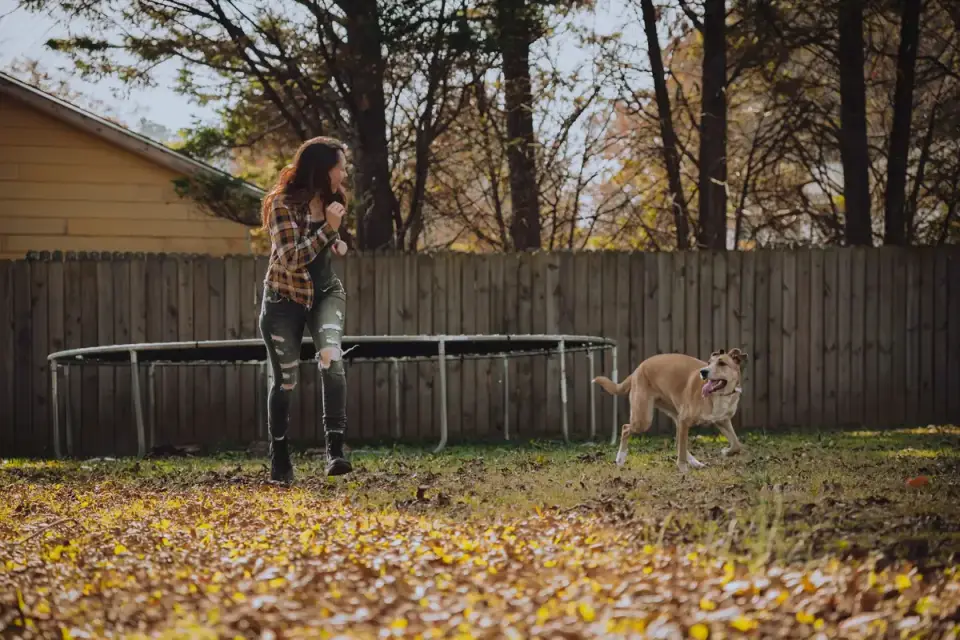
My bottom line with clients is always the same: fix what the dog can see, fix what the fence lets him do, and only then think about supplements — in that order, and with realistic timelines, not a single-visit promise.
Frequently asked questions
What height fence stops a dog from jumping over?
There's no single universal height — it depends on the dog's drive and athleticism, but adding a 45-degree inward-angled extension or coyote rollers at the top of an existing fence stops most jumpers more reliably than simply adding flat height.
Is my dog jumping the fence out of boredom or anxiety?
Watch when it happens. Jumping tied to a specific visible trigger (a passing dog, a delivery truck) points to arousal or frustration; jumping that only happens when the dog is left alone points toward separation-related distress rather than boredom.
Can calming supplements stop fence jumping on their own?
No. Ingredients like L-theanine and ashwagandha have some evidence for supporting a calmer baseline, but they're not a substitute for blocking the trigger, securing the fence, and training an incompatible behavior.
Sources
- Chamomile in the Treatment of Anxiety and Stress: A Scoping Review — Biomedicines
- Ashwagandha and Stress Reduction: A Systematic Review — Cureus
- L-Theanine and Anxiety Outcomes: A Review — Molecular Psychiatry