Play Bow or Aggression? How to Tell If Dogs Are Playing or Fighting
A veterinarian explains the body-language cues that separate genuine play from a real fight, and what to do when you can't tell in the moment.
You can usually tell if dogs are playing or fighting by watching the pauses, not the noise.
On this page
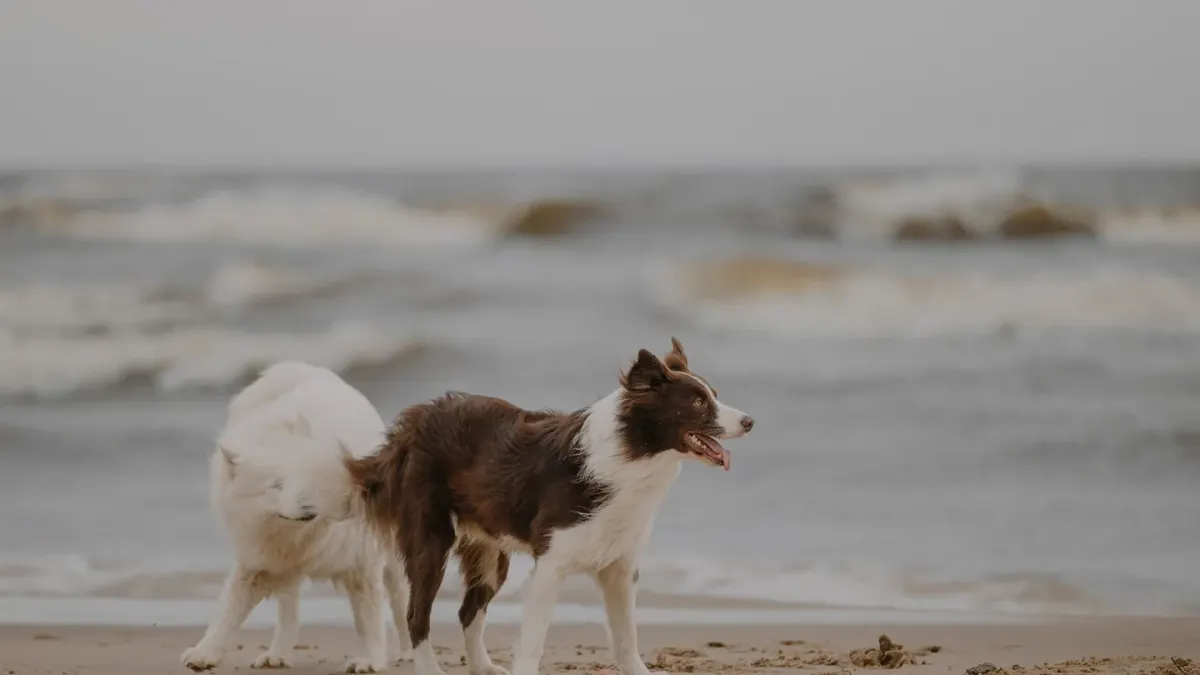
A four-year-old Boxer named Otis used to send new clients into a panic the second he opened his mouth. He’d come barreling across the dog park, ears back, jowls flapping, growling loud enough that people two fields away would turn around. His owner called me convinced he was about to get sued. What I saw, watching from twenty feet back on a cool October morning, was a dog play bowing every four or five strides, hitting the brakes hard enough to skid on the grass, then spinning away to invite a chase. That’s not a fight. That’s a dog with a big engine and a loud voice who happens to be having the best part of his day.
Here’s the short version, because owners standing at the edge of a dog park don’t have time for nuance: play is loose, bouncy, and self-interrupting, with frequent pauses, role reversals, and exaggerated, almost cartoonish movements. Real aggression is stiff, fast, quiet or sharply escalating, and one-sided. If you watch two dogs for thirty seconds and neither one has stopped, backed off, or let the other one “win” a chase, that’s your cue to look closer, not to relax.
What a Play Bow Actually Signals
The play bow, front elbows on the ground, rear end in the air, tail loose and often wagging, is one of the most reliable social signals in the canine repertoire. Ethologists call it a “meta-signal”: it frames whatever comes next, even a hard body slam or an open-mouth grab, as not-serious. Dogs use it before play sequences and often re-use it mid-session, almost like hitting pause to say “still just playing,” especially after something rough happens, like a mouth closing too hard on an ear.
What matters isn’t just that the bow happens, it’s what surrounds it. A loose, wiggly body, relaxed open mouth, soft eyes, and a tail carried at a neutral or lowered wagging position all point toward play. Watch the whole dog, not just the front half. A dog can be play bowing with its front end while its hackles are up and its weight is forward over stiff legs, and that combination is a much less clear signal than a bow with a soft, C-curved body.
The Self-Handicapping Test
One of the most useful things I tell clients to watch for is self-handicapping: the bigger or stronger dog voluntarily making itself weaker. A Labrador will flop onto its back for a smaller terrier. A dog with an obvious size advantage will let itself get “caught” in a chase it could easily win. Role reversal is the other half of that same coin, the chaser becomes the chased, the dog on top rolls to the bottom, and both dogs seem equally invested in keeping the game going rather than in winning it outright.
Real aggression doesn’t do this. It’s efficient, and it doesn’t self-correct. A dog that means to cause harm doesn’t slow down to let the other dog catch up, and it doesn’t roll onto its back mid-fight to even the odds.
Reading the Sound, and Why It Lies to You
Growling, snarling, and even yelping happen constantly during rough play, and they are, in my experience, the single biggest reason owners misjudge a healthy wrestling match as a fight. Vocalization tells you arousal, not intent. A dog can growl through an entire fifteen-minute play session and never mean it. The noise you actually want to worry about is a sudden change in pitch, a scream-like yelp followed by silence, or a low, sustained growl that doesn’t rise and fall with the action.
I think this is where the growl gets misread most often, not just between playing dogs but in the house, too; the same misreading shows up when owners ask why a dog growls the moment they’re petted, and the answer usually comes down to the same principle: growls are information about arousal or discomfort, not a verdict on intent, and context decides what they mean.
When Roughhousing Tips Into Something Real
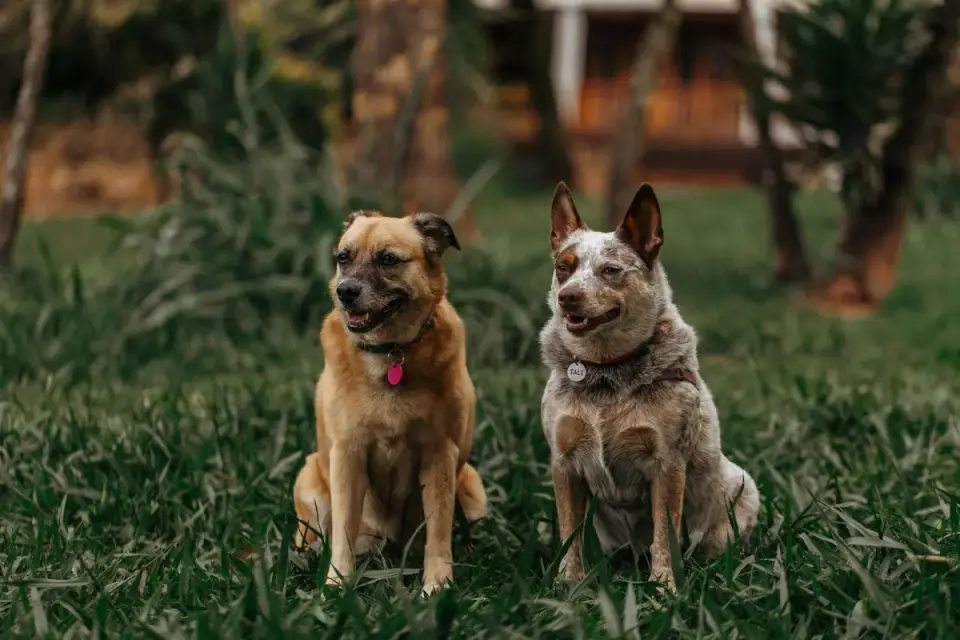
I had a case a couple years back, a fourteen-month-old Belgian Malinois, about 55 pounds, meeting his new housemate, an eight-year-old spayed female Cattle Dog mix who weighed maybe 32 pounds. The first two minutes looked like normal, if lopsided, play. Then the Malinois pinned her against the base of a porch step, and the pitch of her sound changed completely, from a bark-growl to a short, high yelp, and she went stiff and still under him instead of squirming to get free. That stillness, not the noise, was what mattered. I had the owner interrupt immediately with a clap and a recall, not a grab at the collar. Freezing under pressure, rather than actively wriggling or vocalizing back, is one of the more reliable signs that a dog has moved from uncomfortable to genuinely trying not to escalate a threat.
The other tell owners consistently miss is the target. Play bites are inhibited, quick, and aimed at loose skin, the scruff, the flank, an ear. A dog escalating toward real conflict goes for the face, the neck, or holds and shakes rather than releasing. One grab-and-release is normal roughhousing. A held bite, especially anywhere near the throat, is not something to wait out.
The Dogs Who Struggle to Read the Room
Not every dog is a reliable narrator of its own signals, and that’s worth saying plainly. Dogs with limited early socialization, dogs recovering from a prior fight, and dogs who are simply anxious in group settings often send mixed or exaggerated signals, stiff bodies paired with a play bow, or hard staring that looks like a challenge but is really overarousal with nowhere to go. These are the dogs I watch closest at a first meeting, and the ones where I tell owners to manage the environment rather than trust the dog’s own body language to sort itself out.
For dogs who run hot before a structured introduction ever starts, some owners look toward calming support to take the edge off arousal rather than address the play itself. The evidence here is real but still developing. A review in Biomedicines on chamomile’s calming effects notes that “for the remaining species, evidence is derived mainly from preclinical studies or traditional use,” which is a fair summary of where dog-specific data on many calming botanicals currently stands. A systematic review in Cureus looking at ashwagandha found that it “has a moderate positive impact on stress reduction and cognitive performance” across the human trials analyzed. And a review published in Molecular Psychiatry on L-theanine found meaningful anxiety effects in humans “except for one study on psychotic anxiety (SMD = 0.54; 400 mg/day for 8 weeks),” a dose studied in people, not dogs. None of that replaces reading the dog in front of you, and it’s not a substitute for management during an actual introduction; it’s context for owners weighing whether a calming aid belongs alongside training, not instead of it. Readers comparing specific calming ingredients side by side may find our breakdown of chamomile vs. L-tryptophan useful for that narrower question.
What I Tell Owners at the Dog Park
I keep coming back to one client, a woman with a rescued Pit Bull mix named Daisy, roughly three years old, about 48 pounds, who’d shut down completely around other dogs for her first six months in the home. She’d stand rigid at the edge of the yard, tail tucked, not approaching, not retreating. By month eight, on a mild spring afternoon, I watched her offer her first play bow to a neighbor’s Beagle, low, wiggly, tail up and loose. Her owner nearly cried. What changed wasn’t a single training session; it was months of controlled, short introductions where nobody forced contact and every session ended before either dog got tired or frustrated. Daisy’s case is one dog’s story, not a formula, but it’s the shape I see most often: dogs who look “fine” one week and genuinely relaxed the next, because arousal control is built slowly, not switched on.
That timeline is the part owners underestimate most. A dog that seems tense at every group outing for two or three months isn’t necessarily a bad match for other dogs; it may just need shorter sessions and lower-stakes settings before its body language starts to loosen up on its own.
When to Step In, No Matter What the Tail Is Doing
Interrupt immediately, calmly, without grabbing collars or reaching between dogs, if you see: sustained stiffness with no pause, a fixed hard stare held for more than a second or two, hackles up the full length of the spine rather than just at the shoulders, one dog repeatedly trying to leave while the other blocks or follows, or any bite that holds rather than releases. You don’t need to correctly diagnose the situation in the moment. You need to break it up, separate the dogs, and evaluate afterward.
Most dog-to-dog interactions that look alarming to a new owner are, in fact, play. But “most” isn’t “all,” and the cost of misreading a real fight as roughhousing is high enough that it’s worth learning the difference in advance rather than in the middle of one. What would change if you watched your dog’s next park visit for pauses instead of noise?
Frequently asked questions
What's the single fastest way to tell if dogs are playing or fighting?
Watch for pauses and role reversal. Play regularly stops and restarts, with the roles of chaser and chased switching back and forth. A real fight is continuous and one-sided.
Is growling always a bad sign between two dogs?
No. Growling is common during normal rough play and mostly reflects arousal, not hostile intent. A sudden change in pitch, or a growl that doesn't rise and fall with the action, is more informative than the growl itself.
Should I break up dogs who are play fighting?
Not usually, but interrupt if you see sustained stiffness, a held hard stare, one dog repeatedly trying to disengage while the other blocks it, or a bite that holds instead of releasing.
Sources
- Effects of Chamomile on Anxiety and Stress in Companion Animals — Biomedicines
- Ashwagandha and Stress Reduction: A Systematic Review — Cureus
- L-Theanine and Anxiety Outcomes: A Review — Molecular Psychiatry