How to Stop Your Dog From Eating Poop: What the Evidence Actually Supports
A vet explains why dogs eat feces, which causes deserve a workup versus a training plan, and the specific steps that actually change the behavior.
Here's what actually helps a dog stop eating poop, and why chasing every possible reason at once rarely works.
On this page
- Is This Actually a Problem?
- What the Research Actually Shows About Why Dogs Do This
- When Diet or a Medical Cause Deserves a Workup First
- When Behavior, Boredom, or Stress Is the Real Driver
- Where Diet Changes Genuinely Help — and Where They Don’t
- The Calming-Ingredient Question
- What I Actually Tell Owners to Do
- When to Call Your Vet
Is This Actually a Problem?
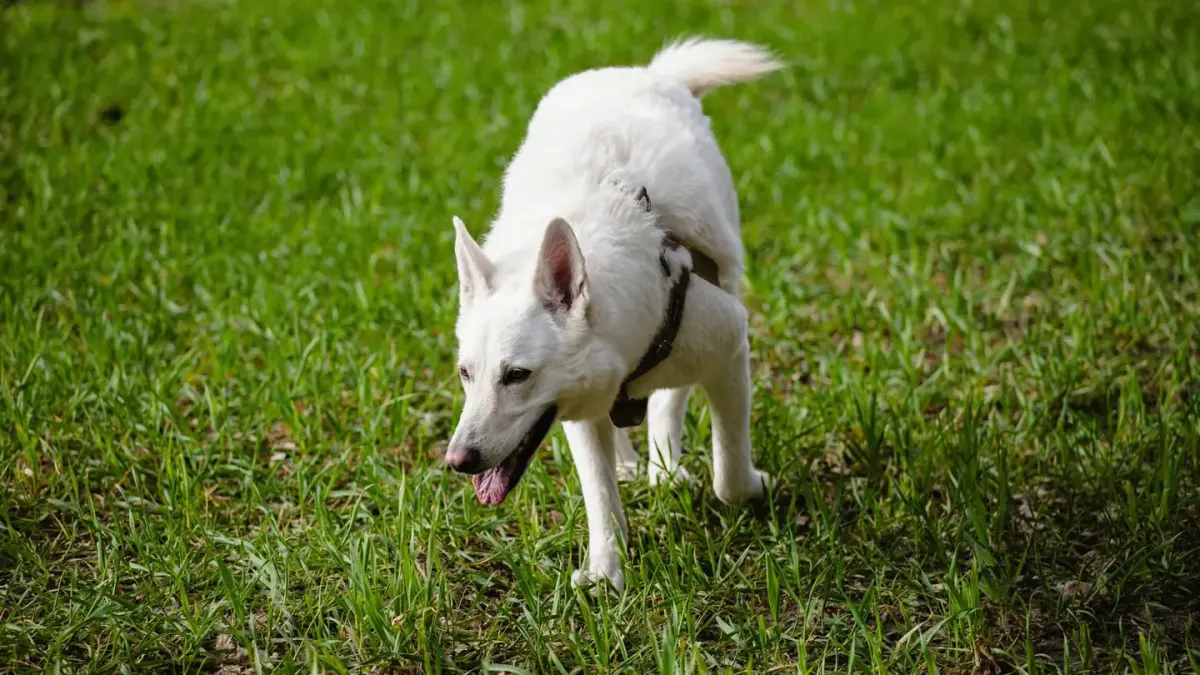
A four-year-old Beagle mix I saw for a wellness visit had been eating her own stool for about three weeks, always within a minute of finishing, always in the same corner of a fenced yard in Ohio. Her owner had already tried three different “poop deterrent” additives before we ever talked. Her bloodwork was normal. Her stool was formed, not greasy, no worms on fecal float. What changed the picture wasn’t a supplement — it was that the family had started leaving her out alone for longer stretches after a work schedule shift, and she’d also started stealing food off the counter, something she’d never done before.
That combination — a new appetite for stealing food, plus fresh stool eaten almost immediately — is exactly the pattern described in the most detailed study we have on this behavior. Before I get into fixes, the first honest answer is: coprophagia by itself, in a healthy adult dog with normal stool, is usually not a medical emergency. It’s unpleasant, understandably alarming, and worth addressing — but the workup and the plan should match the actual pattern you’re seeing, not every possible cause at once.
What the Research Actually Shows About Why Dogs Do This
The largest study on this behavior surveyed thousands of dog owners and found that dogs who ate stool overwhelmingly preferred stool that was one to two days old or fresher, and were far more likely to eat the feces of other dogs than their own. Owners of stool-eating dogs also reported their dogs were more than twice as likely to steal food off a table than owners of non-stool-eating dogs — the researchers noted this “greedy eating” pattern as one of the stronger predictors they identified. This is the Veterinary Medicine and Science (Wiley): The paradox of canine conspecific coprophagy study, and its authors proposed that a preference for fresh stool reflects an old instinct in ancestral canids: eating feces dropped near the den before parasite eggs could mature and become infective. It’s a den-hygiene behavior, not a sign that something is fundamentally wrong with a given dog.
That framing matters because it tells owners this isn’t primarily a hunger problem or a moral failing on the dog’s part. It’s closer to an old, hardwired habit that shows up more in some dogs than others, and multi-dog households see it more often than single-dog homes.
When Diet or a Medical Cause Deserves a Workup First
Before treating this as pure behavior, VCA Animal Hospitals lists several medical contributors worth ruling out: malabsorption disorders, poorly balanced or calorie-restricted diets, and conditions that spike appetite, including diabetes, Cushing’s disease, thyroid disease, or certain steroid medications. Any of these can make a dog’s own or another animal’s stool seem worth eating, either because the dog isn’t absorbing enough nutrition from its regular food or because its appetite drive is running high for reasons that have nothing to do with training.
This is where I tell owners to slow down rather than jump straight to a deterrent product. If the behavior started suddenly in an adult dog with a previously stable diet, or if it’s paired with weight loss, increased thirst, or a change in coat quality, that combination is worth a vet visit before anything else. A fecal exam and basic bloodwork rule out the categories a leash correction never will.
If the workup is clean and the diet is already complete and balanced for the dog’s life stage, the next question is behavioral, not nutritional — and switching foods repeatedly without a clear medical reason to do so usually just adds noise to what you’re trying to observe.
When Behavior, Boredom, or Stress Is the Real Driver
The Why Dogs Eat Poop and How to Stop It guide from the American Kennel Club lists anxiety, isolation, confinement, attention-seeking, and simple boredom alongside the instinctual explanation — and in practice, these categories overlap more than owners expect. A dog left alone for long stretches in a yard with little to do has both the opportunity and, plausibly, the restlessness that makes the behavior more likely.
In my experience, owners often assume their dog is eating stool “for attention,” and sometimes that’s accurate — a dog that gets a big reaction every time gets a training signal it didn’t mean to send. But I’d push back gently on treating that as the default explanation. It’s a much smaller slice of cases than the internet suggests, and treating every dog as attention-seeking means you’ll miss the dogs whose issue is genuinely under-stimulation, isolation stress, or an undiagnosed nutrient gap. The AKC’s own list puts anxiety and isolation ahead of attention-seeking for a reason: those are the patterns that show up most in clinic conversations.
If stress or under-stimulation looks like the driver — a dog that’s also panting, pacing, or destructive when left alone — that’s a different plan than a dog that only does this in the yard after meals. It’s worth reading through the signs described in Why Does My Dog Growl When I Pet Him? if touch-related tension is also new in your household, since stress that shows up in one context often shows up in others.
Where Diet Changes Genuinely Help — and Where They Don’t
If a workup points toward malabsorption or a poorly digested diet, a vet may recommend adjusting fiber or fat content, or trialing a more digestible formula, rather than adding a stool-taste deterrent. Fiber deserves a specific mention here because owners often overcorrect: adding too much bulk to “firm things up” can backfire. If you’re already troubleshooting stool consistency, it’s worth understanding Can Dogs Get Too Much Fiber? before stacking a new fiber source on top of a food that’s already balanced.
I don’t recommend commercial stool-deterrent additives as a first move. They’re marketed to make feces taste unpleasant to the dog eating it, but they only work if every dog and every stool source in the environment is treated consistently — which is rarely realistic in a multi-dog household or on a walk past a park. The Beagle mix I mentioned earlier had already been through three of these products before her family called me; none of them addressed the actual pattern, which turned out to be a longer stretch of unsupervised yard time layered onto a dog with an already opportunistic appetite.
The Calming-Ingredient Question
Owners sometimes ask whether a calming supplement will help if stress looks like part of the picture. The honest answer is: it may help address the stress component, but it isn’t a fix for coprophagia on its own, and the evidence base for calming ingredients is stronger for stress and anxiety generally than for this specific behavior.
Chamomile has a long history of traditional use for relaxation, but a recent review notes that “for the remaining species, evidence is derived mainly from preclinical studies or traditional use,” which is a fair summary of where the animal evidence currently sits — see the review in Biomedicines. Ashwagandha has firmer human data behind it: a systematic review published in Cureus concluded that ashwagandha has “a moderate positive impact on stress reduction and cognitive performance” across the RCTs it analyzed. L-theanine’s human evidence is more mixed by comparison — a review in Molecular Psychiatry found a meaningful effect in only one included study on anxiety, using 400 mg per day over eight weeks. None of these studies were run on coprophagia specifically, so I frame calming support to owners as one piece of an anxiety-reduction plan, not a treatment for stool-eating itself. If you want a deeper comparison of two common calming ingredients, I’d point you to Chamomile vs L-Tryptophan for Calming Dogs.
What I Actually Tell Owners to Do
Cleanup timing is the single highest-leverage change, because it removes the opportunity rather than trying to out-train an old instinct. If your dog reliably eats stool within a minute of producing it, picking up after every dog in the yard immediately — including from other pets — closes the loop faster than any product will. Pair that with a “leave it” cue practiced on low-stakes items first, then generalized to the yard, and with enough physical and mental activity that boredom isn’t adding fuel.
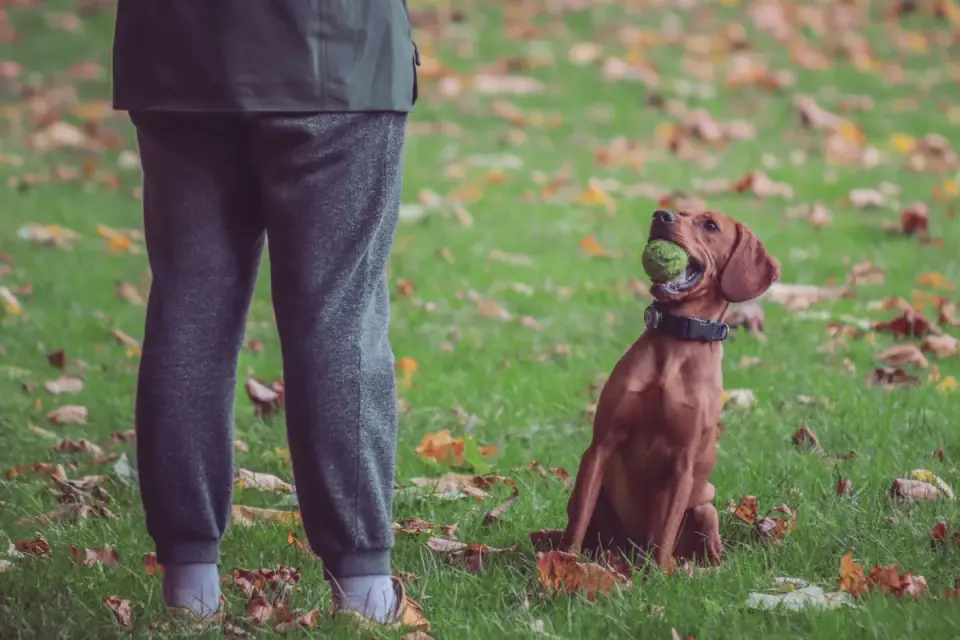
For the Beagle mix, the plan was straightforward once we had the full picture: her family shortened her unsupervised yard time, added a midday visit from a neighbor, and started picking up stool within minutes rather than at the end of the day. Within about five weeks, the behavior had dropped from near-daily to occasional, and by three months it was rare enough that her owner stopped mentioning it at visits. I don’t share that as a guarantee — every dog’s timeline is different, and hers responded to an environmental fix rather than a medical one. But it’s a fair illustration of why matching the plan to the actual driver matters more than trying every remedy on the shelf at once.
When to Call Your Vet
Sudden-onset coprophagia in an adult dog, especially alongside weight change, increased thirst or urination, vomiting, or diarrhea, warrants a visit before you start any behavioral plan. So does coprophagia in a puppy that isn’t resolving with normal maturity and supervision, since young dogs sometimes need a parasite recheck rather than a training fix. If the workup is clean, expect your vet to talk you through the environmental and behavioral pieces rather than reach for medication first — for most dogs, that combination is where the real change happens.
Frequently asked questions
Is it dangerous for a dog to eat poop?
For a healthy adult dog eating its own or another healthy dog's stool, it's unpleasant but rarely dangerous. The real risk is parasite or pathogen exposure if the stool source is unknown, which is a reason to keep up with fecal checks rather than a reason to panic over an isolated incident.
Will a stool deterrent product actually stop the behavior?
It can help in a single-dog household where you control every stool source, but in multi-dog homes or on walks it's inconsistent, because it only works if the deterrent reaches every stool the dog might encounter.
Sources
- The paradox of canine conspecific coprophagy — Veterinary Medicine and Science (Wiley)
- Dog Behavior Problems - Coprophagia — VCA Animal Hospitals
- Why Dogs Eat Poop and How to Stop It — American Kennel Club
- Chamomile and anxiety/stress review — Biomedicines
- Ashwagandha systematic review on stress and cognitive performance — Cureus
- L-theanine review on anxiety — Molecular Psychiatry