The Role of Synovial Fluid in a Dog's Joints
What synovial fluid does in a dog's joints, how viscosity and cartilage nutrition change with arthritis, and what supports healthy joint function.
Understanding the role of synovial fluid helps dog owners protect mobility, comfort, and long-term joint health.
On this page
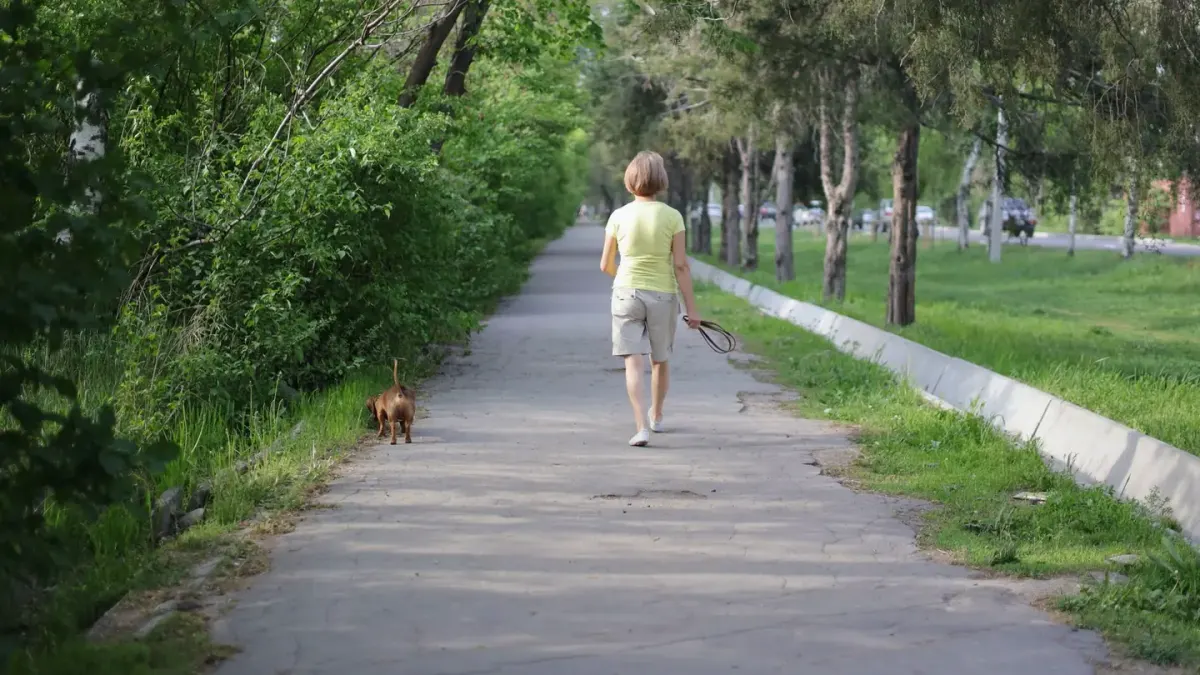
Sunday morning on the trailhead, a seven-year-old 68-pound Labrador mix starts the first quarter-mile loose and bouncy, then shortens her stride on the downhill. Her owner notices the hesitation lasts about four minutes before she shakes it off and trots again. It is the classic warm-up stiffness owners describe with early joint changes, and it points directly to what is happening inside the joint capsule that morning.
That stiffness is largely a synovial fluid story. Synovial fluid is the clear, slightly viscous fluid that fills diarthrodial joints like the hip, stifle, elbow, and shoulder. I organize the whole toolkit around one pattern in these dogs: keep the joint environment nourished and moving smoothly, rather than chasing the cartilage alone. When fluid volume, viscosity, and turnover stay balanced, the joint may help support comfortable motion; when they do not, friction and poor nutrient delivery drive the cycle forward.
What synovial fluid actually does all day
Think of synovial fluid as lubricant, delivery truck, and trash service in one. The synovial membrane secretes hyaluronan and lubricin into a plasma filtrate, creating a fluid that lets cartilage surfaces glide with very low friction.
Cartilage has no blood supply of its own. It depends on joint motion to cycle synovial fluid in and out of the matrix, bringing oxygen and nutrients while carrying away metabolic waste. That is why gentle, regular movement matters more than weekend bursts.
It also matters for load. Healthy fluid is non-Newtonian: it thickens at rest and thins with movement, which helps cushion impact when a dog lands from a jump and then glide smoothly during a trot.
When the fluid thins, the joint talks back
With age, injury, developmental disease, or osteoarthritis, the pattern shifts. Inflammation increases fluid volume but lowers viscosity, because hyaluronan chains shorten and lubricin function declines. The joint may feel effusive or puffy, warm-up time lengthens, and range of motion narrows after rest.
That matches what owners see at home: a dog who rises slowly for the first 30 seconds, then moves more freely once fluid has redistributed.
A four-year-old 45-pound Border Collie from agility class shows the tradeoff side. After a season of hard weekend trials with only two rest days per month, she came in with a puffy carpus and a stride that shortened after 10 minutes of work. Her owner had tried adding extra fetch on off days to “keep her loose,” plus a rotating mix of three different chews. More impact plus more ingredients did not restore glide. Once the program narrowed to leash walks, controlled hill work three times per week, weight checks, and one consistent joint-support plan, the post-exercise swelling settled. The lesson I return to: fluid health responds to load management first, supplements second.
What helps support healthy fluid and cartilage nutrition
No supplement refills synovial fluid like oil in a car. The evidence is strongest for the boring foundations, thin or mixed for add-ons, and I say that plainly to owners.
Movement is medicine when dosed right. Short, frequent walks, incline walking, underwater treadmill, and passive range-of-motion work cycle fluid through cartilage without pounding it. Food therapy and weight control reduce load; each extra pound on a 70-pound dog multiplies joint stress.
For nutritional tools, glucosamine and chondroitin are among the most studied joint support ingredients for dogs, as discussed in a Journal of Veterinary Medical Science review of glucosamine and disease-modifying osteoarthritic drugs, and green-lipped mussel contains omega-3 fatty acids and glycosaminoglycans that have been studied for joint support, with mussel-oil mechanisms explored in Nutrients. In structure/function terms, these tools may help support cartilage matrix and normal inflammatory balance, which in turn may help support a healthier joint environment. They do not rebuild lost cartilage or replace veterinary care for cruciate injury, fracture, or advanced osteoarthritis.
Omega-3s from marine sources, hyaluronic acid, undenatured type II collagen, and antioxidants all have early or mixed data in dogs. I consider them secondary tools for a dog with a clear stiffness pattern, not the core of the plan.
A bend in the usual advice: the senior who cannot walk far
An eleven-year-old 82-pound senior with bilateral hip stiffness complicates the “just walk more” advice. His owner counted only six house-length walks per day before he would sit and refuse, and nights were the hardest with two to three restless repositionings. Pushing distance made next-morning rises worse.
There we bent the routine instead of forcing it. We swapped one 20-minute walk recorded on March 12 for four 5-minute sniff walks, added a ramp to the car, raised food and water bowls, placed rugs over 15 feet of hardwood hallway, and used brief Tui-na–style hind-limb compressions and gentle bicycle motion before bedtime. Acupuncture and a warming food approach fit his cold-stiff pattern, alongside his veterinarian’s pain plan. Within three weeks the owner reported rising in under a minute most mornings. The fluid still needed motion — just distributed differently.
Learn more about one fluid component in Does Hyaluronic Acid Actually Work for Dog Joints? What the Research Shows, compare evidence across ingredients in The Best Joint Supplement for Dogs: What Holds Up to an Orthopedic Read, and check transparency before you buy in Dog Joint-Support Supplement Label Disclosure Checklist.
Practical next step: watch warm-up time, not just limping. If your dog needs more than a few minutes to move freely, is slow on stairs at night as explored in Glucosamine for a Dog Struggling With Stairs at Night: What the Evidence Actually Supports, or shows new swelling or non-weight-bearing lameness, ask your veterinarian for a joint exam and gait assessment before changing supplements.
Frequently asked questions
How do I know if my dog's joint stiffness involves synovial fluid?
You cannot see fluid changes at home, but prolonged warm-up stiffness, swelling around a joint, reduced range of motion, and soreness after rest followed by improvement with gentle movement suggest the joint environment is involved. A veterinary exam and sometimes joint fluid analysis confirm it.
Does exercise help or harm synovial fluid?
Controlled, low-impact movement helps cycle nutrients through cartilage and maintains viscosity. Prolonged rest thickens fluid and stiffens joints, while sudden intense exercise can irritate an arthritic joint. Short frequent walks are usually better than one long outing.
Can a supplement thicken synovial fluid?
No supplement has been shown to directly thicken fluid in dogs at home. Ingredients like glucosamine, chondroitin, omega-3s, and hyaluronic acid may help support cartilage and normal joint function, which supports a healthier joint environment alongside weight control and movement.
Sources
- A review of the clinical efficacy and adverse effects of disease modifying osteoarthritic drugs (DMOADs) in dogs with special focus on glucosamine and pentosan polysulfate; do they work? — Journal of Veterinary Medical Science
- Therapeutic Effect and Underlying Mechanism of Blue Mussel (Mytilus galloprovincialis) Oil on Adjuvant-Induced Rheumatoid Arthritis in Rats — Nutrients