What Vets Say: Can a Carrier Work as a Crate?
Learn when a soft pet carrier can stand in for a crate during travel and when a secure crate is still needed for safety and rest.
Yes, a soft carrier can stand in for a crate for short, supervised rest and travel, but it should not replace a sturdy crate for overnight confinement, anxious chewers, or car travel.

On this page
A carrier feels like a small crate to us, and to a settled dog the resting pattern it invites may help support calm, yet the mesh walls and flexible frame change what it can safely do.
From a whole-patient view, confinement is not just containment. A crate shapes airflow and posture, limits pacing and arousal, and gives the nervous system a repeated cue that it is time to settle. A travel carrier borrows that cue for a little while, and that borrowed calm works best when the dog already knows the space, the stay is brief, and you are close enough to notice restlessness or chewing.

When a carrier works like a crate
A soft carrier can function as a short-term den when three conditions line up: the dog fits with room to stand, turn, and lie on the side, the dog is settled rather than panicked, and use is supervised. That looks like a quiet hotel nap with you in the room, a bedtime space in an unfamiliar guest room, or a familiar hide during a lobby wait. Many owners describe that portable bedroom effect, and the pattern in Dog Car Seat Belt vs Crate vs Barrier: Which Restraint Is Safest? points to the same lesson: familiarity may help support steadier rest in new places.
The American Veterinary Medical Association frames travel preparation around acclimation and secure containment, which traces outward from the same plant-and-practice logic I use in botanical work: prepare the terrain, then ask less of the body. Practice at home first with the door open, feed calm meals inside, add familiar bedding, and keep early sessions to 15 to 30 minutes while you watch breathing, lip licking, whining, and attempts to paw at mesh.
Where a carrier falls short
A carrier is not built to do a crate’s harder jobs. Mesh zippers yield to teeth and claws, soft sides collapse under a larger dog leaning or rolling, and ventilation and heat build faster in a small fabric box than in a wire or hard plastic crate. An unsupervised afternoon, an overnight stretch, or a dog who still has accidents in unfamiliar places asks more than a carrier should hold.
Safety in motion is a separate limit. General pet travel guidance does not treat a soft bag on a back seat as crash protection, and crash-focused testing work discussed by the Center for Pet Safety shows why restraint design matters in a sudden stop. For car travel, a crash-tested crate or restraint secured per instructions offers a more defensible plan than a loose carrier. A clingy dog who seems content staying home with someone she trusts while we travel reminds us that the kindest choice is sometimes not to bring the dog at all, especially for long drives or anxious travelers.
How to decide for your dog and trip
Think in terms of pattern, not just size. A relaxed adult who naps easily in small spaces and leaves zippers alone may do well in a carrier for an hour or two. A puppy still learning house training, a senior with stiff joints who needs to stretch and reposition often, a dog with separation distress, or any dog who chews through fabric needs a true crate.
Ask these four questions before you substitute:
- Can the dog stand without hunching, turn freely, and stretch on the side?
- Will someone be present and awake the whole time?
- Is the stay under two to three hours with a potty break plan?
- If the dog panics, vomits, or toilets, can you respond without driving or leaving the hotel?
If any answer is no, bring the crate. The same whole-room thinking applies in hotels, where confinement often matters more than policy, as described in Can You Leave Your Dog Alone in a Hotel Room?.
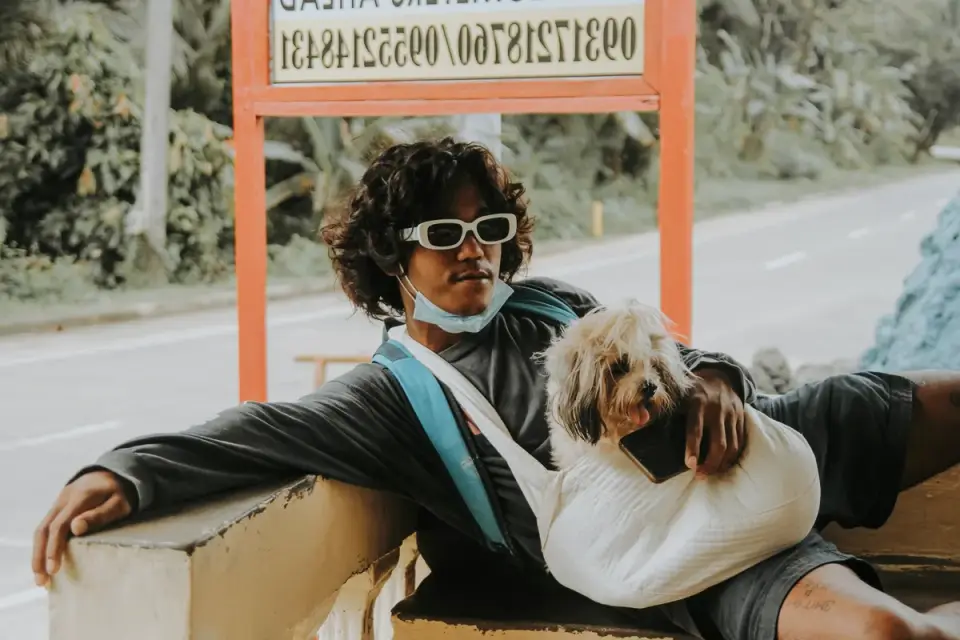
Setting up a carrier for short crate duty
From both western calming-herb reasoning and TCVM settling patterns, routine and warmth matter more than any single aid. Keep light low, keep the base level and padded, offer water before enclosure rather than a spillable bowl inside, and keep a spare pad handy because travel stops often bring home mud, rain, or something smelly.
For joint comfort, place the carrier on the floor rather than a high bed, leave room for the dog to shift from curled to side-lying, and open the door as soon as you arrive so stiff dogs can stand and walk. Watch for panting, drooling, repeated circling, or pawing at the door, then shorten the next stay and return to open-door practice. When the carrier remains a place of rest rather than pressure, it may help support easier travel without pretending to be what only a secure crate can be.
Frequently asked questions
Can a puppy sleep overnight in a soft carrier instead of a crate?
For most puppies, no. Overnight stretches are long, unsupervised, and often include accidents or chewing, which soft mesh does not contain well. Use a properly sized crate with a potty-break plan.
Is a carrier safe for car travel?
A carrier can keep a small, calm dog contained, but a loose soft carrier is not crash protection. Secure a crash-tested crate or restraint for driving and keep the carrier for inside the destination.