Can You Leave Your Dog Alone in a Hotel Room?
A veterinarian explains when leaving a dog alone in a hotel room is genuinely safe, what separation anxiety looks like before you walk out, and how to decide.
You can leave a dog alone in a hotel room only if it is crated, calm, and the hotel allows it.

On this page
- The real question isn’t legality — it’s the dog in front of you
- What separation anxiety looks like before you ever leave the room
- Why the crate matters more than the hotel’s policy
- The counterargument: some owners skip confinement entirely
- What I actually tell clients before they leave the room
- Where I land
A nine-year-old cattle dog named Scout taught one of my clients this lesson the expensive way. They’d crated him at home without issue for years — a solid, sturdy dog, about 42 pounds, who slept through thunderstorms in his crate and never so much as scratched at the door. So when they checked into a hotel outside Flagstaff for a weekend hike, they assumed the same routine would hold: crate him, walk down to dinner, be back in ninety minutes. He wasn’t back to normal by the time they returned. The room smelled of urine, the crate door had been bent outward at the latch, and the front desk had already fielded two noise complaints from the room next door. Nothing about Scout’s home behavior predicted it. The unfamiliar smells, the different door, the sound of strangers in the hallway — all of it stacked on top of a dog who had never actually practiced being alone anywhere but his own house.
Yes, you can leave a dog alone in a hotel room, but only under specific conditions — the dog needs to already be comfortable with confinement, the hotel needs to actually permit it, and the absence needs to stay short. Beyond that, it stops being a question of whether it’s allowed and starts being a question of whether it’s fair to the dog in the room.
The real question isn’t legality — it’s the dog in front of you
Most hotel pet policies don’t ban leaving a dog alone outright; they regulate how. A dog left unattended is commonly required to be crated the entire time, and some properties won’t allow it even then. That’s a housekeeping-and-liability decision on the hotel’s side, not a behavioral assessment of your dog. The behavioral assessment is yours to make, and it has to happen before you book, not after you’ve already left the room once and come back to a mess.
A dog who handles being left alone at home usually — not always — handles a short hotel absence the same way, provided they’re in a crate they already know, with a chew or a stuffed Kong to occupy them. A dog who has never been crated, or who has any history of vocalizing or destructiveness when left, is a different animal entirely in an unfamiliar room. New environment stress compounds baseline separation intolerance; it doesn’t cancel it out.
What separation anxiety looks like before you ever leave the room
This is where I ask clients to slow down and actually watch their dog, not guess. According to the ASPCA, dogs with separation anxiety may urinate, defecate, bark, howl, chew, dig, or attempt to escape once left alone — and the distress often shows up within minutes of departure, not gradually over the outing. Pre-departure anxiety is a tell on its own: pacing near the door, whining, or unusually clingy behavior as you gather your keys and shoes is the dog telling you what’s about to happen before it happens.
The AKC notes that these behaviors are frequently mistaken for a training gap — a dog who “just needs house manners” — when they’re actually a distress response. That distinction matters here because a hotel room amplifies every one of these signs. A dog that whines for ten quiet minutes at home before settling may bark continuously in a hotel hallway, where a neighboring guest hears every second of it and the front desk hears about it next.

Why the crate matters more than the hotel’s policy
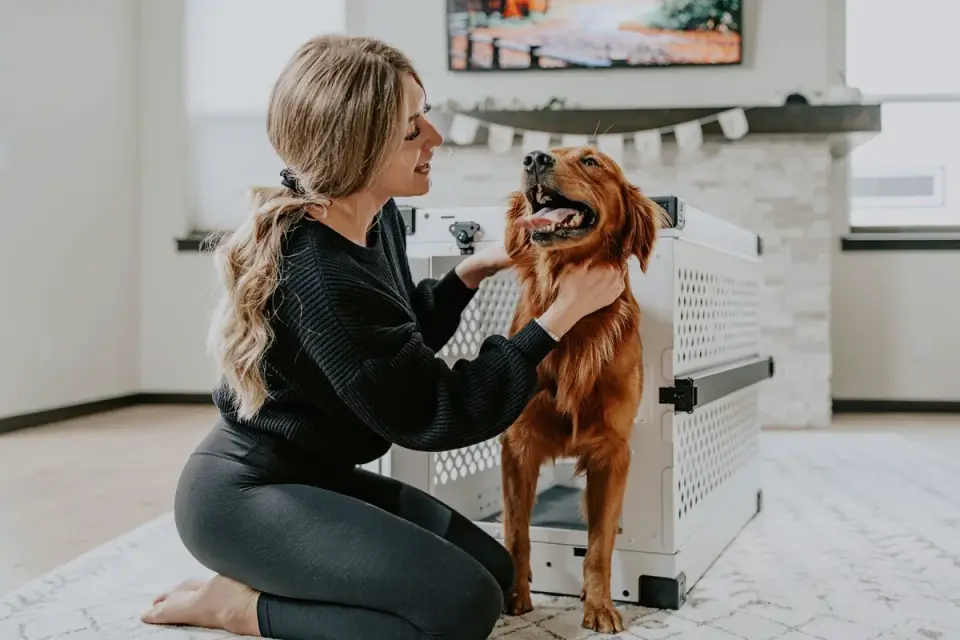
I’ve watched this play out from the other side too, with dogs who did fine. A twelve-pound terrier mix named Biscuit, crate-trained since puppyhood, spent three nights in a roadside hotel while his owners went to dinner each evening — never longer than an hour, always in the same collapsible crate he traveled with, positioned away from the door and window. He was quiet enough that housekeeping never knew he’d been alone at all. The difference wasn’t the hotel’s rules. It was that Biscuit’s crate functioned as a portable version of “home” regardless of what room it sat in, because the dog’s sense of safety was tied to the crate itself, not the four walls around it.
That’s the mechanism worth understanding: a crate-trained dog generalizes safety to the crate; a dog who is only used to loose access at home has nothing familiar to anchor to in a hotel room. If you’re weighing which travel carrier or crate to bring, our guide to Best Airline-Approved Dog Carriers covers the structural features — not just the “approved” sticker — that actually matter for a dog spending real time inside one.
Extended Stay America’s own guidance for pet travelers backs this up from the operations side: pets left unattended should be confined to a crate for the full duration, and confining a dog to the bathroom instead is explicitly discouraged, according to Extended Stay America. A bathroom isn’t a substitute den; it’s an unfamiliar tiled room with a door a stressed dog will scratch at.
The counterargument: some owners skip confinement entirely
I hear the pushback regularly. Owners with easygoing dogs — often older, low-energy breeds — argue that crating a dog who’s never needed one at home just to satisfy a hotel policy is more stressful than leaving them loose in a controlled room. There’s some truth in it for the right dog. But I still land on the side of crating or containment for any hotel stay, for one plain reason: you don’t have the dog’s full home-behavior history to compare against, because the environment itself has changed. A calm dog can still chew a bedspread, root through a minibar, or bolt when housekeeping opens the door unannounced. Purina recommends letting your dog acclimate to the room with you present before ever attempting to leave them alone in it — that settling-in period is the cheapest insurance you have against a bad first absence.
What I actually tell clients before they leave the room
Test the absence at home first, in a room the dog hasn’t been in before, if you can. Keep the actual hotel absence under an hour on the first attempt. Leave a chew or a stuffed Kong, not just an empty crate. Put a Do Not Disturb sign on the door and tell the front desk a dog is inside, with your cell number, so a knock doesn’t become a surprise. If your dog has any history of destructive or vocal behavior alone — even mild — don’t test that history for the first time in a hotel. Book with a sitter or, if the trip allows for it, weigh boarding instead; our comparison of Boarding Kennel vs. Pet Sitter walks through which fits a given dog’s temperament and stress tolerance better. And if the trip involves a flight before the hotel ever comes into play, confirm the carrier’s and airline’s actual rules early — our Airline Pet Policies guide covers what trips owners up most often.
Where I land
I told Scout’s owners, once the carpet had been steam-cleaned and the apology made to the front desk, that the mistake wasn’t leaving him crated — it was assuming home behavior would transfer intact to an unfamiliar room without ever testing it first. That’s the whole calculus, condensed: a dog can be left alone in a hotel room when the dog, not just the hotel, is actually ready for it. Test it short, test it crated, and read the pre-departure signs honestly before you close the door behind you.
Frequently asked questions
Is it illegal to leave a dog alone in a hotel room?
No, it isn't a legal question in most cases — it's a matter of the individual hotel's pet policy, which usually requires the dog to be crated and quiet for the duration of any unattended time.
How long can I leave my dog alone in a hotel room?
For a dog's first time being left alone in that specific room, keep it under an hour, even if the dog handles longer absences comfortably at home.
What should I do if my dog has separation anxiety before a hotel trip?
Don't test it for the first time in a hotel; work with a trainer or veterinarian on the anxiety beforehand, and plan on a pet sitter or boarding for this trip instead.
Sources
- Separation Anxiety — ASPCA
- Separation Anxiety in Dogs: Signs, Causes, and Prevention — AKC
- Dog Hotel Etiquette: 12 Essential Tips for Pet-Friendly Stays — Extended Stay America
- 6+ Top Tips for Staying in a Dog Friendly Hotel — Purina