Can Dogs Eat Apples? What the Evidence Actually Supports
A board-certified veterinary neurologist walks through what apples actually offer a dog nutritionally, how real the seed-cyanide risk is, and when this ordinary treat gets complicated by GI disease.
Yes, dogs can eat apples safely — the fruit's fiber and vitamins are fine, but seeds and core need real caution.

A retriever mix named Biscuit used to meet her owner at the back door every fall when the neighbor’s apple tree started dropping fruit onto the shared fence line. Biscuit’s owner, worried about “toxic seeds” she’d read about in a Facebook group, spent two years steering her dog away from every apple that rolled into the yard, cores and all, even the ones Biscuit had already mouthed and dropped untouched. When she finally asked me about it during a routine exam, the honest answer surprised her: apples are one of the least complicated fruits in a dog’s diet, and the actual risk in her yard had never been the fruit — it was the fence gap the dog kept finding.
Yes, dogs can eat apples, and for most of them it’s a low-stakes, nutrient-positive treat. The flesh contributes soluble and insoluble fiber, vitamin C, and a modest hit of potassium, without the fat load of most commercial treats. Where I want an owner’s attention isn’t the fruit itself — it’s the parts around it, and the small number of dogs for whom “just a fruit” isn’t actually simple.
What an apple is actually giving your dog
Strip away the marketing language and an apple slice is doing one job well: adding bulk fiber and a bit of vitamin C to a diet that’s otherwise usually complete without either. According to the AKC, apples provide fiber that may help support healthy digestion and regular bowel movements, along with vitamin C that supports immune function. That’s structure-and-function language, not a treatment claim, and it’s the right register here — an apple is a snack, not a supplement. The same guidance recommends keeping apple treats to roughly 10% or less of daily calories and removing the core, seeds, and stem before feeding, which lines up with how I counsel owners in clinic.
The cyanide question, sized correctly
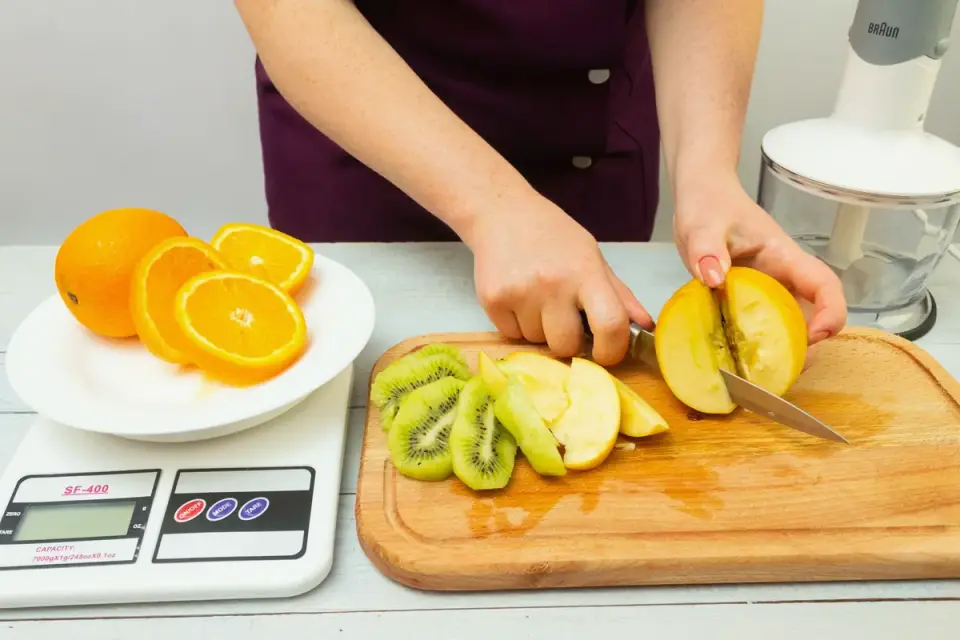
Apple seeds contain amygdalin, a cyanogenic compound that can release hydrogen cyanide when it’s broken down by chewing and digestion. That fact is true and worth respecting — it’s also routinely overstated online. The ASPCA lists apple plant material outside the fruit flesh as toxic, and its poison-control data show that a dog would need to chew through an implausibly large number of seeds to approach a dangerous dose — the overwhelming majority of reported apple-core exposures produce no clinical signs at all. Intact, unchewed seeds pass through largely unchanged. The core itself is the more ordinary hazard, and it’s a mechanical one: a chunk large enough to lodge in the esophagus or cause a partial obstruction is a more realistic emergency than cyanide toxicity ever is. I’d rather an owner worry about the size of the piece their dog swallows than the seed count.
This is where I think the online discourse gets the balance backward, and it’s the one place I’ll be direct about it: treating a stray swallowed seed as a poisoning emergency distracts from the actual habit worth building, which is cutting the core out before the apple ever reaches the dog. Small dogs and puppies carry less margin on a body-weight basis, so the habit matters more for them, not less.
Where this gets more complicated
Fiber-forward fruit isn’t neutral for every gut. Dogs with exocrine pancreatic insufficiency (EPI) are managed with enzyme replacement and a specific nutritional plan. As JAVMA puts it, “EPI is treated by pancreatic enzyme replacement therapy, nutritional management (low-residue diets with moderate fat content), and supplementation of cobalamin” — a fiber-heavy snack layered onto that plan without checking in first isn’t a neutral choice. The same review notes that persistent dysbiosis can linger even after enzyme therapy starts, a reminder that GI disease in dogs doesn’t resolve as cleanly as an ingredient swap. Separately, Frontiers in Veterinary Science research on probiotic response in dogs with GI disease found that “diversity metrics did not distinguish non-responders from responders” — a useful reminder that gut health in a compromised dog is harder to predict from the outside than owners, or honestly some clinicians, assume.
I think about these cases the way I think about a difficult neurologic workup: I want the imaging and I want the exam findings, not one or the other. A healthy Labrador snapping up a fallen apple slice needs almost none of this analysis. A senior dog with a known pancreatic or GI diagnosis needs the fiber load run past whoever is managing that plan first, in the same deliberate way you’d introduce any new variable into a case that’s already being tracked closely. If your dog is switching foods for age-related digestive changes or has needed probiotics alongside antibiotics, that’s the dog I’d slow down for — not the one grabbing a dropped core off the porch.

Back to Biscuit: the fix wasn’t banning apples, it was mending the fence and teaching her owner to hand-feed seedless slices instead of letting windfall fruit, core and all, become a free-for-all. That’s most apple questions in a sentence — manage the piece size and the parts you remove, not the fruit itself. Apples sit in the same low-drama category as other whole-food produce dogs handle well; if you’re building out a broader rotation, sweet potato is worth the same evidence-first read, and if you’re layering multiple fiber sources into one diet, it’s worth knowing how much fiber is actually too much before you stack them.
So where does that leave a reasonably careful owner — treat the apple like the low-stakes snack it usually is, or keep quietly rationing it out of habit long after the actual risk has been priced in correctly?
Frequently asked questions
How many apple seeds are actually dangerous to a dog?
A meaningful dose requires the seeds to be thoroughly chewed, not just swallowed whole, and the number needed is large enough that a dog snatching a dropped core is very unlikely to reach it. That said, removing the core is still the easy, correct habit — there's no upside to testing the margin.
Can apples upset a dog's stomach?
Yes, especially in large amounts or in dogs unaccustomed to extra fiber. Start with a slice or two and watch stool quality over the next day before making it a regular thing.
Sources
- Toxic and Non-toxic Plants: Apple — ASPCA
- Can Dogs Eat Apples? How to Safely Feed Apples to Dogs — AKC
- Exocrine Pancreatic Insufficiency: Management Review — JAVMA
- Probiotic Response and Gut Microbiota Diversity in Dogs — Frontiers in Veterinary Science