Dog-Friendly Checklist for a Family Reunion Trip
Vet-written checklist for bringing a dog to a family reunion — joint comfort, routine, safety, and house manners.
A calm reunion with your dog starts with joint comfort, routine, and a clear house plan.
On this page
A couple summers ago I counseled a family bringing their 9-year-old, 54-pound Lab mix to a three-day reunion at a lake house with 14 relatives, two toddlers, and a senior beagle already living there. The Lab had early morning stiffness, panted on stairs, and had skipped meals on a prior overnight trip. We mapped medication timing, a ground-floor sleeping spot away from foot traffic, and two 15-minute leashed walks per day to hold her baseline. By day two her owners reported she settled in 20 minutes instead of pacing for two hours, and she ate breakfast without coaxing.
My position is simple: expectation first. Decide before you leave what normal will look like for joints, behavior, and rest, then protect that baseline. A reunion rewards prevention more than improvisation.
Your reunion-ready baseline — decide these before you pack
- Health and ID current: vaccines, medications, vet contact, photo of records on your phone
- Sleep plan: crate or bed placement, ground-floor access, low-stress handling for stiff dogs
- Daily rhythm: feeding times, walk schedule, quiet breaks away from crowds
- Food safety: who feeds the dog, where trash lives, what table scraps are off-limits
- House rules: doors, stairs, kids, other pets, off-limit rooms
- Travel comfort: car breaks, water, non-slip footing, joint-friendly loading
- Exit plan: what triggers an early walk, a crate break, or a vet call
Ask the host the joint questions first
Reunions live or die on flooring and stairs. Hardwood, steep deck steps, and slick docks ask a lot from aging hips and elbows. Ask where your dog will sleep, whether a ground-floor room is available, and if baby gates can block stairs. Bring a familiar bed, a non-slip runner if you can, and plan to lift or ramp dogs that struggle rather than letting them rehearse the jump all weekend.
The American Veterinary Medical Association reminds owners to plan for containment, identification, and comfort during travel, and that same logic applies inside a busy house. Prevention holds.
Hold the routine when the house gets loud
Dogs track pattern more than place. Keep feeding times, morning elimination, and bedtime within about 30 minutes of home. Build in decompression: a crate in a quiet bedroom, a chew, and permission to skip the backyard barbecue.
For road legs of the trip, our packing checklist helps keep food, water, and medications consistent. Consistency may help support normal digestion and calmer behavior when everything else smells new.
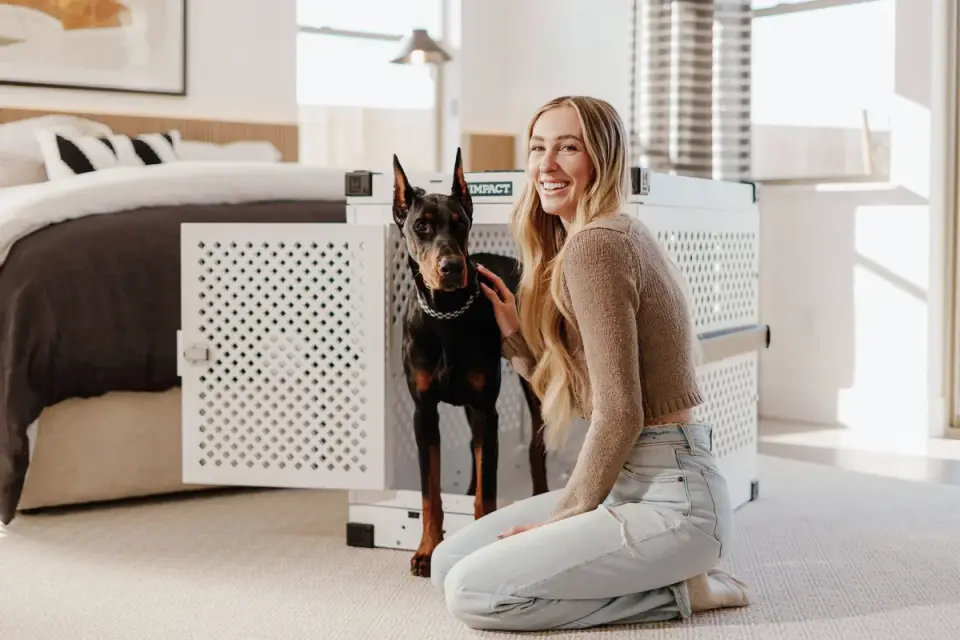
I also worked with a household traveling 340 miles with a 68-pound shepherd mix who hated crating and guarded doorways. They had tried letting him “free roam to relax” at the last gathering, and he spent the evening pacing between the kitchen and porch, barked at 11 p.m., and refused his evening meal. For the next trip we flipped it: scheduled crate naps every four hours, leashed greetings only, and no unsupervised kid time. He still whined the first night. The tradeoff was real — less freedom, more management — but his morning stiffness eased faster because he actually rested.
Food, kids, and other dogs need explicit rules
Say it out loud on arrival: no table feeding, trash behind a latched door, dog treats only from one jar. Assign one adult to watch dog-kid interactions. Keep introductions with resident dogs short, parallel, and leashed, then separate for rest.
Expectations beat corrections.
If flying is part of your reunion plan, check carrier and health rules early with our guide to airline pet policies. For trips that cross a border, the U.S. Department of Agriculture outlines country-specific documents and timelines that take weeks, not days.
Bend the plan for seniors and stiff movers
The usual advice says more walks will tire a dog out. With an arthritic dog, that backfires. Shorten distance, add frequency, and protect footing. One family I advised stayed four nights with a 12-year-old cattle-dog type who bunny-hopped on the host’s tile. We cut the group trail walk, added three 10-minute sniff walks on grass, and fed dinner in the crate at 5 p.m. before the noisy family dinner. She chose to lie down during fireworks practice next door instead of trying to follow, which told us rest was working.
That is preventive care in real time. Structure and realistic timelines may help support joint comfort, even if no supplement or gadget promises a pain-free weekend.
Pack medications in original bottles, note morning versus evening doses, and keep your regular clinic number plus the nearest after-hours clinic in your phone. If you are sorting pet-friendly lodging around the reunion, our guide to how to find truly pet-friendly hotels covers fees and questions hosts often forget to mention.
Frequently asked questions
Should I bring my senior dog to a family reunion?
If your dog eats, walks, and rests reasonably well away from home and you can secure ground-floor rest and a quiet break space, often yes. If travel causes prolonged panting, refusal to eat for more than a day, or inability to rise on slick floors, a familiar sitter may better protect baseline comfort.
How do I handle relatives who feed table scraps?
State the rule once on arrival and give an alternative. Place an approved treat jar on the counter and ask all feeding go through one adult. Rich, fatty foods can upset digestion, so keep trash secured and plates out of surf height.
How much exercise does my dog need at a reunion?
Keep home frequency, trim intensity. Two to three short leashed walks for sniffing and elimination usually beat one long group hike, especially for stiff or older dogs that need traction and rest breaks.
Sources
- Traveling with Your Pet — American Veterinary Medical Association
- Pet Travel From the U.S. to Another Country — U.S. Department of Agriculture