Does Cold Weather Make a Senior Dog Seem More Stiff and Slow Than Usual?
A vet explains why arthritic senior dogs slow down when temperatures drop, how to tell ordinary cold stiffness from a new problem, and what genuinely helps.
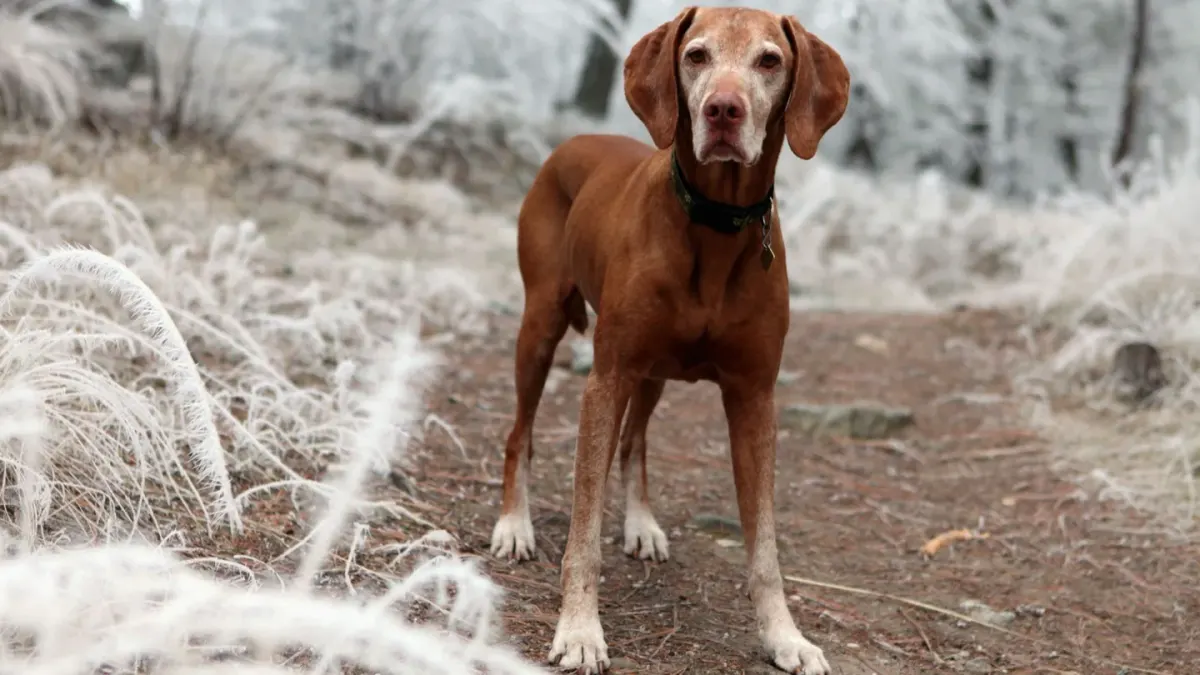
When the thermometer drops, a lot of senior dogs move through the house like they aged five years overnight, and that shift is rarely in your head.
On this page
Quick check before you read further. If your senior dog is doing most of these, cold weather is very likely the explanation:
- He is slower to rise after napping, especially first thing in the morning
- The stiffness eases within twenty or thirty minutes of moving around, or once the house warms up
- It tracks with the thermometer: worse on a raw, damp day, better on a mild one
- He still wants to go for a walk, just at a gentler pace
- Appetite, mood, and bathroom habits are unchanged
If instead you are seeing a new limp that does not resolve, a refusal to use stairs he handled last week, or stiffness that lingers into the afternoon regardless of temperature, that is a different conversation, and it belongs with your veterinarian rather than a blog post.
What is actually happening inside the joint
An arthritic joint is not simply achy in the abstract. According to VCA Animal Hospitals, cold, damp conditions can worsen stiffness and discomfort in dogs with osteoarthritis, and VCA advises keeping arthritic dogs warm and dry rather than housing them outdoors. The proposed mechanisms are reasonable even where the science is still incomplete: cold weather may thicken the synovial fluid that normally lets a joint glide, and lower temperatures can leave the muscles supporting that joint less pliable and more prone to guarding. In a joint where cartilage has already worn down, nerve endings sit closer to the surface than they should, and shifts in barometric pressure may add another layer of irritation on top of that exposure.
No one has fully mapped this at the cellular level, and sources like Cornell University College of Veterinary Medicine are honest about that. But the pattern is consistent enough, across enough dogs and enough winters, that it is worth taking seriously rather than dismissing as coincidence.
Older dogs also lose some of their own insulation. Body fat redistributes, coats can thin, and circulation is not what it was at four years old. So the same outdoor temperature simply asks more of a fourteen-year-old body than it did of a younger one, quite apart from the joints themselves.
Ordinary winter stiffness versus something new
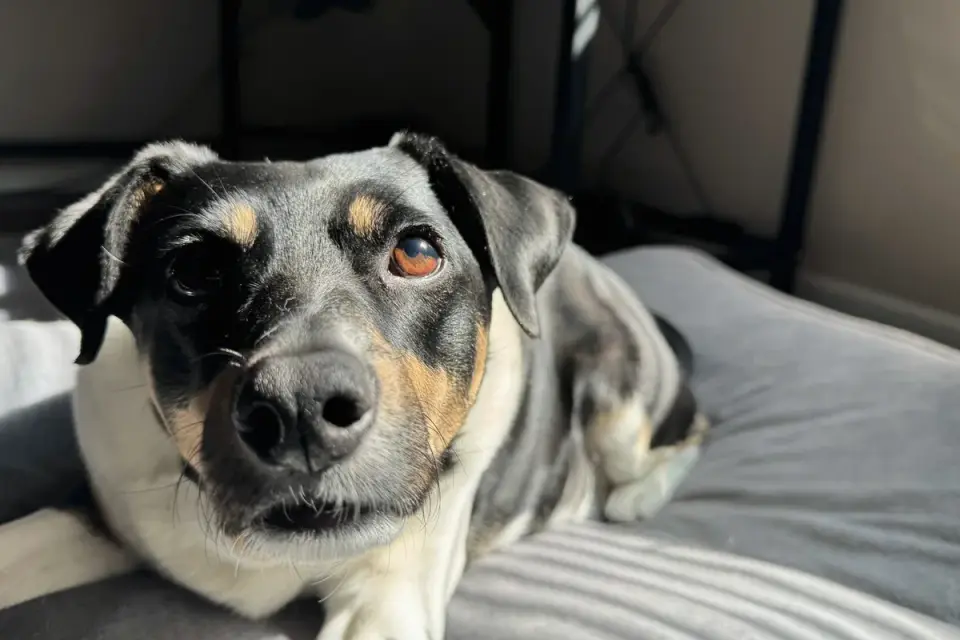
The useful comparison is not “stiff or not stiff.” Almost every arthritic senior dog gets stiffer in winter. The comparison that matters is this dog, this January, against this dog, last January, and against himself two weeks ago.
Weather-linked stiffness tends to be reversible within the same day and proportional to conditions, worse on the coldest, wettest mornings, milder by afternoon or indoors. A genuinely new problem tends to be one-sided rather than general, involve swelling or heat over a specific joint, or persist regardless of temperature or rest. A dog favoring one leg consistently, yelping when a particular joint is touched, or losing muscle over the hindquarters is telling you something a space heater will not fix. That distinction is the whole point of watching closely instead of assuming every winter slowdown is routine.
The American Veterinary Medical Association also flags a related, more urgent risk: arthritic and elderly dogs have more difficulty walking on snow and ice and are more prone to slipping and falling, which can turn ordinary winter stiffness into an acute injury in one bad step.
Comfort measures worth the effort
Much of what genuinely helps is unglamorous. A coat or sweater for a thin-coated or small dog keeps muscles warmer between the car and the front door. Orthopedic bedding in a draft-free spot supports a joint that has already lost cartilage cushioning. Non-slip rugs across hard flooring reduce the slipping that so often triggers a real injury on top of ordinary stiffness. Shorter, more frequent walks on salted or gritted paths tend to serve an arthritic dog better than one long outing or, worse, no movement at all, since complete rest lets a joint stiffen further rather than easing it.
None of these substitute for a veterinary pain plan when one is warranted. They are the scaffolding around it.
Worth reading alongside this: The Best Joint Supplement for Dogs: 5 Formulas Scored on Dose, Evidence, and Testing walks through what the evidence actually supports for joint-support ingredients, and How to Change Food for a Senior Dog Without Wrecking Digestion covers a related seasonal transition many owners make around the same time. If you have also noticed your senior dog reacting oddly to noise this winter, Why an Old Dog Startles at Sounds He Used to Ignore is worth a look, since pain and sensory change often arrive together in an aging dog.
When to call the vet instead of waiting out the season
A dog nearing the end of a long life deserves to be comfortable through every winter he has left, not just monitored for emergencies. Call your veterinarian if stiffness does not ease with warmth and rest, if one leg is clearly worse than the others, if he cries out or pulls away from a touch he used to tolerate, or if he is eating and drinking less alongside the slowdown. Cold weather is a reasonable explanation for a gentle, predictable dip in mobility. It is not a reasonable explanation for pain that lingers, and a dog who is quietly hurting through an entire season deserves better than an assumption.
Frequently asked questions
Is cold-weather stiffness a sign my dog's arthritis is getting worse?
Not necessarily on its own. A predictable pattern, worse on cold or damp days and better once the house or the dog warms up, is typical of weather sensitivity in an arthritic joint. What deserves a vet visit is a change in the baseline: new limping that does not resolve, reluctance to go up stairs he managed last month, or stiffness that lingers well into a warm afternoon.
Do dog coats and sweaters actually help joint pain?
They help keep muscles and connective tissue warmer and more pliable, which can make movement feel easier, particularly for thin-coated or small senior dogs. A coat is not a treatment for the joint itself, but as a comfort measure alongside a vet-guided pain plan, it is a reasonable and low-risk addition.
Should I walk my senior dog less in winter?
Shorter, more frequent walks on safe footing usually beat one long walk or none at all. Complete rest tends to let joints stiffen further, so the goal is steady, gentle movement rather than either extreme.
Sources
- Helping Your Dog with Osteoarthritis — VCA Animal Hospitals
- Cold weather animal safety — American Veterinary Medical Association
- Osteoarthritis — Cornell University College of Veterinary Medicine