Road Trip Packing List: Everything Your Dog Needs
A vet-written, evidence-based packing list for dog road trips — restraint, hydration, motion sickness, and what senior or arthritic dogs need that healthy young dogs don't.
Pack for the dog you actually have — restraint first, water on a schedule, and a plan for the joints that don't love a long car ride.
On this page
Last summer I had a client bring in a nine-year-old Lab mix named Cooper the week before a three-state drive to a family reunion. The owner’s question wasn’t about food or toys. It was: “He can’t really get in and out of the car anymore — what do I even do about that for eight hours a day?” That conversation is the reason I don’t hand out a generic packing list. I hand out a sequence, because what a dog needs changes from the driveway to the rest stop to the hotel room, and it changes again if that dog has stiff hips or a bad shoulder.
Before you load the car: restraint decides the trip
Start here, not with snacks. The American Veterinary Medical Association is direct about this: the safest place for a dog in a moving vehicle is the back seat, properly restrained in a crash-tested crate anchored to the seat or a crash-tested harness clipped into the seatbelt. An unrestrained dog in a collision can be thrown into the front seat, through a window, or crushed by a deploying airbag. That’s not a comfort item, it’s the one thing on this list that changes outcomes in a crash.
If your dog already rides loose in the car out of habit, budget a week of short trips before the real one to get them used to a harness or crate. Don’t try to introduce restraint for the first time on hour one of a road trip.
Packing for the actual hours in the car
Once restraint is sorted, the rest of the list is mostly logistics:
- Food and water for the whole trip, plus extra. Bring your dog’s normal food — a diet switch on the road is a fast route to loose stool in a moving vehicle — and pack roughly an ounce of water per pound of body weight per day as a baseline, more if it’s hot or your dog is anxious.
- A no-spill bowl you can offer at every stop without flooding the back seat.
- Medications and supplements, in their original containers, with a few extra days’ supply in case the trip runs long.
- Leash, collar with ID, and a copy of vaccination records, especially if you’re crossing into a state or region with different tick- or heartworm-prevalence.
- A basic first aid kit — gauze, tweezers for ticks or foxtails, and something to wrap a minor cut.
- Bedding that smells like home and one or two familiar toys, not a suitcase of new ones.
None of this is exotic. What trips owners up is timing, not the shopping list itself.
Motion sickness: the part most lists get vague about
Motion sickness in dogs is real and it’s more common in young dogs whose inner-ear structures are still developing — most outgrow it as they mature, according to AKC Pet Insurance. Practical steps that actually help: withhold food for roughly two hours before departure, get in twenty minutes of exercise before you load up, keep the car cool, and crack a window for airflow. For dogs whose nausea doesn’t respond to those basics, VCA Animal Hospitals notes that anti-nausea medications such as maropitant (Cerenia) or antihistamines like diphenhydramine are options your veterinarian may prescribe — this is a “talk to your vet before the trip” item, not a glovebox guess.
I tell clients the same thing every time: if your dog drools, yawns repeatedly, or goes quiet and still in the first twenty minutes of a drive, that’s early nausea, not car anxiety, and it responds better to a pre-trip plan than to reassurance mid-drive.
What changes for a senior or arthritic dog
This is where I want to slow down, because it’s the part a generic packing list skips entirely. In my practice, the dogs who struggle most on road trips aren’t the anxious ones — they’re the ones with quiet joint pain that owners haven’t fully registered yet. A stiff dog who takes thirty seconds longer than she used to getting up from a nap, or who’s started hopping rather than trotting up the porch steps, is often the same dog who’ll be miserable folded into a back seat for six hours with only gas station stops to move around.
For that dog, add to the list: a ramp or step, sized to your vehicle’s height, so the dog isn’t jumping in and out — repeated jumping onto a hard bumper height is exactly the kind of impact loading that aggravates an already sore hip or elbow. Add more frequent stops, every ninety minutes to two hours rather than the standard three to four, specifically to let the dog walk and reset stiff joints rather than just relieve themselves. And add supportive bedding — a padded mat rather than a bare crate floor — because a joint that’s already inflamed doesn’t do well pressed against a hard surface for hours at a stretch.
The counterargument I hear from owners is that a ramp or extra stops just make the trip longer, and for a dog with mild, occasional stiffness that’s a fair tradeoff to skip. But for a dog who’s already showing daily signs — slow to rise, reluctant on stairs, shorter walks than a year ago — I’d rather build in the extra twenty minutes than manage a flare-up three states from home. That’s the same logic I use for planning beach trips or boarding decisions for older dogs — build the accommodation in ahead of time rather than reacting to it on the road.
The stop-and-arrival stretch owners forget
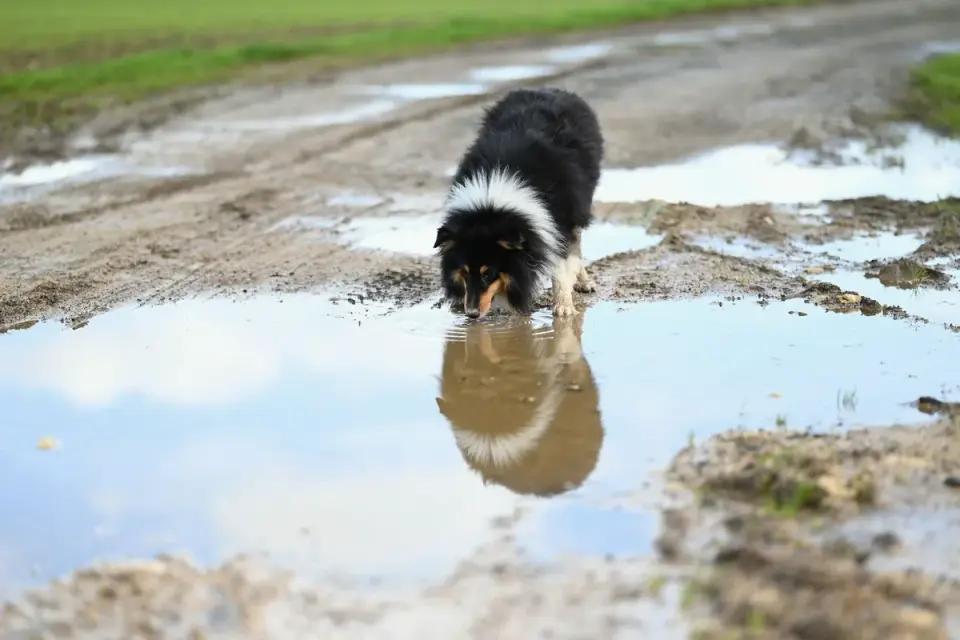
By the time you’re checking into a hotel or arriving at family, the dog’s tolerance for the day is usually lower than the owner’s. I’ve watched this play out with more than one older client dog: everyone’s relieved to be out of the car, and the dog gets walked around a new parking lot on unfamiliar pavement, allowed to jump straight onto a hotel bed, and then can barely move the next morning. If your dog has any joint sensitivity, treat arrival like the end of a workout, not the start of a party — a short, calm walk, a familiar bed height they can get onto without jumping, and food and water on the usual schedule before anything else happens. If you’re flying instead of driving for part of the trip, the restraint and comfort logic carries over — see our guides on airline pet policies and airline-approved carriers for what changes in the cabin.
Where I land
A road trip packing list isn’t really about the items — it’s about sequencing them to the hours your dog will actually spend in the car. Restraint first, because it’s the safety item. Food, water, and meds on a schedule, because that prevents the problems most owners call about. And for any dog carrying stiff joints, a ramp, more frequent stops, and padded bedding aren’t extras — they’re the difference between a dog who arrives tired and a dog who arrives sore. I’d rather a client over-pack for comfort than under-pack for restraint; one is a minor inconvenience, the other is the item that actually protects the dog.
Frequently asked questions
How often should I stop on a road trip with my dog?
Roughly every ninety minutes to two hours for a dog with any joint stiffness, and every three to four hours for a healthy adult dog, to allow water, a bathroom break, and a short walk to reset stiff muscles and joints.
Can I give my dog Benadryl for car sickness?
Diphenhydramine is commonly used to reduce motion sickness by calming inner-ear-driven nausea signals, but dosing and appropriateness vary by dog, so confirm the plan with your veterinarian before the trip rather than dosing on your own.
Do older dogs need anything different for a road trip than younger dogs?
Yes — a ramp or step to avoid repeated jumping in and out of the vehicle, more frequent movement breaks, and padded bedding to reduce pressure on sore joints during long stretches of stillness.
Sources
- Pet safety in vehicles — American Veterinary Medical Association
- How to Reduce Your Dog's Motion Sickness in Cars — AKC Pet Insurance
- Motion Sickness in Dogs — VCA Animal Hospitals