How to Create a Calming Routine for an Anxious Dog
A veterinarian explains how to build a repeatable calming routine for anxious dogs, layering predictability, body comfort, and evidence-bounded supplement choices.
A steady routine helps an anxious dog predict the day, settle the body, and recover faster from stress.

On this page
Tuesday at 5 p.m., the sky bruises purple and a six-year-old 48-pound cattle-dog mix named in spirit starts circling the kitchen island. Her owner can set a clock by it. Shoes come off, mail drops, the dog pants, licks her lips, then wedges behind the trash can. Treats do not land. A walk only adds adrenaline. The owner wants to create a calming routine for an anxious dog, not just survive the evening spike, and that decision — structure instead of rescue — is where I start with almost every worried dog.
My verdict is simple. Predictability calms more dogs than any chew, and any supplement only earns its place when it helps maintain normal relaxation inside that whole-patient picture of sleep, pain, exercise, and training.
That means I do not build a routine around a product. I build it around the nervous system.
Why routine steadies a worried nervous system
Dogs with anxiety live with poor recovery. A trigger fires, cortisol and adrenaline rise, and the dog stays braced long after the noise stops. A fixed sequence — same place, same cues, same order — gives the brain a pattern to recognize.
From a pain-management lens, I also look at the body that carries the worry. Stiff hips, an aching back, or itchy skin lower the threshold for panting, pacing, and vocalizing. Food therapy, gentle movement, acupuncture, and comfortable resting surfaces may help support comfort and mobility, which in turn may help support calmer behavior. It is never just the mind.
Keep it boring on purpose.
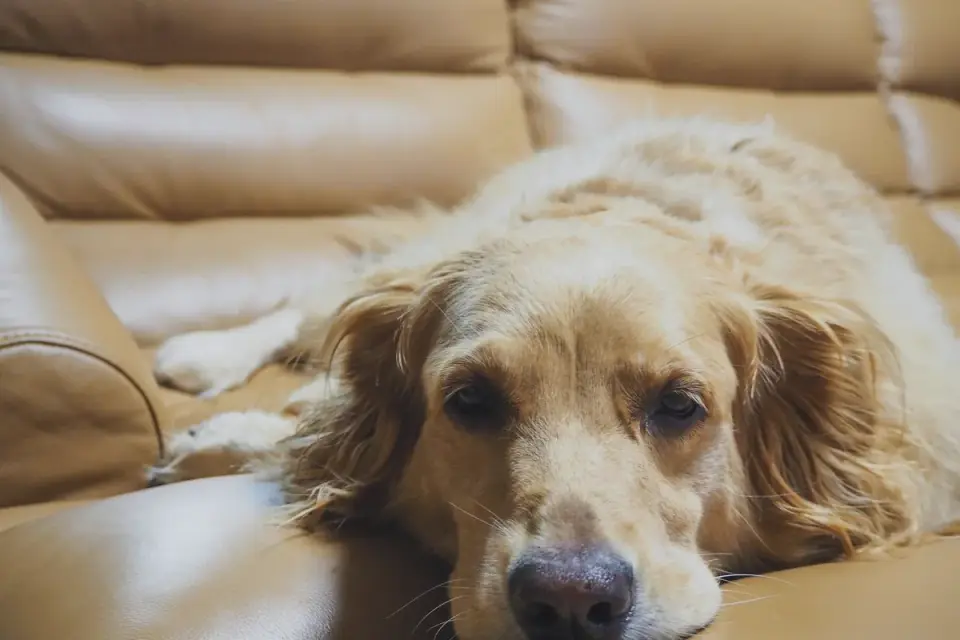
Anchor the day before you add anything
Start with sleep, pain, and predictability. Most anxious dogs I meet are under-rested and over-scheduled, with long alone stretches followed by intense evening attention.
Pick a rest station and protect it. A crate with the door open, a cot in a low-traffic corner, a mat that only means settle. Practice short mat sessions when the house is quiet, reward breathing and hip-shifts, then end. You are teaching the place to mean downshift, not punishment.
Then fix the timeline. Same morning sniff walk, same midday decompression break, same evening wind-down. Three weeks in, owners often report the dog starts heading to the mat before they ask, and that anticipatory settling at 9 p.m. is the marker I trust more than any single calm evening.
For dogs who panic around handling, my guide on how to prepare your dog for a vet visit to reduce fear lays out the same desensitization logic I use at home.
What I actually layer into the evening wind-down
Once the base holds, I add a 30- to 45-minute sequence. Light dims. Background noise drops to low classical or white noise. A lick mat or snuffle search replaces fetch. Slow chest strokes replace pats on the head. Breathing slows together.
This is where the second story matters. A four-year-old 22-pound mini poodle took trazodone before storms, plus a new herbal chew, plus a thunder shirt, all introduced on the same Friday. By day 10 he was groggy, refused breakfast, and still trembled when rain hit the windows. Nothing could be judged because everything changed at once, and the owner felt she had failed. We stripped it back to one change at a time, kept the prescription, paused the extras, and rebuilt the routine step by step. Less felt slower. It worked faster.
If you want mechanics for clinic-day stress, the breakdown in how to keep a dog calm during a vaccine shot or blood draw shows why single-variable changes matter.
Supplements sit inside the picture, not over it
Here is where I am decisive, and where I part from neutral surveys. I will consider a supplement only after sleep, pain, and training are addressed, and I favor ingredients with human or preclinical signals that may help support relaxation without promising sedation.
Ashwagandha has the broadest stress signal of this group. “A systematic review analyzed multiple RCTs and concluded that ashwagandha has a moderate positive impact on stress reduction and cognitive performance,” reviewed in Cureus. That is encouraging but still general-species data, not a canine anxiety trial, so I frame it as may help support stress resilience within a routine.
Chamomile is gentler and thinner in evidence. “For the remaining species, evidence is derived mainly from preclinical studies or traditional use,” as summarized in Biomedicines. I use it in that spirit — traditional support for relaxation, not a fix for panic.
L-theanine, an amino acid studied for calm focus, has the narrowest anxiety signal here: “except for one study on psychotic anxiety (SMD = 0.54; 400 mg/day for 8 weeks)” in a large review published in Molecular Psychiatry. That human dose does not transfer to dogs, and I do not extrapolate it.
The strongest counterargument is fair. Why bother with any of these if canine trials are limited? Because owners need daytime tools while behavior work builds, and a low-risk chew with a plausible mechanism may help support steadiness for some dogs. I still land on routine first because training and environment change the threshold itself.
For deeper ingredient detail, I walk through chamomile and tryptophan tradeoffs in chamomile vs L-tryptophan for calming dogs and in dog calming chews.
The edge case that changes the plan
An eight-year-old 65-pound Labrador started pacing at 2 a.m. three nights a week, panting though the house was cool. The owner assumed anxiety and wanted a stronger evening chew. On exam the dog rose slowly, slipped on hardwood, and guarded his lower back. Night pain, not fear alone, was driving the restlessness. We added rugs, a firmer orthopedic bed, evening short leash walks instead of rough play, and a veterinary pain plan. By week four the midnight pacing had shortened from forty minutes to a brief reposition and sigh. The calming routine stayed, but pain care did the heavy lifting.
Check with your veterinarian before combining calming supplements with behavior drugs, and stop layering if you see sedation, vomiting, diarrhea, or worsening agitation.
Your next step is practical. Write a one-page routine, run it unchanged for fourteen days, and track settling time, panting, and sleep. Adjust one variable at a time.
Frequently asked questions
How long before I know if a calming routine is working?
Give a consistent routine 2 to 4 weeks before judging it. Track how fast your dog settles, how long panting or pacing lasts, and how sleep looks. Change one element at a time so you can tell what helped.
Should I give a calming supplement every day or only before triggers?
Use daily support for baseline restlessness and event-based tools for predictable triggers like storms or departures, under veterinary guidance. Daily use does not replace training, sleep, and pain management.
When is anxiety a veterinary visit rather than a training problem?
See your veterinarian for sudden behavior change, night waking, panting at rest, aggression, self-injury, loss of appetite, or no improvement after 2 weeks of consistent work. Pain, cognitive change, and medical causes need to be ruled out first.
Sources
- Chamomile Evidence Review — Biomedicines
- Ashwagandha Stress and Cognition Systematic Review — Cureus
- L-Theanine Anxiety Meta-Analysis — Molecular Psychiatry