How to Read Dog Body Language: A Beginner's Guide
A vet-written guide to reading canine body language — the signals owners miss, what stress actually looks like on a dog, and when a growl is information, not a problem.
Reading a dog well starts with the tail, ears, and weight, not the growl that shows up after the warnings were missed.

On this page
Maple was a four-year-old shepherd mix, about fifty-five pounds, who came into my exam room because her owner had been bitten while trimming her nails — the first bite in four years of ownership. When we walked back through it together, the warning signs had been there for at least ninety seconds before the bite: ears pinned back, weight shifted onto her back legs, a hard stare at the nail clippers, then a stiff freeze. Nobody in the room had clocked any of it as anything more than “she doesn’t love nail trims.” That’s the pattern I see most: owners aren’t ignoring their dogs, they just haven’t been taught what to look for.
Reading a dog well starts with the tail, ears, and weight, not the growl that shows up after the warnings were missed. Most dogs give you several seconds — sometimes several minutes — of smaller signals before they escalate to a growl, snap, or bite. Learning to spot those signals earlier changes what you do with them: you can create space, end the interaction, or intervene before a dog feels like escalation is the only option left.
Start with the whole dog, not just the tail
A wagging tail doesn’t mean a happy dog by itself, and that’s the single biggest misconception I correct in appointments. Tail position and speed matter more than motion. A tail held high and stiff, wagging in short fast strokes, usually signals arousal or tension — not friendliness. A tail held low, tucked, or wagging in a loose, wide sweep at roughly body height is closer to genuine relaxed greeting.
The mistake owners make is reading one body part in isolation. A dog can wag its tail while its ears are pinned, its weight is back on its haunches, and its mouth is closed tight — that combination reads as conflicted or worried, not happy, even though “the tail was wagging” is what most people report afterward. Read the whole dog: ears, eyes, mouth, weight distribution, and tail together, and weight the story they tell as a group.
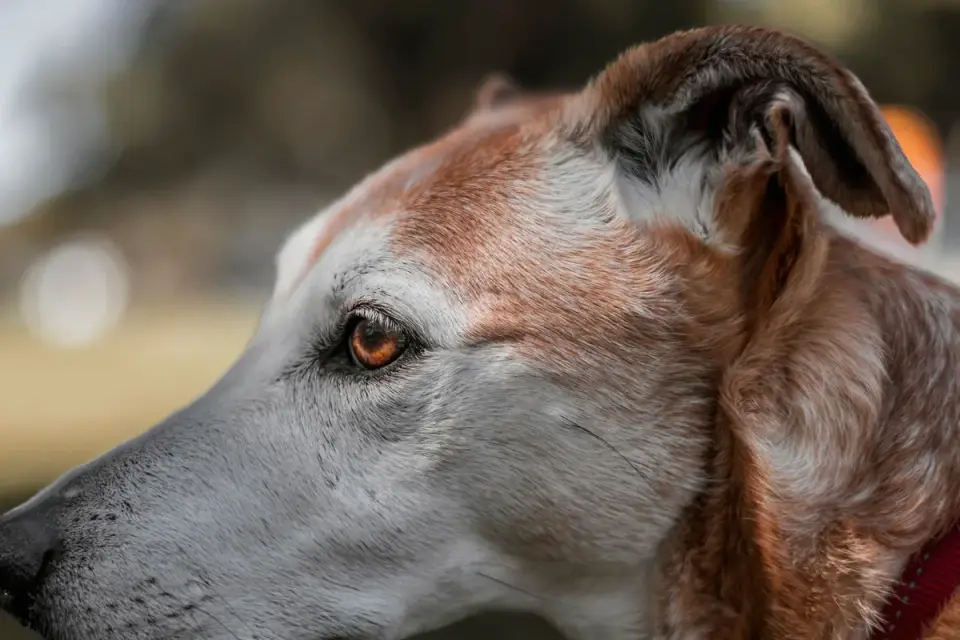
The signals that come before a growl
Dogs have a well-documented set of lower-intensity signals — sometimes called calming or appeasement signals — that tend to show up before overt aggression. In my experience these are the ones owners miss most consistently:
- Lip licking with no food nearby. A quick tongue flick when nothing is being eaten is a common early stress marker.
- Whale eye. Showing the whites of the eyes in a half-moon shape while the head stays turned away from something. If you’re not sure what this looks like in practice, our guide on what whale eye means in dogs breaks down the specific eye and head positioning to watch for.
- Yawning outside of tiredness. A yawn during a nail trim or a vet exam is rarely about being sleepy.
- Weight shifted back or away. A dog leaning its center of gravity backward, even slightly, is voting with its feet before it votes with its teeth.
- A closed, tight mouth replacing a loose, open “smiling” mouth — this shift alone is worth stopping and reassessing the situation.
None of these signals mean a dog is aggressive. They mean a dog is uncomfortable and is asking, in the only language it has, for the interaction to change. Growling is actually further down this list, not the start of it — it’s a dog escalating because the smaller signals didn’t work.
Why the same signal means different things in different contexts
I’ve watched this play out with a lot of dogs, but one that sticks with me was a seven-year-old cattle dog named Otto who growled every time his owner reached to pet him while he was resting on the couch. The owners had been told by a well-meaning friend that this meant Otto was “dominant” and needed to be corrected. When we walked through the actual context — always resting, always a reach from above, always stopping the moment the hand backed off — it looked much more like a dog protecting a resting spot than a dog contesting status. We changed the approach: no reaching over a resting dog, invite him off the couch instead, reward calm approach on his own feet. The growling stopped within a couple of weeks, not because he was punished for it, but because the situation that triggered it stopped happening. If a dog in your home growls specifically when touched, our piece on why dogs growl when petted walks through the more common underlying reasons before you assume the worst one.
Context is the piece most guides leave out. A stiff body and a hard stare mean something different at a dog park gate than they do on a quiet walk with no other dogs around — the same posture can be play-arousal in one setting and real conflict-avoidance in another. If your dog tenses specifically at other dogs on leash, it’s also worth knowing that frustration and true aggression can look nearly identical from a distance; the difference matters for what you do next, which is covered in our guide to barrier frustration versus aggression on leash.
Where stress-support ingredients fit, and where they don’t
Body language is a communication problem first, not a chemistry problem — no ingredient replaces reading the dog correctly and changing the situation that’s triggering the response. But for dogs who run chronically tense — the ones who show these low-grade signals in a lot of everyday contexts, not just one specific trigger — some owners look at calming ingredients alongside training and management, and it’s worth being precise about what the evidence actually supports.
Chamomile has a long history in traditional herbal care for relaxation, but the clinical picture is still thin: a recent review noted that “for the remaining species, evidence is derived mainly from preclinical studies or traditional use,” in Biomedicines. That’s a fair description of where chamomile sits — plausible, traditionally used, not yet backed by strong clinical trial data in dogs specifically.
Ashwagandha has more human clinical evidence behind it. A systematic review published in Cureus “analyzed multiple RCTs and concluded that ashwagandha has a moderate positive impact on stress reduction and cognitive performance.” That’s a moderate, not dramatic, effect, and it’s human data — worth knowing, not worth overstating for a dog.
L-theanine is the one with the most specific dosing data, though again mostly from human research. A review in Molecular Psychiatry found effects across most anxiety measures “except for one study on psychotic anxiety (SMD = 0.54; 400 mg/day for 8 weeks).” I mention the dose only to show how specific the human research gets — it isn’t a dosing recommendation for a dog, and any supplement decision belongs in a conversation with your own veterinarian, not a body-language article.
What I actually tell owners to do
Watch for signals in clusters, not in isolation. Note context — where, with whom, and what just happened right before the signal showed up. And treat a growl as information you were given late, not a behavior problem you need to punish out of the dog; punishing a growl tends to remove the warning while leaving the underlying discomfort untouched, which is a worse outcome, not a better one.
The owners I see most often aren’t bad at reading their dogs — they just were never shown what to look for before the growl. Maple’s owner, once she knew what a pinned ear and a backward weight shift meant, started catching the signal with a full minute to spare before any nail trim went sideways. She didn’t need a different dog. She needed different information, delivered earlier in the sequence than the bite. What would change for you, watching your own dog this week, if you started reading the signal that comes before the one you already know?
Frequently asked questions
What's the very first sign a dog is uncomfortable?
Usually something small — a lip lick with no food around, a quick yawn outside of tiredness, or a slight backward weight shift. These typically show up well before a growl or stiff freeze.
Does a wagging tail always mean a happy dog?
No. Tail position, height, and speed matter more than motion alone. A high, stiff, fast wag often signals arousal or tension, while a loose wag at body height is closer to a relaxed greeting.
Should I correct my dog for growling?
I don't recommend it. A growl is communication, not the problem itself. Punishing it can suppress the warning while leaving the underlying discomfort in place, which raises risk rather than lowering it.
Sources
- Efficacy and Safety of Chamomile in Anxiety and Stress: A Review — Biomedicines
- Ashwagandha and Stress Reduction: A Systematic Review — Cureus
- L-Theanine and Anxiety Outcomes: A Meta-Analytic Review — Molecular Psychiatry