Traveling With a Small Dog vs a Large Dog: What Actually Changes
A vet's evidence-based comparison of how travel logistics, restraint, and joint stress differ between small and large dogs, with practical steps for each.
Traveling with a small dog vs a large dog changes almost every decision, from restraint choice to how often you stop.
On this page
Start with your dog on the exam table, not the map. I ask owners the same three questions before any trip: how big is your dog, how anxious is your dog in the car, and how far are you actually going. The answers split hard along size lines, and most of the advice that follows in this guide splits the same way.
The short version: a small dog under about 20 pounds usually travels best in an approved carrier, secured to the seat, with more flexibility on cabin air travel and hotel logistics. A large dog usually travels safest crated or harnessed in cargo space, needs a bigger vehicle footprint, and carries more joint-load risk on long, cramped drives. Neither size is “easier” overall — the friction just shows up in different places.
The restraint question looks different at 12 pounds and 80 pounds
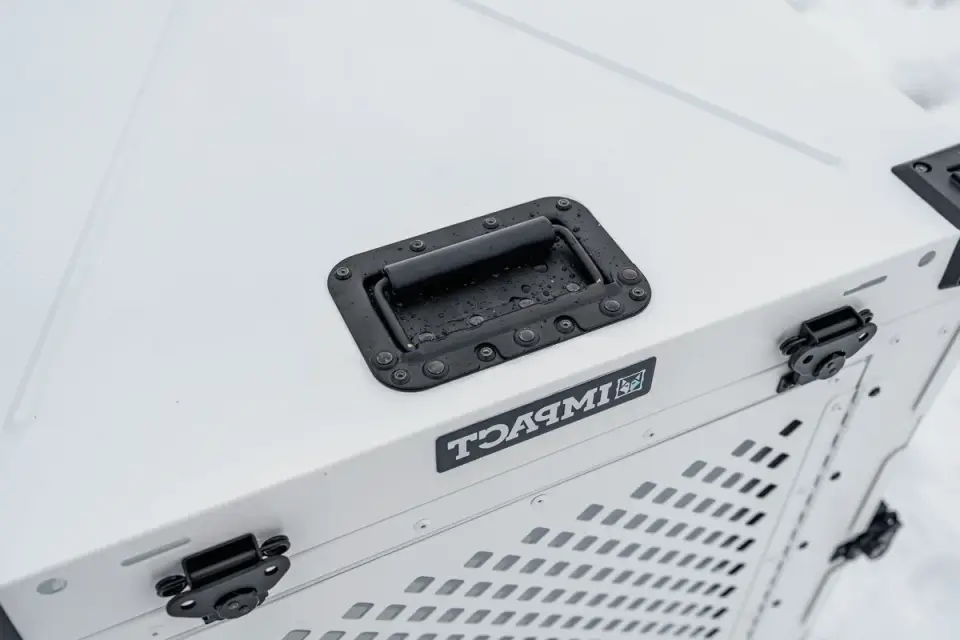
For a small dog, a hard-sided or structured soft carrier that buckles into the seatbelt system is usually the most practical restraint, and it doubles as under-seat airline gear if you fly. For a large dog, a carrier of the same design isn’t realistic in most vehicles, so the choice comes down to a crash-tested crate anchored in cargo space or a crash-tested harness clipped to a rear seatbelt.
This isn’t a cosmetic difference — it’s a tested one. Center for Pet Safety crash-testing of 11 harness products found that only one, the Sleepypod Clickit Utility, met all four of their pass criteria: no catastrophic failure, consistent performance across sizes, keeping the dog on the seat through the crash pulse, and a tether that limits forward travel to six inches or less. Most harnesses marketed as “crash tested” did not meet that bar. Size matters here too — a harness rated for a 15-pound dog is not automatically safe scaled up to 70 pounds, because the forces a large dog’s body generates in a sudden stop are substantially higher.
The Pet safety in vehicles: American Veterinary Medical Association is more general than CPS on brand-level detail but is consistent on the core rule: the safest place for any dog, regardless of size, is the back seat, properly restrained in a crate, carrier, or harness, positioned as close to the center of the vehicle as possible. Unrestrained dogs can become projectiles in a collision, and dogs riding loose in the front seat risk serious injury from an inflating airbag. That guidance doesn’t change by weight class — what changes is which restraint category is even physically an option for your dog.
Space and joint load work against the large dog on long drives
A 10-pound dog can stretch out across a back seat or lie flat in a roomy carrier. An 80-pound dog often can’t fully extend in the average sedan, and that matters more for an older or arthritic large dog than people expect. I’ve had clients describe a stiff-legged, hesitant hop out of the car after a five-hour drive that wasn’t there on the way in — the dog simply couldn’t shift position enough during the trip to keep a hip or shoulder comfortable.
In my practice, I worked with a nine-year-old 75-pound Labrador named Duke whose owners drove twelve hours to a lake house every July. The first two summers, Duke came out of the car reluctant to jump down, circling twice before lying on the cool garage floor, and it took him a good twenty minutes to walk normally. The owners assumed it was just the heat. What actually changed things was breaking the drive into two-hour segments with a real walk at each stop, not just a bathroom break, so Duke could load and unload his joints instead of holding one position for hours. By the third summer, with that schedule plus a padded platform for the crate to take some of the vibration off his hips, he was moving normally within a few minutes of arrival instead of twenty. That’s one dog’s experience, not a controlled result, but the pattern — stopping more often for large or aging dogs — matches what I recommend on the merits regardless.
A small dog is easier to lift, easier to walk on a rest-stop patch of grass, and easier to carry through an airport or hotel lobby without much size-driven joint stress from the travel itself. If you’re managing feeding on the road, the mechanics differ by size too — see this guide on collapsible bowls and feeding gear for traveling dogs for what actually holds up at a rest stop for either size class.
Motion sickness and anxiety don’t sort neatly by size, but treatment options do
Small and large dogs both get carsick, and I don’t see a strong size pattern in my caseload — it tracks more with individual vestibular sensitivity and how much car experience the dog has had. What does differ by size is how you manage it. For dogs of any size with confirmed motion sickness, maropitant citrate (brand name Cerenia) is FDA-labeled for prevention of vomiting due to motion sickness in dogs 4 months and older, dosed by body weight, and the label restricts use to two consecutive days for that indication according to the DailyMed - NIH: DailyMed Cerenia label. That’s a prescription conversation with your vet, not a size-specific home remedy, though dosing volume obviously differs between a 10-pound and 90-pound dog.
Anxiety compounds motion sickness in both directions, and a large, anxious dog is harder to manage physically in a moving vehicle than a small one — there’s simply more dog to keep calm and contained if panic sets in. If you’re flying rather than driving, the calculus shifts again by size class; our guide to flying with a dog covers cabin-eligible weight limits that functionally decide whether a small dog rides with you or a large dog goes as checked cargo, which is its own risk conversation.
What I actually tell owners before a trip
Near the end of a travel-planning appointment, I go back to basics regardless of size: get the dog comfortable with the crate or harness well before the travel day, not the morning of. A dog meeting its carrier for the first time at a rental car counter is a dog primed to panic. The Traveling with your animal: AVMA’s pet travel guidance recommends acclimating pets to crates and restraints in advance and getting them used to car travel with short trips before a long one — advice that applies identically to a Chihuahua and a Great Dane, even though the equipment looks nothing alike.
I’ve counseled owners of small breeds with existing joint concerns — luxating patellas especially — that jumping in and out of the car unsupported is a real risk regardless of trip length, and a ramp or lift matters as much for a 12-pound dog with a bad knee as for a 90-pound dog with hip dysplasia. If your small dog’s daily movement patterns already concern you, our guide on exercise ideas for toy and small breeds is a useful companion to travel planning, since travel days often break a dog’s normal routine in ways that show up in gait a day or two later.
For food changes on the road — a common request from clients worried about GI upset away from home — stick with what the dog already eats when possible; if you’re weighing a diet tweak like sweet potato as a bland option, see what the evidence on sweet potato for dogs actually supports before switching mid-trip.
The honest recap: size doesn’t make travel easier or harder overall, it just moves the hard part. Small dogs face more restraint-quality scrutiny and airline-cabin logistics; large dogs face more physical space and joint-load constraints on long drives. Plan for your dog’s actual size class, not a generic “traveling with dogs” checklist, and the trip goes smoother for both of you.
Frequently asked questions
Is it safer to travel with a small dog or a large dog?
Neither is inherently safer — small dogs have more crash-tested carrier options that fit standard seatbelts, while large dogs need crash-tested crates or harnesses sized for higher-force impacts, per Center for Pet Safety testing.
Do large dogs need more stops on a road trip than small dogs?
Often yes, especially older or arthritic large dogs, since they can't fully extend or shift position in a typical back seat the way a small dog can.
Can I give my dog medication for car sickness regardless of size?
Maropitant (Cerenia) is FDA-labeled for motion sickness prevention in dogs 4 months and older, dosed by weight, for up to two consecutive days — talk to your vet before travel.
Sources
- 2013 Harness Crash Test Study Results — Center for Pet Safety
- Pet safety in vehicles — American Veterinary Medical Association
- Traveling with your animal — American Veterinary Medical Association
- CERENIA- maropitant citrate tablet label — DailyMed - NIH