What Causes Resource Guarding in Dogs? The Science Behind the Growl Over the Bowl
A vet explains the real drivers of resource guarding in dogs — instinct, learning history, and stress — and what actually changes the behavior.
Resource guarding in dogs stems from survival instinct, past experience, and stress — not defiance or a training failure.
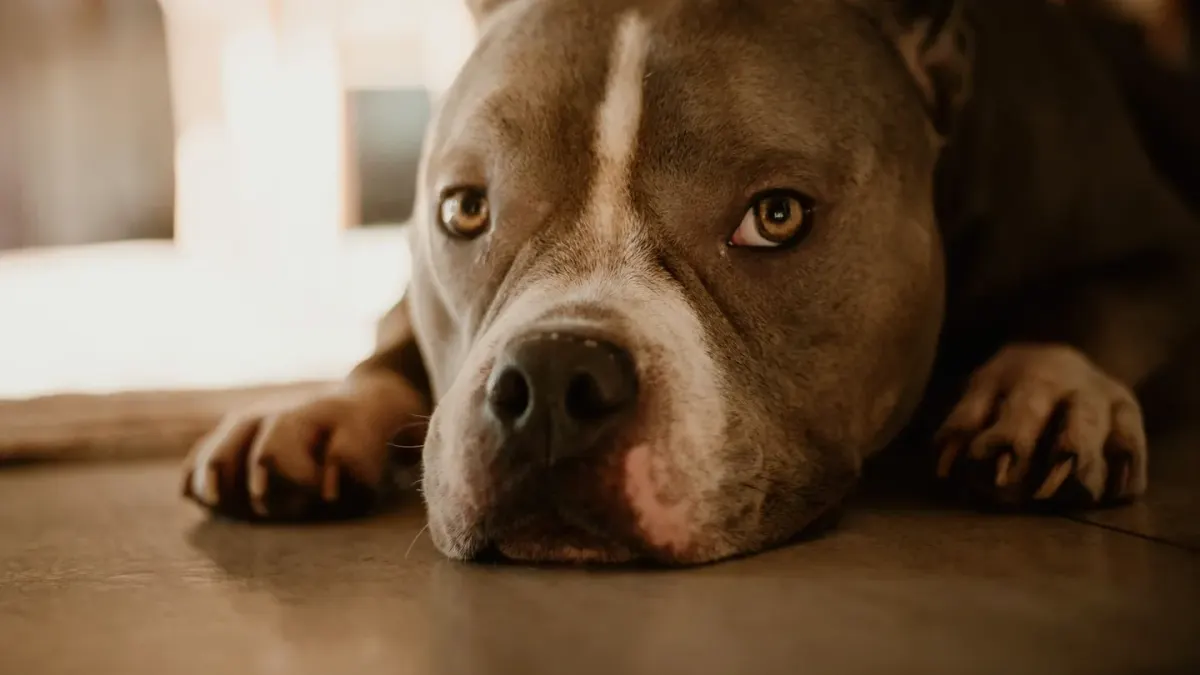
On this page
Start with what I tell every owner in the first five minutes of an appointment: your dog is not being dominant, and you did not create this by feeding him in the kitchen. Resource guarding is a normal defensive behavior that sits on a spectrum, and the plan depends on where your dog falls on it, not on shame or punishment.
I worked with a two-year-old shepherd mix named Cooper, fifty-eight pounds, whose owners first noticed the problem on a Tuesday evening when their ten-year-old reached for a dropped chicken bone. Cooper had never so much as stiffened over his kibble before. He froze, showed the whites of his eyes, and gave a short, low growl before anyone touched him. Within three weeks the same freeze started happening over a stuffed Kong, then over a spot on the couch. The owners were weighing whether to keep him at all with kids in the house, and that fear is exactly what pushes people toward punishment-based fixes that make guarding worse, not better. What changed things was mapping out exactly which resources triggered it, at what distance, and building a management plan before any behavior work started.
Where the Instinct Actually Comes From
Guarding a carcass, a den, or a mate is ancient survival wiring, not a personality flaw. In the wild, an animal that let every resource be taken without contest didn’t eat, and it didn’t reproduce. Domestic dogs inherited that circuitry even though almost none of them are competing for scarce food anymore. The instinct is still there, dormant, until something activates it: genuine scarcity, a startling approach, or a history of resources actually being taken away.
That last point matters more than most owners expect. A dog who has had toys or food snatched away — even gently, even by a well-meaning kid — learns that hands approaching a resource predict loss. The guarding response isn’t random escalation; it’s a learned prediction. Growl, snap, or lunge, and the hand usually retreats. That single reinforcement history can build in a matter of days.
The Learning History That Makes It Worse
Once a dog discovers that a warning signal works, the behavior gets rehearsed and refined. Early on it might be a freeze or a hard stare — what many owners describe as “whale eye,” the visible white crescent around the iris when a dog turns its head away but keeps its eyes locked on the trigger. That’s worth learning to read on its own; we cover it in What Does Whale Eye Mean in Dogs?. If the freeze gets ignored or, worse, punished, dogs often skip straight to the growl next time, because the subtle signal didn’t work.
This is the same escalation ladder you see in other defensive behaviors. A dog that growls when touched during rest is usually protecting a state, not an object, and the guarding logic overlaps quite a bit with what we discuss in Why Does My Dog Growl When I Pet Him? The trigger differs — touch versus possession — but the underlying mechanism, a warning that has worked before, is the same.
The Stress and Anxiety Piece
Guarding rarely shows up in a vacuum. Dogs under chronic stress — a recent move, a new pet in the house, inconsistent routines, or an anxious temperament to begin with — sit closer to threshold already, so a normal trigger produces an outsized response. This is where the research on the canine stress response gets genuinely useful, even though it doesn’t replace training.
A review in Biomedicines looking at chamomile and stress notes that “for the remaining species, evidence is derived mainly from preclinical studies or traditional use” — an honest limitation worth sitting with rather than glossing over. It means chamomile has a long history of traditional use for relaxation, but the controlled dog-specific data is still thin. I don’t lean on it as a behavior fix; I treat it as one small piece of a calmer baseline, nothing more.
Ashwagandha has a stronger evidence base behind it in humans. A systematic review in Cureus “analyzed multiple RCTs and concluded that ashwagandha has a moderate positive impact on stress reduction and cognitive performance.” That’s a meaningfully different evidence tier than chamomile, and it’s the kind of distinction I want owners to actually understand rather than treating every calming ingredient as interchangeable.
L-theanine sits somewhere in between. A review in Molecular Psychiatry found benefit “except for one study on psychotic anxiety (SMD = 0.54; 400 mg/day for 8 weeks)” — a human dosing study, not a canine one, and worth flagging as such. None of this evidence turns a supplement into a substitute for a management plan. It may help support a calmer baseline nervous system in a dog that’s already stressed, which can make the training itself land better. It does not touch the learning history that’s driving the guarding.
Ruling Out Pain and Medical Contributors First
Before any behavior plan, rule out pain. A dog guarding a bed or a specific spot on the floor, especially an older dog, may be protecting a body position that hurts to be moved out of, not the location itself. Sudden-onset guarding in a dog with no prior history deserves a vet visit before a trainer’s phone number. Orthopedic pain, dental pain, and GI discomfort all lower a dog’s tolerance for being approached or handled, and treating the guarding as purely behavioral in that situation wastes weeks.
What I Actually Recommend, In Order
Here’s the sequence I walk owners through, and I keep it in this order on purpose:
First, stop testing the guarding. Don’t reach for the bowl mid-meal to “prove” your dog is fine with it — that’s the exact rehearsal that builds the behavior further. Second, map the specific triggers: which items, what distance, which family members. Third, build management — separate feeding, pick-up-and-trade protocols for objects, baby gates during high-value chew time — so nobody gets bitten while the real work happens. Fourth, bring in counter-conditioning under a qualified trainer’s guidance once the dog is under threshold consistently, not before.
I once had a family try to skip straight to step four with a nine-month-old Labrador who guarded rawhides. It backfired within a week because they were still handing him the rawhide and immediately hovering, which is the opposite of what counter-conditioning requires. Slowing down to management first isn’t the boring option — it’s the one that actually works.
Where Calming Support Fits, and Where It Doesn’t
Set the expectation early: a calming supplement will not resolve possession-based aggression. What it may help support is the physiological floor a dog is starting from — a dog who startles at a normal approach because their baseline arousal is already elevated. Ashwagandha’s evidence base, per that Cureus review, is the strongest of the three ingredients discussed here for general stress reduction; chamomile and L-theanine have more preliminary or human-only data behind them for this specific use. None of the three are a replacement for identifying and managing the actual triggers.
This mirrors a distinction I make constantly with anxious dogs more broadly — the difference between a dog that’s bored and one that’s genuinely anxious changes the whole plan, which is why I wrote about it separately in Boredom vs Separation Anxiety: How to Tell the Difference. Guarding has its own trigger map, but the same principle holds: treat the mechanism, not just the symptom.
When to Call In a Trainer or Behaviorist
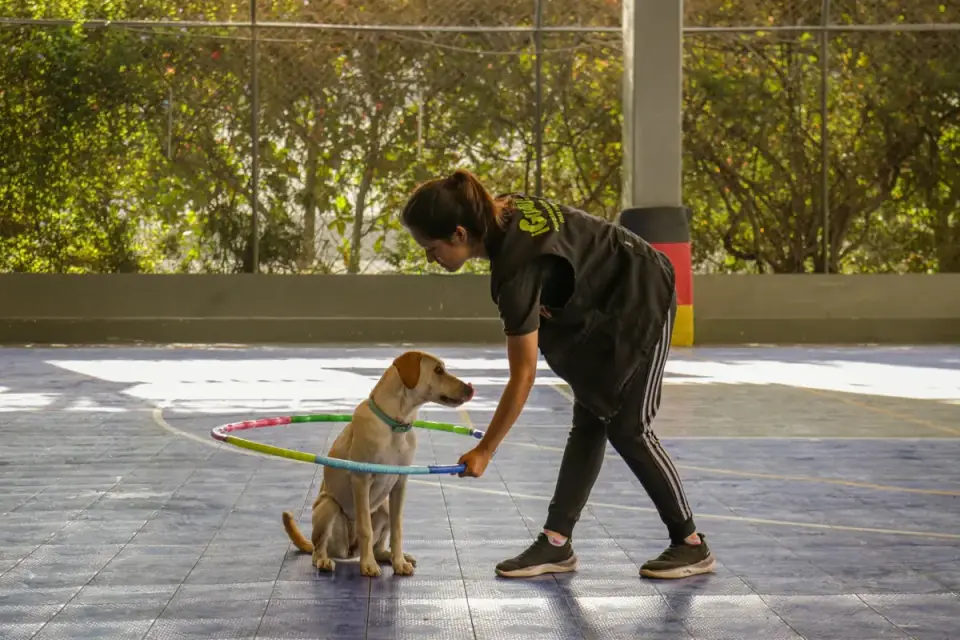
Call a certified trainer or veterinary behaviorist if guarding involves a bite, escalates quickly, extends to guarding people or locations rather than objects, or if you have young children in the home. This isn’t a behavior to manage alone through internet advice once teeth have made contact. It’s also worth distinguishing true possession aggression from generalized frustration around a barrier or leash, which has different roots and a different fix — we break that down in Barrier Frustration vs Aggression: What’s the Difference in Dogs on Leash?
Cooper’s case resolved over about ten weeks of trade protocols and separated feeding, with no punishment involved anywhere in the plan. His owners still don’t reach into his bowl mid-meal, and they don’t need to — that was never really the goal. The goal was a dog who trusts that hands near his resources aren’t a threat, and owners who can read the early signals before a growl is the only warning left.
Frequently asked questions
Is resource guarding the same as dominance?
No. Guarding is a defensive, fear- and instinct-driven behavior, not an attempt to assert rank over the household. Treating it as a dominance problem tends to make it worse because punishment increases the underlying anxiety.
Can a puppy grow out of resource guarding on its own?
Not reliably. Early guarding tends to get rehearsed and reinforced rather than fading, so it's worth addressing management and training as soon as it's noticed, especially in a household with children.
Should I keep testing my dog by taking food away to see if it's improving?
No. Repeatedly taking a resource away to test the dog is the exact rehearsal pattern that strengthens guarding. Trade-based protocols under a trainer's guidance are the safer way to check progress.