Why Does My Dog Yawn and Lick His Lips Around Strangers?
A veterinary guide to the yawning-and-lip-licking pattern dogs show around unfamiliar people — what the behavior means, what the evidence says, and how to respond step by step.
Dogs often yawn and lick their lips around strangers as a calming signal that reflects mild stress or unease.
On this page
- What the Yawn-and-Lick Pattern Actually Means
- Before the Greeting: Reading the Early Signs
- During the Interaction: Separating Social Stress From Simple Excitement
- What to Do in the Moment
- After the Stranger Leaves: Supporting Recovery
- Where Calming Ingredients Fit — and Where They Don’t
- When to Call Your Veterinarian
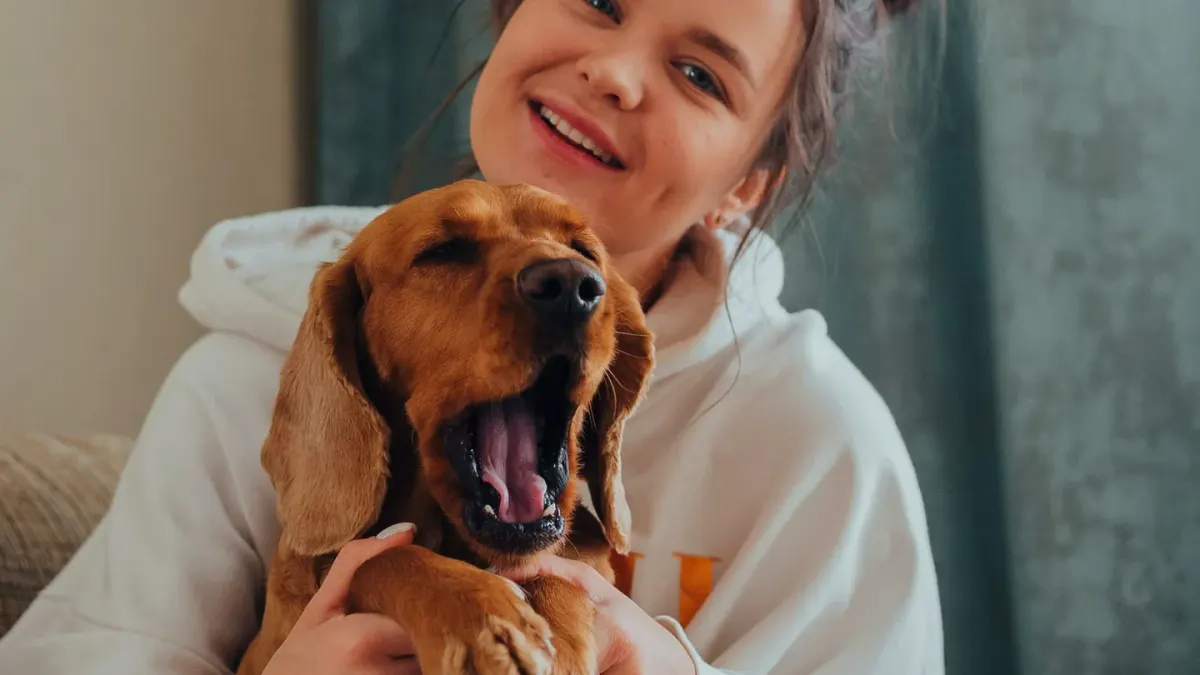
Dogs often yawn and lick their lips around strangers as a calming signal that reflects mild stress or unease. It is one of the more common questions I get in exam rooms: the dog seems friendly enough, tail loose, no growl — but the mouth keeps opening in a wide yawn, and the tongue flicks over the lips every few seconds while a new person leans in. Owners read it as boredom or thirst. It is neither.
What the Yawn-and-Lick Pattern Actually Means
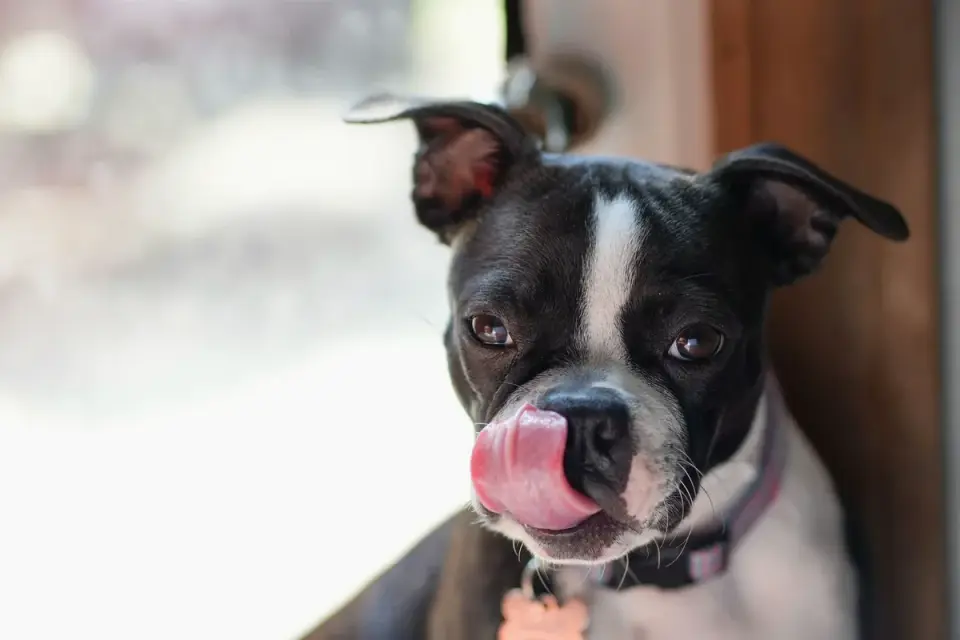
Think of it on a timeline, because that is how it plays out in real encounters. Before a stranger even finishes crossing the room, a sensitive dog is already reading body language — eye contact, pace, tone of voice — and starting to self-regulate. Yawning and lip licking are two of the behaviors researchers call appeasement or displacement signals: actions that don’t fit the immediate context (a dog isn’t tired, hasn’t just eaten) but appear when tension is building. A PMC-indexed study on dogs’ behavioral displays toward familiar and unfamiliar people found these signals shift with the audience, which fits the everyday pattern: the same dog barely reacts to the owner’s return but yawns repeatedly when a delivery driver steps up.
Before the Greeting: Reading the Early Signs
Catch the signal early and the rest of the interaction gets easier. In the seconds before a stranger reaches down to pet, watch for a tongue flick, a slow blink, or a yawn with the head turned slightly away. These are requests for a slower approach, not invitations to lean in further. A dog that is ignored at this stage often escalates to a stiffer body, a lowered tail, or a step back — still calming signals, just louder ones. Some dogs stop here and never need to growl at all.
During the Interaction: Separating Social Stress From Simple Excitement
Context decides the meaning. A yawn at the end of a long walk, right before settling on the bed, is fatigue. The same yawn thirty seconds after a stranger crouches down and reaches out is almost always social stress. Related but distinct patterns are worth knowing, too — a dog that goes further and growls when handled, for instance, is signaling a firmer boundary than a yawn; see Why Does My Dog Growl When I Pet Him? for that escalation. Older dogs sometimes show a version of this that looks more like a startle response than a calming signal, which is covered separately in Why an Old Dog Startles at Sounds He Used to Ignore.
What to Do in the Moment
- Pause the introduction. Ask the stranger to stop approaching and let the dog choose the distance.
- Turn sideways rather than facing the dog head-on; a direct approach reads as more confrontational.
- Skip the hand-over-the-head reach. Let the dog sniff a loosely offered hand at its own pace, or skip contact entirely on a first meeting.
- Reward calm distance, not forced tolerance. A treat dropped near the dog’s feet while it stays back beats a treat used to lure it closer.
- End the interaction while it’s still going well, before the signals escalate.
This is a short list, and that’s the point — the fastest way to make a nervous dog worse is to overcomplicate the greeting.
After the Stranger Leaves: Supporting Recovery
Recovery time matters as much as the encounter itself. A dog that shakes off, sniffs the ground, or settles within a minute or two after the stranger leaves has processed the stress normally. A dog that keeps pacing, panting, or scanning the door for longer stretches is telling you the encounter cost more than it looked like in the moment. Tracking that recovery window over several encounters is one of the more useful things an owner can bring to a veterinary behavior visit.
Where Calming Ingredients Fit — and Where They Don’t
Nutraceuticals are a supporting layer, not a substitute for managing the introduction itself. Chamomile has long-standing traditional use for relaxation, though Biomedicines notes that “for the remaining species, evidence is derived mainly from preclinical studies or traditional use.” KSM-66 ashwagandha has firmer human data behind it: a systematic review published in Cureus “analyzed multiple RCTs and concluded that ashwagandha has a moderate positive impact on stress reduction and cognitive performance.” L-theanine’s evidence is narrower still — a review in Molecular Psychiatry found a meaningful effect size in one anxiety study, “except for one study on psychotic anxiety (SMD = 0.54; 400 mg/day for 8 weeks),” a human dosing context that shouldn’t be extrapolated onto a dog’s bowl. For a side-by-side look at two of the most common calming ingredients, see Chamomile vs L-Tryptophan for Calming Dogs.
I think of these ingredients the way I think of acupuncture or food therapy in a pain-management plan: each may help support the nervous system’s baseline, but none of them replace reading the dog in front of you. A supplement can take the edge off a chronically anxious dog’s day; it won’t teach a stranger to stop reaching over a nervous head.
When to Call Your Veterinarian
Book a visit if the yawning and lip licking spreads beyond strangers into everyday handling, if it’s joined by whale eye or a tucked tail, or if the dog starts refusing walks and visitors altogether. Sudden onset in an older dog is also worth a checkup, since pain and reduced vision can lower a dog’s tolerance for surprises. A veterinarian can rule out a medical driver and, if needed, refer the case to a veterinary behaviorist for a structured desensitization plan.
Most of the time, though, the answer is simpler than owners expect: the dog is fine, is just a little unsure, and is telling you so in the clearest language it has.
Frequently asked questions
Is it normal for a dog to yawn a lot around new people?
Yes. Repeated yawning that shows up specifically when a stranger approaches, and not around naptime, is a well-documented calming signal rather than fatigue.
Should I comfort my dog when he lip-licks around strangers?
Give space rather than heavy reassurance. A calm, low-key retreat to a comfortable distance teaches the dog the signal worked, without reinforcing panic through excited coddling.
When does yawning and lip licking mean something more serious?
If it's paired with stiff posture, a tucked tail, whale eye, or if the dog starts avoiding all new people and places, ask your veterinarian about a referral to a veterinary behaviorist.
Can supplements stop a dog from yawning around strangers?
Ingredients like chamomile, ashwagandha, and L-theanine are studied for general stress support, but none of them treat the underlying fear driving the signal — management and, often, training come first.
Sources
- Audience Effect on Domestic Dogs' Behavioural Displays and Facial Expressions — PMC
- Chamomile in Anxiety and Stress: A Review — Biomedicines
- Ashwagandha for Stress: A Systematic Review — Cureus
- L-Theanine and Anxiety: A Review — Molecular Psychiatry