Sweet Potatoes Are Good for Dogs When Cooked Plain
Cooked plain sweet potato can be a fiber-rich topper for dogs. Learn safe portions, prep rules, and when to skip it.
Sweet potatoes are good for dogs when cooked plain and kept to a small measured topper.
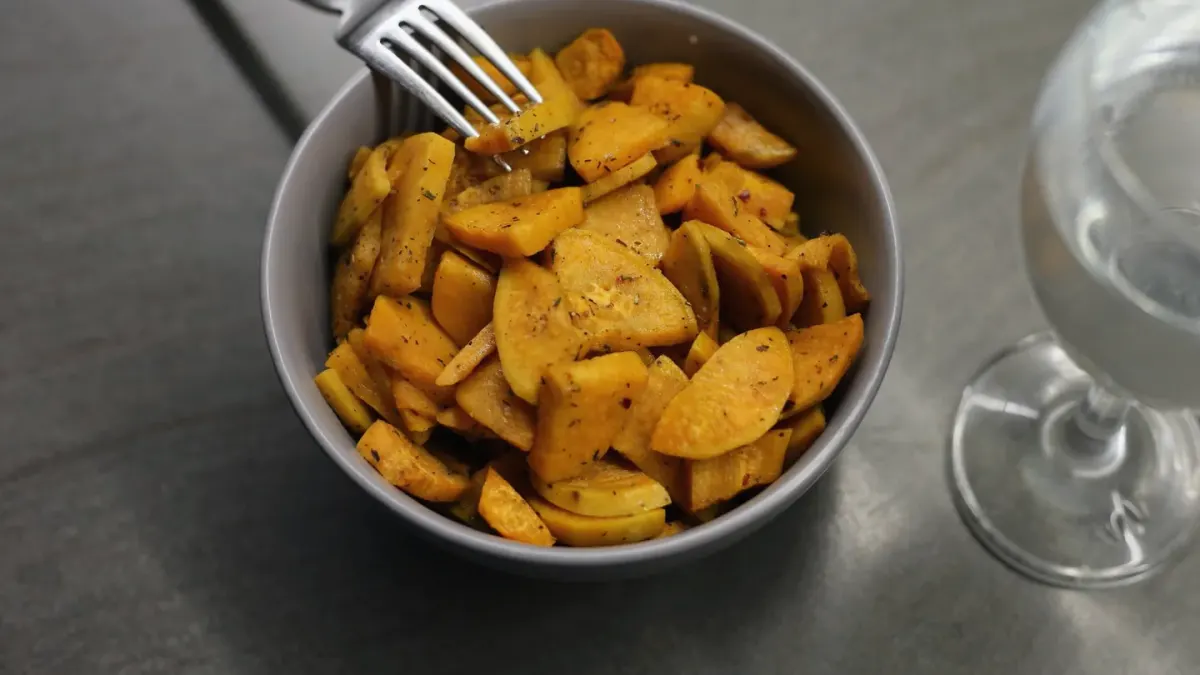
Cooked, peeled, plain sweet potato fits most adult dogs well as a small carbohydrate topper, not as the base of the meal. From a food-therapy view it reads as gently supplementing and moistening, while in Western terms it is cooked starch plus soluble and insoluble fiber with beta-carotene, potassium, and vitamin C that may help support normal digestion and help maintain balanced nutrition when the main diet stays complete.
What plain cooked sweet potato adds to the bowl
Cooking softens cell walls and starch granules, which makes it easier to chew and digest than raw chunks. In vitro work reported in the Journal of Animal Science found bacterial alpha diversity metrics increased (P < 0.01) during acacia fiber fermentation and decreased during inulin and pectin fermentation, illustrating how different fiber types can shift fermentation patterns.
That fiber mix is why owners often notice smaller, firmer-volume changes in stool rather than a true fix for diarrhea or constipation. In TCVM language, that is Spleen Qi deficiency with mild dryness — a dog that is tired after meals, has soft or variable stools, and does well with warm, cooked foods. Sweet potato may help support normal bowel regularity as part of a balanced meal, but it does not replace diagnosis or treatment for persistent vomiting, bloody stool, weight loss, or pancreatitis.
Keep the expectation narrow. There are no controlled feeding trials showing joint, skin, or immune benefits from sweet potato itself in dogs. Treat it as palatable fiber and energy, similar to how plain pumpkin is often used as a measured fiber addition — see Adding Pumpkin to Your Dog’s Meals: How Much Actually Helps Digestion.

How to cook, peel, and portion it safely
Peel, cube, then boil, steam, bake, or microwave until completely soft with no seasoning, butter, oil, marshmallow, brown sugar, garlic, or onion. Mashed or small soft cubes are safest. Cool to room temperature before serving.
Raw sweet potato is not toxic, but hard chunks are difficult to digest and raise choking risk, especially for small dogs and fast eaters. Fried pieces, chips, skins with butter, and casserole leftovers are the wrong form because added fat and seasonings can upset the stomach.
Portion as a topper. For most healthy adult dogs, keep extras including sweet potato to under 10% of daily calories, mixed into a complete diet:
- Small dogs under 20 lb: 1-2 teaspoons cooked mash
- Medium dogs 20-50 lb: 1-2 tablespoons
- Large dogs over 50 lb: 2-4 tablespoons
Start with half that amount for 2-3 days and watch stool, appetite, gas, and itch. Randy, for example, was weighing whether to add a spoonful for Sammi, his 10-year-old spayed Miniature Australian Shepherd in Victorville, because she begs during meal prep and tends toward soft evening stools. A measured teaspoon stirred into her regular dinner, rather than a separate bowlful, keeps the test clear: if stools stay formed and weight stays steady, it fits; if gas or looseness appears, stop and return to the base diet.
Dogs that need tight calorie control, diabetic dogs, dogs with chronic kidney disease on potassium restriction, dogs with recurrent calcium-oxalate stones, and dogs with food allergies should only try it after veterinary guidance. For context on other plain cooked options, compare Can Dogs Eat Eggs? A Nutritionist’s Honest Read on Raw, Cooked, and How Much and Can Dogs Eat Apples? What the Evidence Actually Supports.
When to keep it smaller or skip it
Skip sweet potato when a dog has ongoing vomiting, diarrhea beyond 24-48 hours, abdominal pain, loss of appetite, or a known diagnosis that requires a prescribed diet. A topper can mask a trend your veterinarian needs to see.
Use extra caution with fried, seasoned, or candied forms, whole raw pieces, vines and leaves from home gardens, and any commercial treats where sweet potato is paired with xylitol, raisins, chocolate, onion, or excess fat. When in doubt about wild plants or table foods with mushrooms or alliums, the risk rules for Are Mushrooms Safe for Dogs? What Actually Determines the Risk and onion toxicity apply: plain and identified is different from mixed and unknown.

If sweet potato consistently loosens stool, increases gas, drives weight gain, or replaces balanced food, it is not helping maintain balance for that dog. Return to the complete diet, save the leftovers for people food, and ask your veterinarian about fiber alternatives that fit the diagnosis.
Frequently asked questions
Are sweet potatoes good for dogs with sensitive stomachs?
A small amount of cooked, peeled, plain sweet potato is often tolerated, but stop if gas, loose stool, or vomiting appears and ask your veterinarian if signs last more than a day or two.
Can dogs eat sweet potato skins?
Soft, plain cooked flesh is preferred. Skins can carry soil, seasoning, and extra fiber that upsets some dogs, so peel before cooking.
How much sweet potato can I give my dog?
Keep it as a topper under 10% of daily calories — usually teaspoons for small dogs and 1-4 tablespoons for larger dogs — mixed into a complete diet.