Can Dogs Eat Pizza Rolls? Why Vets Say No
Pizza rolls pack fat, salt, cheese, garlic and onion into one bite. Learn risks, signs to watch, and safer swaps.
No — dogs should not eat pizza rolls, because even one combines excess fat, salt, garlic and onion.

On this page
A dropped pizza roll rarely stays on the floor for long, but I do not let dogs keep that prize. In practice the dough pocket, melted cheese, seasoned tomato sauce, garlic and onion powder all land together, and from both a Western and a food-therapy view that combination reads as greasy, salty Dampness with pungent Alliums that irritate blood and gut. A patient of mine, Polly, a 7-year-old spayed female Pomsky mix from Kenosha, Wisconsin, grabbed two off a coffee table while her owner Olivia turned to answer the door. Polly vomited once that evening and passed soft stool overnight, then settled with bland meals and rest. That outcome was common, not guaranteed — smaller dogs and dogs with sensitive pancreases can fare worse from the same amount.
What is actually inside that small pocket
A typical frozen pizza roll is enriched wheat dough around cheese, tomato paste, pepperoni or sausage bits, oil, around 150–200 mg sodium per piece, plus garlic powder, onion powder, oregano and preservatives. None of those parts helps maintain balanced nutrition for a dog, and several work against it.
Fat and cheese are the first problem. A rich, fatty meal can upset the stomach in any dog and may help trigger pancreatitis in susceptible dogs, with vomiting, belly pain, hunched posture and loss of appetite.
Salt is the second problem. Plain cooked starches like bread are bland by comparison, while one or two pizza rolls can carry a surprising sodium load for a 10- to 20-pound dog. Watch for excess thirst, restlessness and then vomiting or diarrhea.
Why garlic and onion matter even in powder form
Allium vegetables — onion, garlic, leeks and chives — can damage canine red blood cells and cause Heinz-body hemolytic anemia. Powdered forms are more concentrated per gram than fresh, so seasoning blends count. The Merck Veterinary Manual describes Allium toxicosis in animals, including weakness, pale gums, rapid breathing, vomiting and dark urine developing a day or more after eating.
A single lick of sauce is unlikely to cause anemia, but pizza rolls stack onion plus garlic plus fatty meat in one bite. That layering is why my answer stays no even for “just one.” Dogs with existing anemia, senior dogs like Maddy, and Japanese breeds need extra caution, and any known onion or garlic concentrate ingestion deserves a call to a veterinarian.
What to do if your dog ate pizza rolls
Count how many disappeared, save the box for the ingredient panel, and note the time. For one small bite in a healthy adult dog, most owners can monitor at home for 24–48 hours: appetite, energy, stool, vomiting, belly tenderness and gum color.
Call a veterinarian promptly for more than a taste, for puppies and small breeds, for repeated vomiting, bloody stool, marked lethargy, abdominal pain, pale gums or collapse, or if the product contained xylitol/birch sugar — rare in pizza rolls but worth checking. Do not induce vomiting unless directed.
At the clinic we often check hydration, palpate the abdomen, and in Allium exposures may check a complete blood count over several days, since changes lag behind ingestion. Treatment is supportive: fluids, anti-nausea care, low-fat bland diet during recovery, and oxygen or transfusion in severe anemia cases. Food therapy after a greasy indiscretion leans bland and easy to digest while the Spleen-Stomach system settles.
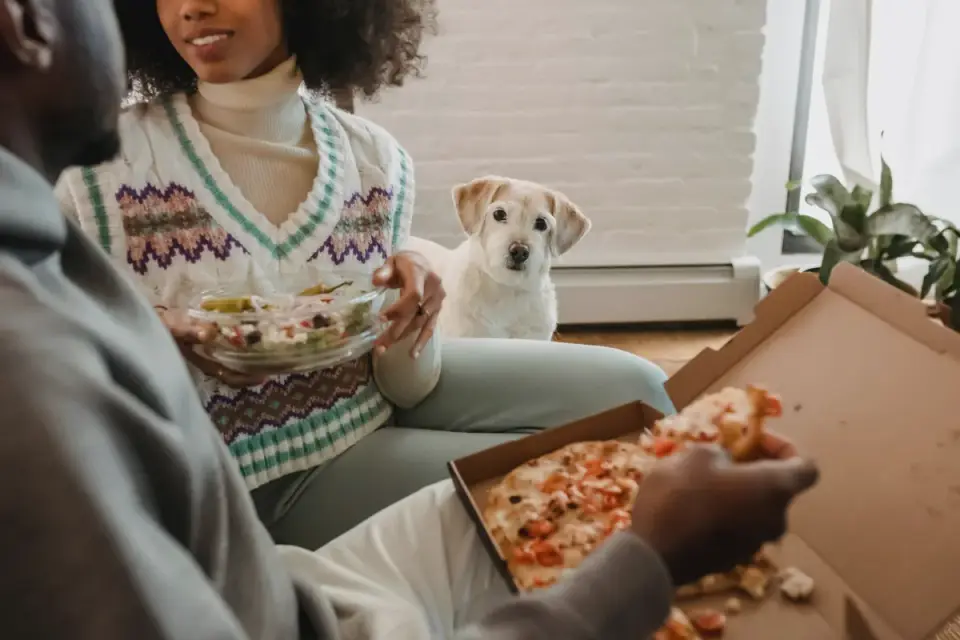
Safer ways to share the moment
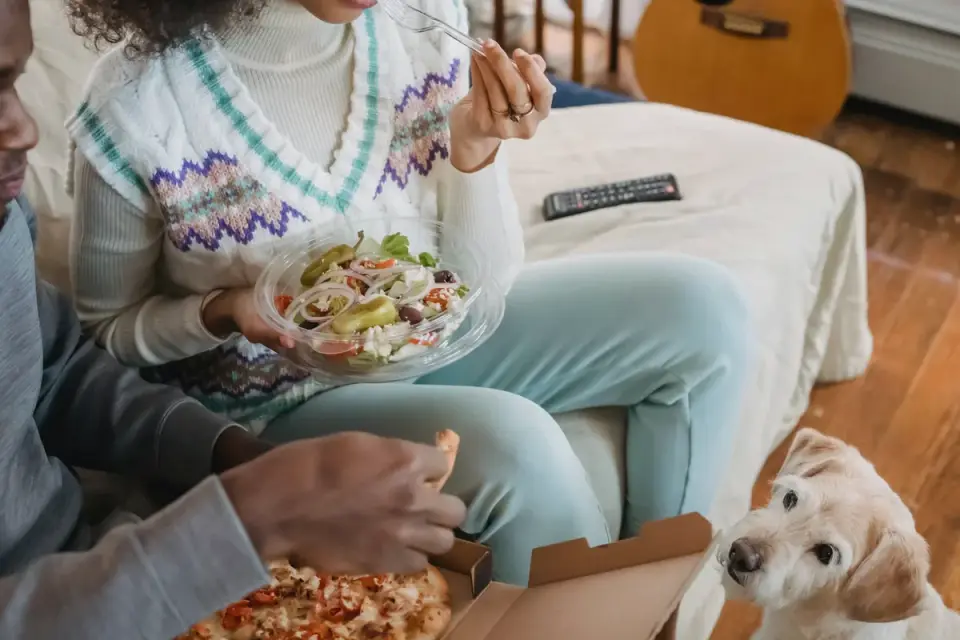
Dogs beg because pizza smells like fat, cheese and meat, not because they need it. Keep the pattern clear: people snacks stay on the table, dog food stays in the bowl.
When you want to include your dog, offer a small piece of plain cooked chicken, a bite of plain baked potato, or a dog-safe fruit used as a training reward. Owners in my classes often find blueberries or small cubes of apples hold attention without the grease, and tiny bits of bananas work for some dogs in strict moderation.
Avoid deli pepperoni, extra cheese, buttery crusts and seasoned sauce as “safer” pizza pieces — they carry the same fat-salt-Allium load in a different shape. If begging drives constant table-stealing, feed the dog before your meal, use a mat or crate station, and save favorites for harder training moments.
The bottom line for owners
Pizza rolls offer no nutritional trade worth making: refined dough, saturated fat, sodium and Allium seasonings that may help support gut upset in the short term and red-cell or pancreatic harm in larger or repeated exposures. From a TCVM view, that greasy, salty, pungent mix fans Damp-Heat while taxing digestion. Plain, minimally seasoned whole foods in tiny amounts keep both frameworks calmer.
For related context, read Can Dogs Eat Apples? What the Evidence Actually Supports.
For related context, read Can Dogs Eat Avocado Safely? What the Fat, the Pit, and the Persin Actually Mean.
Frequently asked questions
Can dogs eat one pizza roll?
No. Even one contains fat, salt, cheese, garlic and onion powder. Most healthy adult dogs may only get mild upset, but the risk is not worth it and small dogs are more vulnerable.
What if my dog ate several pizza rolls?
Note the number, save the ingredient panel, and call your veterinarian. Watch for vomiting, belly pain, diarrhea, lethargy, pale gums or dark urine over the next 1-3 days.
Are the garlic and onion in pizza rolls enough to poison a dog?
They can contribute to Allium toxicosis, especially with repeated exposure or in small dogs. Powdered seasonings are concentrated. Any concerning amount or symptoms warrant veterinary advice.