7 Facts About Dog Sleep in Cars and Parked Risks
Can dogs sleep safely in the car? A vet explains motion sleep, restraint, and why parked cars turn risky fast.
Dogs can sleep soundly in a moving car when restrained, cool, and settled — parked cars are the risk.
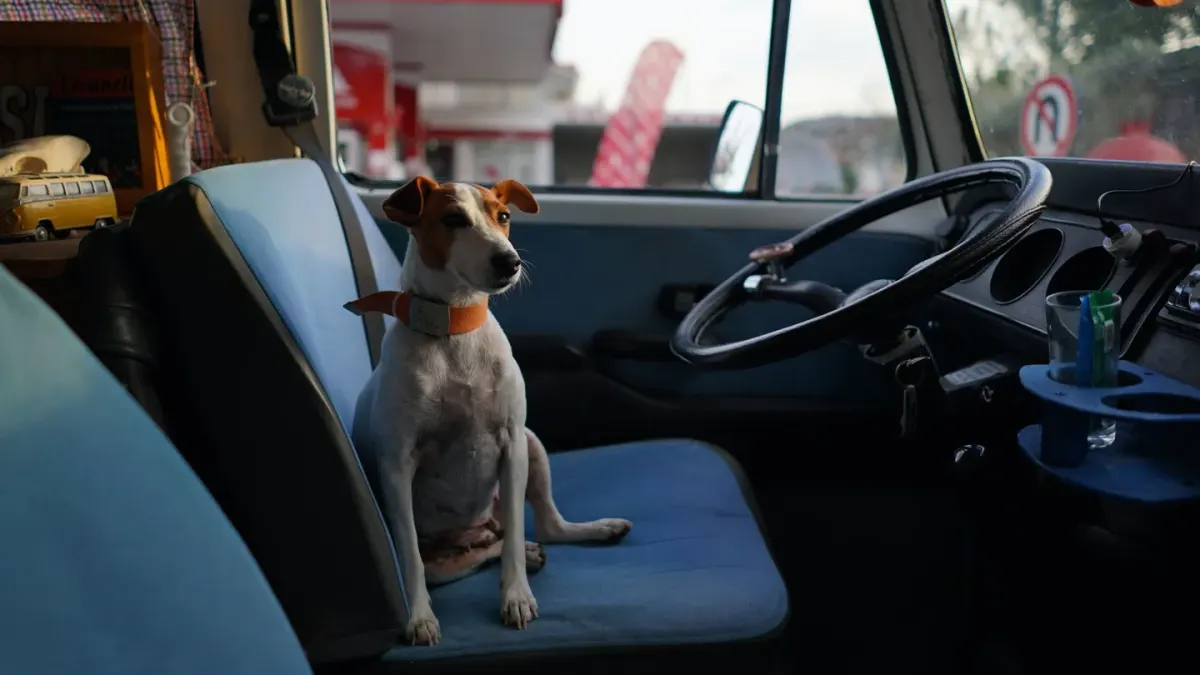
Donald knew his 7-year-old Akita mix Alisa only truly relaxed about 20 minutes into the drive from Riverside, when the vibration settled and she folded onto the back seat with a long sigh. That pattern is common, and my expectation for clients is this: sleep in a moving, restrained, climate-controlled car is generally fine, while sleep in a parked car is where heat and ventilation risks begin.
Vestibular and auditory input explains much of the difference. Steady low-frequency motion, engine hum, and reduced novelty lower arousal, which is why many dogs cycle from alert watching to drowsy lying to light non-REM sleep on the highway. It is rest, but it is lighter and more interrupted than home sleep, with braking, turns, and stops causing brief awakenings and postural adjustments.
That fragmentation matters for comfort, not just safety. An unrestrained sleeping dog slides during stops, braces with neck and limb muscles, and wakes stiff. A dog secured in a crash-tested crate or with a tested harness on the back seat can relax muscle tone without bracing, which is why restraint improves both crash protection and sleep quality. The trade-offs among those options are detailed in Dog Car Seat Belt vs Crate vs Barrier: Which Restraint Is Safest? and in Crash-Test Ratings for Dog Car Restraints, Explained.
My recommendation is settled and specific: back seat only, restrained, climate control on, with a non-slip surface and head support. Vets often see neck soreness and anxiety in small dogs that try to balance on a slick seat, and in practice, a familiar blanket plus a pre-drive walk does more for sleep than any calming supplement. Alan’s 7-year-old Miniature Schnauzer mix Nila, from San Francisco, is a useful illustration — she paced for three 40-minute trips until Alan added a crate pad, covered the carrier on three sides, and kept the rear vents open, after which she lay down within 10 minutes.
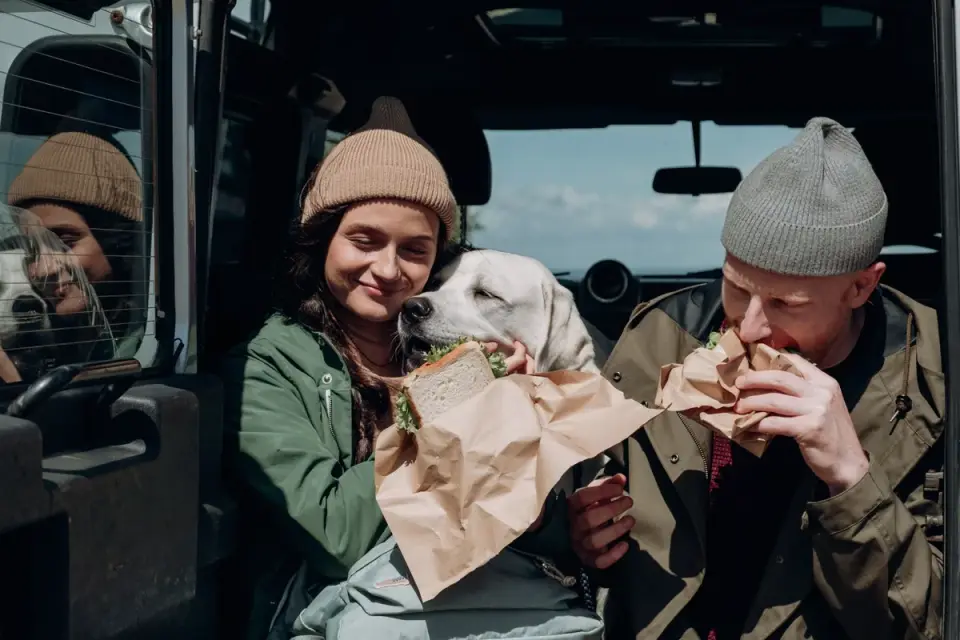
Parked sleep is a different physiology. Dogs cool mainly by panting, not sweating, so cabin heat rises faster than owners expect even with cracked windows. The American Veterinary Medical Association warns never to leave pets alone in parked vehicles because temperatures can climb to life-threatening levels in minutes, and cracked windows do not prevent heatstroke.
Why a parked car changes the equation so fast
Heatstroke physiology is straightforward: panting moves heat out only if surrounding air is cooler and moving. In a closed cabin, panting recirculates hot, humid air, core temperature rises, and a sleeping dog notices late because sleep blunts behavioral responses like seeking shade or vocalizing. Early signs include heavy panting, drooling, restlessness, then glazed eyes, vomiting, or collapse.
VCA Hospitals notes that brachycephalic breeds, older dogs, puppies, and dogs with heart or airway disease overheat fastest, and that heatstroke can progress to organ injury even after cooling begins. That is why I do not accept “she is just sleeping, I will be five minutes” as a plan. If you must stop with a dog in warm weather, one person stays with the engine and air conditioning running, or the dog comes with you.
Cabin-heat data from vehicle studies are sobering. The National Highway Traffic Safety Administration reports that parked vehicle interiors can rise by 20 degrees in 10 minutes, which is why child-and-pet heatstroke campaigns treat any parked-vehicle wait as unsafe.
Cold, noise, and air quality count too. Winter cabins drop quickly once the engine stops, exhaust or idling in garages risks carbon monoxide, and front-seat airbags make the front seat unsafe for sleeping dogs of any size, as explained in Is It Safe for Your Dog to Ride in the Front Seat?.
How to set up real rest on the road
Keep expectations preventive: motion sleep may help support calm behavior on travel days, but it does not replace nighttime sleep. Plan a potty and sniff walk every 2 to 3 hours, offer water at stops, keep the cabin near 68 to 72 degrees when possible, and watch for non-sleepy signals — whining, drooling, yawning, or refusal to lie down can signal motion sickness rather than tiredness. More on that distinction is in Do Puppies Outgrow Car Sickness?.
What would change my mind is controlled evidence that unrestrained car sleep is as safe, or that cracked windows keep parked cabins safe. Current heat-transfer physics and veterinary heatstroke reports do not support either claim.
For now, let a restrained dog nap while you drive, and never let a parked car become the bedroom.
Frequently asked questions
Is it normal for my dog to fall asleep in a moving car?
Yes. Steady motion and lower stimulation reduce arousal, so many dogs doze after 15 to 30 minutes. Provide restraint, a non-slip surface, and cool airflow so the dog can relax without bracing.
Can I let my dog sleep in a parked car with windows cracked?
No. Cabin temperature can rise 20 degrees in 10 minutes, cracked windows do not prevent heatstroke, and a sleeping dog responds late to overheating. Take the dog with you or keep climate control running with an adult present.