How Long Can a Dog Safely Ride in a Car in One Day?
How long can a dog ride in a car in one day? A vet explains safe driving limits, breaks, and joint, age, and heat factors.
Most healthy adult dogs do best with 6 to 8 hours of total travel and a real break every 2 to 3 hours.

You are staring at an eight-hour drive on the map app, and your co-pilot is already asleep on the back seat with his chin on your bag. That was the setup for a couple I counseled last spring before a move from Ohio to Colorado: a healthy four-year-old, 58-pound Labrador mix, a single overnight planned, and one long first day they hoped would cover nearly 11 hours. The dog had done two-hour hikes without trouble, but he had never done more than 90 minutes in the car without a stop. They wanted a number, and they wanted to know what would actually force them to stop sooner.
My answer was not a single mileage limit. For that Lab, I set an expectation first: plan for no more than 6 to 8 hours of total car time in one day, with a 15- to 20-minute break every 2 to 3 hours for water, a potty walk, and a chance to move stiff legs. He could likely handle a longer day once, but comfort and joint stiffness fall off faster than most owners expect after hour six. That range is my default for healthy adult dogs, then I tighten it for age, heat, anxiety, and motion sickness.
Where I land on a daily limit
Healthy adult dogs can often tolerate 6 to 8 hours in the car in a day when the day includes regular stops, water, ventilation, and a proper restraint. Puppies, seniors, brachycephalic breeds, and dogs with arthritis, cardiac disease, or anxiety usually need a shorter day, closer to 4 to 6 hours, with more frequent breaks.
The strongest counterargument is that many dogs sleep through 10- to 12-hour drives without obvious harm. That happens. A calm adult dog in cool weather with good airflow may rest quietly for long stretches. I still land on the shorter range because stillness is not the same as comfort. Prolonged confinement limits water intake, delays urination, stiffens arthritic joints, and raises heat risk at every stop. The ASPCA makes the same practical point in its car-travel guidance: plan stops for exercise and relief, never leave a dog unattended in a vehicle, and secure the dog to prevent injury.
What the hours actually do to the body
Think in systems rather than miles. Bladder capacity sets one clock. Most adult dogs need to urinate every 4 to 6 hours, and holding longer creates discomfort and accidents. Hydration sets another. Dogs drink less in a moving car, especially anxious dogs, so scheduled offers matter. Joints set a third clock. Cartilage has no direct blood supply and depends on movement for nutrient exchange, which is why a dog with early arthritis may rise stiff after three hours even if he slept peacefully.
Heat is the clock that can turn dangerous. A parked car gains heat in minutes, even with cracked windows. Restraint matters too. An unrestrained 50-pound dog becomes a projectile in a sudden stop, which is why I point owners toward the crash-test work summarized by the Center for Pet Safety when we discuss harnesses and crates.
That failed approach I see most often is the nonstop push. An owner of a nine-year-old, 72-pound German shepherd tried to show me it could work: one 9-hour day, fuel stops only, dog left resting in the back with the windows cracked while they ate. By day two the dog was slow to rise, refused the car ramp, panted at rest, and held his left hind leg stiff for the first dozen steps. Nothing catastrophic, just a dog who told us the plan cost too much. We split the return into two five-hour days with leashed walks every two hours, offered water at each stop, and added a non-slip mat and a crash-tested harness fitted over his chest. By day 10 at home his morning stiffness was back to baseline, and the owner said the shorter days felt easier on the humans too.
How to build the day around breaks
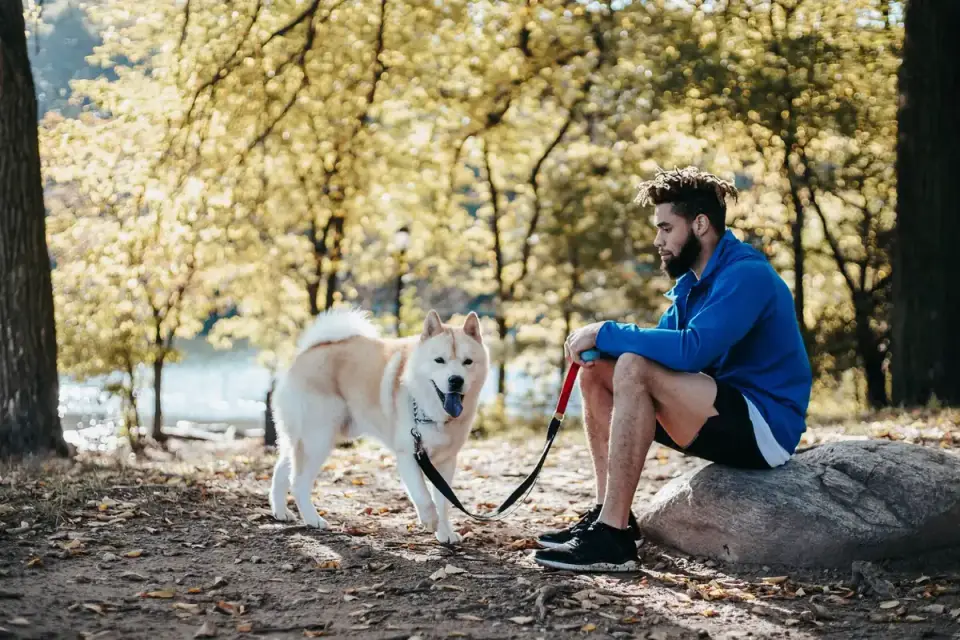
I teach a simple rhythm: drive 2 to 3 hours, stop 15 to 20 minutes, repeat. Use each stop the same way. Potty on leash first, then water, then a slow five-minute sniff walk for joint motion and mental decompression. Offer a small meal or snack on schedule rather than one large meal right before driving, which can worsen nausea.
Watch the dog, not the odometer. Lip licking, drooling, yawning, whining, restlessness, panting when the car is cool, or a reluctance to re-enter the car all signal that the day should end early. For puppies prone to motion sickness, which I discuss more in our piece on Do Puppies Outgrow Car Sickness?, shorter legs and an empty-ish stomach often help. Secure every dog every time; our explainers on Crash-Test Ratings for Dog Car Restraints, Explained and Best Dog Car Travel Gear: A Brand-Neutral Buyer’s Guide walk through what actually holds up.
The edge case that changes the math is the senior dog who loves travel but pays later. A 13-year-old, 24-pound beagle mix I followed did fine during a six-hour lake trip, alert and tail-wagging at each stop, then could barely manage stairs that night and needed help into the car the next morning. She was seven pounds lighter than the prior year from muscle loss, and that loss showed only after sustained stillness. For dogs like her, I now cap a travel day at four hours, add a padded crate pad, keep the car cool, and plan a true rest day after. The joy during the ride is real, and the delayed stiffness is also real.
Expectation first: if your dog is healthy, conditioned to the car, and you can protect breaks, water, temperature, and restraint, 6 to 8 hours is a reasonable ceiling. If anything in that list is uncertain, shorten the day.
Frequently asked questions
Can a dog ride 10 hours in a car in one day?
Some healthy adult dogs tolerate it occasionally with frequent stops, water, and cool temperatures, but I recommend 6 to 8 hours as a more joint- and bladder-friendly ceiling. End the day early for panting, restlessness, vomiting, or reluctance to reload.
How often should I stop when driving with my dog?
Every 2 to 3 hours for 15 to 20 minutes for a leashed potty break, water, and a short walk. Puppies, seniors, and nauseous dogs often need stops every 1 to 2 hours.
Do older dogs need shorter travel days?
Yes. Dogs over about 8 to 10 years, or any dog with arthritis or muscle loss, often do best with 4 to 6 hours total and padded bedding, non-slip footing, and a rest day after travel.
Sources
- Pet Safety Research and Crash Testing — Center for Pet Safety