Best Dog Car Travel Gear: A Brand-Neutral Buyer's Guide
A vet's evidence-based guide to choosing dog car restraints, crates, and travel gear — what the crash-test data actually shows and what to prioritize.
The best dog car travel gear isn't the priciest harness on the shelf — it's whatever keeps your dog from becoming a projectile.
On this page
A ten-year-old mixed-breed dog named Biscuit rode shotgun — literally, front passenger seat, no restraint — for most of his life. His owner brought him in after a minor fender-bender left him limping on a front leg he’d braced against the dashboard on impact. Nothing was broken. But I remember sitting with her afterward, going through what could have happened at even ten miles an hour more, and watching her realize that the thing she’d never thought twice about — Biscuit just riding along, unclipped — was the single riskiest part of every trip they took together.
I land on this early because owners usually get the order of operations backward. They shop for gear based on comfort, aesthetics, or what a bag of Ozempic-eyed golden retriever looked happiest in on Instagram, when the first and really the only question that matters is: what happens to this dog in a crash. Everything else — comfort, ease of cleaning, whether the crate matches your trunk — is a real but secondary consideration.
What “crash-tested” actually means, and why most gear isn’t
Here’s the uncomfortable fact most product pages don’t lead with: there is no government safety standard for pet travel restraints in the United States. Anyone can put “crash-tested” on a harness label with no independent verification behind it. The Center for Pet Safety — a nonprofit that has done the only rigorous, independently funded crash testing on this equipment — found in its landmark study that of 11 harness brands claiming crash protection, only one passed. An earlier 2011 pilot study found a 100 percent failure rate across the harnesses tested.
To count as a genuine top performer in that testing, a harness had to avoid catastrophic failure (the dog becoming a projectile or slipping loose), perform consistently across sizes, keep the dog on the seat through the full event, and use a tether that stays short — six inches or less of slack. That last detail matters more than owners expect: a long tether lets a dog build enough momentum in a crash to injure itself even while technically “restrained.”
My rule of thumb when a client asks which harness to buy: ask for the independent test data, not the marketing copy. If a brand can’t point you to a specific crash-test protocol and result — not just a photo of a sled test — treat the “crash-tested” claim as unverified.
Crate, carrier, or harness — the tradeoffs are real
None of these three restraint types is universally correct; the right one depends on the dog and the vehicle.
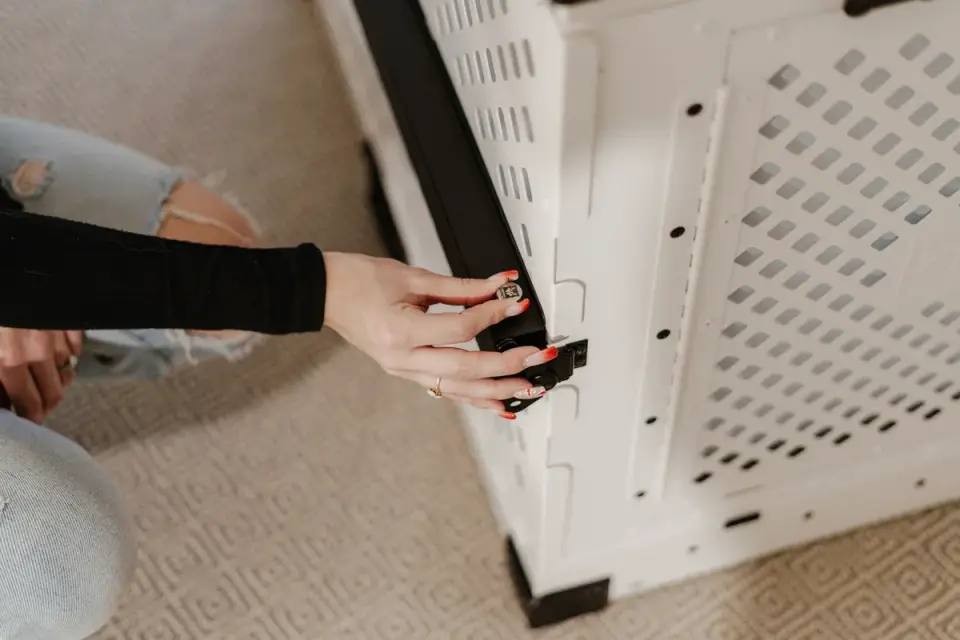
A hard-sided crate, secured near the center of the vehicle and strapped down so it can’t shift, is generally the most protective option for small-to-mid-size dogs and is often what I recommend for anxious travelers, since an enclosed space tends to lower stress on top of the physical protection. The American Veterinary Medical Association notes that crates and carriers should be sized so the dog can stand, turn around, and lie down comfortably, and should be secured with a seatbelt or cargo strap rather than left loose in the cargo area — a loose crate is itself a projectile risk in a hard stop. See the American Veterinary Medical Association for the full guidance.
A harness anchored to the seatbelt system is the practical choice for larger dogs where a crash-worthy crate isn’t feasible in the vehicle, and for dogs who need to see out the window to stay calm. The tradeoff is that harness quality varies enormously, which loops back to the crash-test problem above — this is the category where “buy the cheap one” is genuinely the wrong call.
A soft-sided carrier works for small dogs but should never simply sit on a seat unbuckled; it needs its own secure attachment to the seatbelt or a rated base, the same logic as a crate.
Why “he’s fine loose in the back” is the argument I hear most, and why I still don’t buy it
I understand the appeal of letting a dog ride loose. It’s less gear, less fuss, and most dogs seem perfectly happy sprawled across the back seat. The counterargument I hear most from owners is some version of: my dog has ridden unrestrained for years and nothing’s ever happened. That’s true for a lot of dogs, right up until it isn’t, and the physics don’t care how many uneventful trips came before the one that isn’t. A national survey found that 84 percent of respondents had driven with pets in the car, yet only 16 percent used any restraint system, even though 83 percent agreed an unrestrained dog in a moving car can be dangerous — a gap between what owners believe and what they actually do, documented by AAA SoCal. The same reporting notes that in a 50 mph crash, an unrestrained 10-pound dog can exert roughly 500 pounds of force, and an unrestrained 80-pound dog at just 30 mph can exert around 2,400 pounds of force — numbers that make clear why “he’s calm” isn’t a safety plan.
There’s a second piece to that gap worth naming directly: an unrestrained dog isn’t just a risk to itself. It’s a driving hazard. The same reporting found 65 percent of dog owners admit to at least one distracting behavior with their dog in the car — petting them, letting them climb into a lap, allowing them to move seat to seat — and the AVMA’s own guidance points out that unrestrained pets can be crushed by a deploying airbag or ejected through a window or windshield in a collision. Restraint protects the driver’s attention as much as it protects the dog.
What I actually tell clients before a road trip
In my practice, this conversation comes up constantly in spring, right before road-trip season starts. One family I worked with had a seven-year-old Lab mix with early hip changes, and their instinct was to let him lie flat across the back seat for comfort on a six-hour drive to visit grandparents. I understood the impulse — he did look more comfortable sprawled out — but for a dog with joint sensitivity, an unrestrained body sliding into a door or footwell during braking is a real injury risk on top of the crash risk everyone else faces. We worked out a crate sized to let him lie flat with his hips extended, strapped low and centered in the cargo area, with a supportive bed liner inside so pressure points weren’t an issue on long stretches. It wasn’t the setup they’d pictured, but it solved the actual problem — comfort and containment weren’t in conflict once we picked gear built for both.
That’s usually the crux of it: owners assume safety gear means sacrificing comfort, when in most cases a properly sized, properly secured option does both jobs at once.
Beyond the restraint itself, a few practical items round out a car-safe kit worth budgeting for: a stable water and feeding setup for rest stops — see our guide to collapsible bowls and feeding gear for traveling dogs — and a clear sense of how the major restraint types compare in independent testing, covered in more depth in crash-test ratings for dog car restraints, explained. If you’re still deciding between the three restraint categories for your specific dog and vehicle, our breakdown on dog car seat belt vs crate vs barrier walks through the decision in more detail. And if this is a first trip with a young dog, how to travel with a puppy for the first time covers the acclimation side that gear alone won’t solve.
Where I land
Buy restraint gear the same way you’d buy a car seat for a child: demand to see the independent test data, not the packaging claim. A crate that’s sized correctly and properly strapped down, or a harness with a verified crash-test pass and a short tether, will do more for your dog’s safety than any amount of extra padding or styling. Everything else on the shopping list — bowls, mats, window shades — is genuinely optional. The restraint isn’t.
Frequently asked questions
Is a harness or a crate safer for car travel?
Independent crash testing suggests a well-secured, correctly sized crate is often more protective, especially for smaller and mid-size dogs, but a crash-tested harness with a short tether is a reasonable option when a crate doesn't fit your vehicle.
Does "crash-tested" on a product label mean it's actually been verified?
Not necessarily. There's no government safety standard for pet travel gear, so the label alone doesn't confirm independent testing — ask the brand for the specific test protocol and results.
Sources
- 2013 Harness Crash Test Study Results — Center for Pet Safety
- Pet safety in vehicles — American Veterinary Medical Association
- 31 Percent in New AAA Survey Admit to Being Distracted by Their Pet While Driving — AAA SoCal