Play Growl vs. Warning Growl: How to Tell the Difference
A vet's field guide to reading the difference between a play growl and a warning growl, with the body language cues that actually matter.
Pitch alone won't tell you; watch the whole dog, the context, and what happens right after the sound stops.
On this page
A client brought in a four-year-old pit mix named Ruby last winter after her son’s friend backed away from her mid-tug-of-war, convinced she was about to bite. Ruby was fifty-two pounds, otherwise easygoing, and the growl in question had happened over a rope toy on the living room rug on a Saturday afternoon. I watched the video the owner had, thankfully, taken on her phone. Ruby’s whole rear end was wagging. Her front legs kept dropping into a bow between tugs. Her mouth was open and loose, not tight. That growl was punctuation on a game, not a warning shot. It took maybe ninety seconds of watching to be confident, but I understand why a parent standing three feet away, hearing only the sound, made the opposite call in real time. Growls are loud and blunt instruments. The information that actually separates play from warning lives almost entirely in the rest of the dog’s body, and most people never learn to look there first.
The sound itself is the least reliable clue
Owners want a rule about pitch: low means serious, high means playful. It doesn’t hold up consistently enough to bet on. Some dogs growl in a rumbling, guttural register during full-tilt play; others produce a genuinely low, sustained growl over a stolen sock that’s more about resource guarding than any real threat of a bite. Pitch and duration shift with breed, individual dog, and how worked up the animal already is. Treating the growl as a stand-alone signal is where most misreads start, including the one that almost got Ruby banned from that particular friend’s house.
What actually separates the two
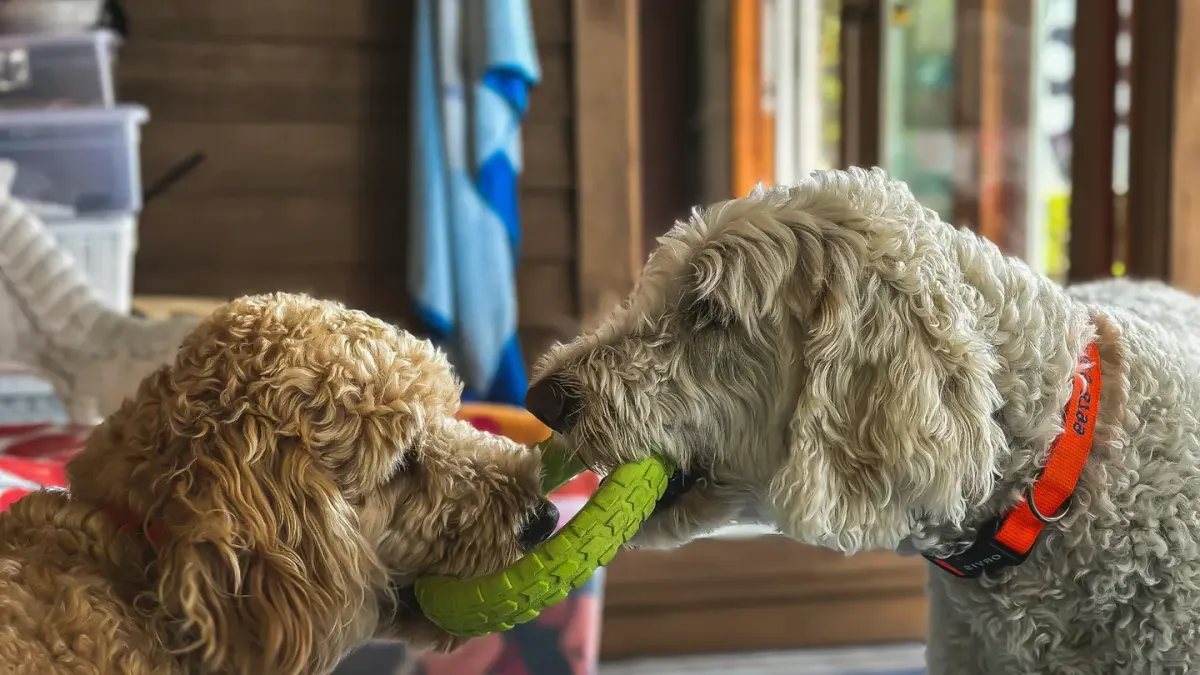
Play growls arrive inside a package of loose movement: a bouncing gait, exaggerated play bows, a soft, open mouth, and a body that keeps re-engaging even after a pause. The dog offers the toy back. It circles in for another round. Nothing about the posture is still.
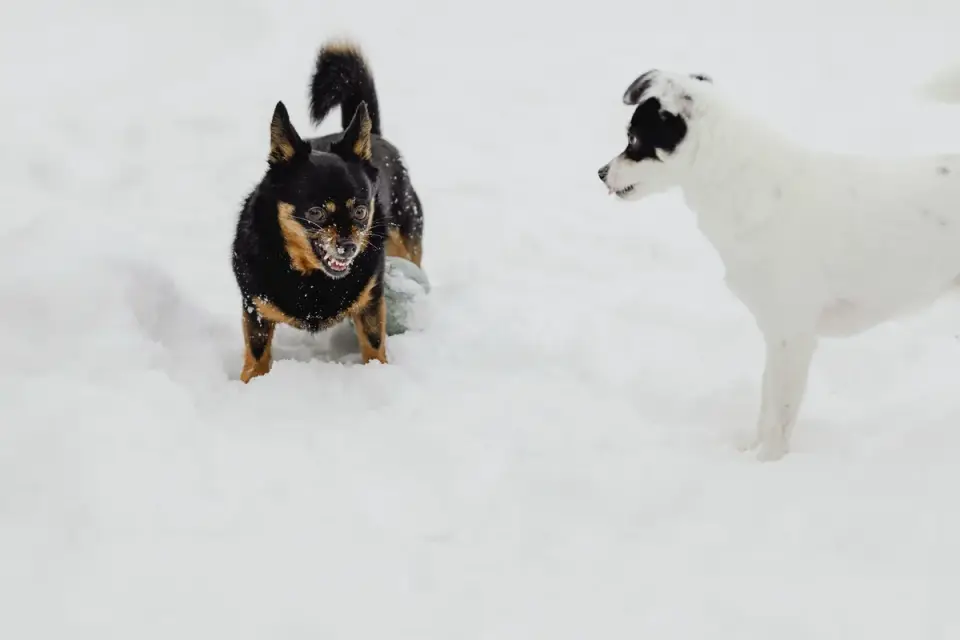
Warning growls come with the opposite signature: a stiff, frozen body, weight shifted slightly back or squared over a resource, ears pinned or held rigid, and a hard stare rather than the darting, playful eye contact of a game. The mouth tends to close tighter between growls instead of hanging open. Context matters as much as posture — a growl over a full food bowl, a growl when a hand reaches for a resting spot, a growl from a dog who has gone still after being cornered on a leash, all deserve to be read as communication about discomfort, not an invitation to keep going.
Where I’ve seen owners get it backward
In my practice, the mistake runs in both directions almost equally. Some owners assume any growl during rough play means the session needs to stop immediately, and they end up punishing a dog for perfectly normal social communication — which, ironically, can make a dog less likely to growl before it escalates, because it learns the warning itself gets punished rather than the behavior underneath it. Other owners assume growling during a tense moment over a toy or a tight space is “just how he plays,” because that’s what it looked like at the dog park last month, and they miss the shift into a real warning until there’s a bite. The dogs I see for growl-related consults are rarely lacking in signals. What’s usually missing is a caregiver who’s learned to watch the whole animal instead of waiting for the sound to tell them what’s happening.
Rule out pain before you rule out temperament
A growl that shows up new — especially around handling, being picked up, touched near the hips or spine, or asked to jump onto furniture — deserves a veterinary exam before a behavioral one. Musculoskeletal pain is one of the more common, and more commonly missed, drivers of a sudden defensive growl in a dog with no prior history of one. If Ruby had started growling only when her hips were touched, that video wouldn’t have settled anything; it would have been the start of a workup, not the end of one. This is a subtly different check than the play-versus-warning question. It’s worth doing regardless, since a dog in pain can escalate from a warning growl to a bite faster than a comfortable one.
What to do in the moment, either way
If it’s play, the safest move is still to keep both dog and human loose and give the dog room to disengage on its own terms; forcing continued contact once a dog has started backing off, even mid-game, can flip a fun interaction into a frustrated one. If it’s a warning growl, the single most useful thing an owner can do is stop, create distance, and not punish the sound. A dog that gets scolded for growling doesn’t stop feeling the discomfort behind it — it just stops telling you before it acts on that discomfort. That single fact changes how a lot of owners handle the next growl once they understand it. Related reading on this: Why Does My Dog Growl When I Pet Him? covers how to read growls that show up specifically around touch, and What Does Whale Eye Mean in Dogs? walks through one of the earlier, quieter warning signs that usually precedes a growl by a wide margin.
When anxiety is running underneath the warning growls
Some dogs growl defensively far more often than their situation would predict — not because they’re poorly socialized, but because their baseline anxiety is high enough that ordinary handling reads as threatening. That’s a different problem than a one-off resource-guarding growl, and it’s worth naming separately rather than lumping every warning growl into the same training plan. For dogs whose warning growls trace back to a generally anxious temperament, some owners look at calming support alongside behavior modification, not instead of it. The evidence for individual ingredients is mixed and, for dogs specifically, still thin. A review covering Cureus: KSM-66 Ashwagandha found that “a systematic review analyzed multiple RCTs and concluded that ashwagandha has a moderate positive impact on stress reduction and cognitive performance” — though that conclusion comes from human trial data, not canine studies. L-theanine has similar limits: a review in Molecular Psychiatry noted an effect “except for one study on psychotic anxiety (SMD = 0.54; 400 mg/day for 8 weeks),” a human dosing study, not a dog one. And for chamomile, a review of Biomedicines is direct about the gap: “for the remaining species, evidence is derived mainly from preclinical studies or traditional use.” None of that makes these ingredients useless, but it means they belong in a supporting role, structure and function language rather than a promise, layered under a real training plan rather than replacing one.
I’ve watched this play out with a rescue collie named Beckett, a dog who’d growl defensively any time a stranger reached toward his collar, even gently, even from someone he’d met twice before. His owner had already ruled out pain with her regular vet by the time I saw him. We built a desensitization plan around collar touches paired with high-value treats, working in five-minute sessions twice a day, and it took roughly six weeks before Beckett stopped stiffening at the first reach. Nothing about that timeline was fast, and nothing about it involved a supplement doing the actual work — the behavior modification was the intervention. What changed was consistency: the owner stopped testing him with new people during the six weeks and stuck to the protocol with people he already trusted. That’s usually where I land with anxious warning growlers. Realistic timelines, structure over shortcuts, and calming support treated as a possible assist rather than the plan itself.
The bottom line
A growl by itself is not the whole message. Read the body first: loose and bouncy usually means play, stiff and still usually means a warning, and a growl that shows up suddenly with no clear trigger deserves a vet visit before a training plan. Related background worth reading if biting is also part of the picture: How to Stop Puppy Biting and Mouthing: What Actually Works and, for dogs whose anxiety shows up in the gut as much as the growl, Can Probiotics Be Given With Antibiotics for Dogs? touches on how digestive and behavioral stress can overlap.
Frequently asked questions
Can a dog's growl mean two things at once, both play and a real warning?
Yes. A game can tip into genuine frustration mid-session, especially over a toy that starts to feel contested. Watch for the body going still or the mouth closing tighter — that shift matters more than the sound changing.
Should I ever punish a warning growl?
No. Punishing the growl tends to suppress the warning without changing the underlying discomfort, which can produce a dog that skips straight to a bite next time. Address what's driving the growl instead.
Is a growl during tug-of-war a sign I should stop the game?
Not necessarily. Loose body language, a bouncy gait, and the dog re-engaging after a pause are all signs of normal play. Stop if the dog's body stiffens or it stops giving the toy back voluntarily.
Sources
- Effects of Ashwagandha on Stress: A Systematic Review — Cureus
- L-Theanine and Anxiety: A Review — Molecular Psychiatry
- Chamomile and Anxiety & Stress: A Review — Biomedicines