Beach Trips With Your Dog: Safety and Etiquette
A veterinarian's guide to taking a dog to the beach safely — heat, salt water, hidden hazards, and the etiquette that keeps everyone's trip good.
Taking a dog to the beach rewards planning; the sand that thrills your dog can also mask the risks that send you to an emergency clinic.
On this page
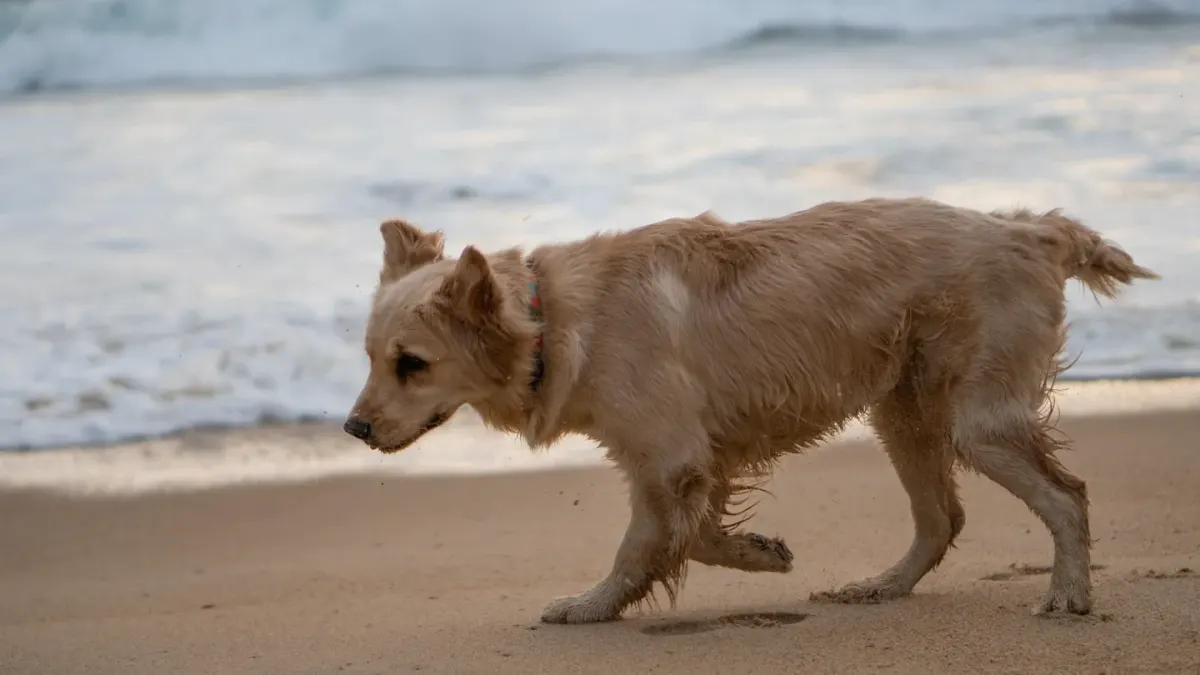
A ten-year-old Lab mix named Maple lay flat on the porch the evening after her first beach day, refusing dinner, drinking water she then vomited back up within the hour. Her owner had let her play fetch in the surf for close to two hours on a warm September afternoon, no shade breaks, and had assumed the panting was just excitement. It wasn’t. It was the early picture of salt water ingestion stacked on top of exertional heat load, and by the time I saw her that night her sodium was elevated enough that we kept her on IV fluids overnight. She recovered fully. I think about Maple every time a client tells me the beach is “just running around outdoors” — it isn’t, physiologically, and treating it like a normal walk is where most of the trouble starts.
The short version: the beach is not more dangerous than a park, but it fails differently, and the failures cluster around water, heat, and sand rather than the traffic and terrain risks owners already watch for on land. Compare the two settings side by side and the pattern is clear. On a walk, the main hazards are cars, other dogs, and uneven footing — things most owners already manage instinctively. At the beach, the hazards are less visible: a dog can drink enough ocean water to raise blood sodium to dangerous levels, exert far more than it looks like while swimming against surf, and stand on sand or asphalt hot enough to burn its paw pads, all without an owner registering that anything unusual is happening.
Salt Water Is a Real Ingestion Risk, Not a Folk Warning
Dogs that play fetch in the surf swallow water incidentally, and small amounts rarely cause a problem. The risk builds with volume and with heat. According to the AKC, early signs of saltwater poisoning include increased thirst, vomiting, diarrhea, and unusual tiredness after a beach visit, and severe cases can progress to tremors or seizures as sodium pulls water into brain tissue. What makes this one easy to miss is timing: a dog can look completely normal on the drive home and start vomiting two or three hours later, which is exactly what happened with Maple. The practical fix isn’t avoiding the surf. It’s bringing fresh water and offering it every fifteen to twenty minutes of play, so a thirsty dog reaches for the bowl instead of the wave.
Freshwater lakes and ponds carry a different, arguably more serious risk: cyanobacteria, commonly called blue-green algae. The ASPCA notes that these toxin-producing blooms can cause severe neurologic or liver damage and are most often fatal, and that dogs are exposed by drinking contaminated water, swimming through it, or licking it off their coat afterward. Blooms often look like a green paint slick or surface scum, but plenty of toxic blooms are visually unremarkable, which is the part owners underestimate. If a lake, pond, or slow-moving section of water looks off in any way — scummy, unusually green, foul-smelling — the safest call is to skip it entirely rather than let a dog wade in to “just cool off.”
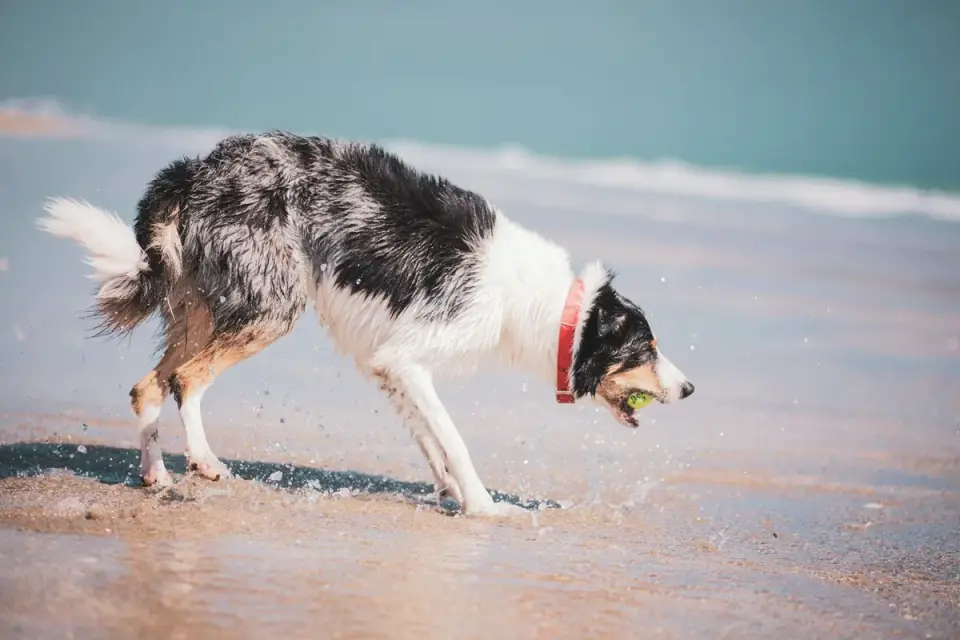
Heat Builds Faster Than It Looks on an Open Beach
There’s no shade structure most owners bring that competes with a beach umbrella’s actual coverage, and sand reflects heat back up at a dog’s belly and paw pads in a way grass does not. The AVMA recommends walking dogs on grass rather than pavement on extremely hot days and offers a simple test: if you can’t hold the back of your hand on the surface for ten seconds, it’s too hot for paw pads. Dry sand on a sunny afternoon regularly clears that threshold well before the air temperature feels dangerous to a person standing upright in shoes.
Brachycephalic breeds, overweight dogs, and older dogs with any degree of heart or airway compromise carry the most risk, largely because panting is a dog’s primary cooling mechanism and any breed or body condition that limits airflow limits that cooling. I ask owners of flat-faced breeds to treat a midday beach trip the way they’d treat a midday run — worth doing, just not between roughly eleven and three. Morning and early evening visits solve most of the heat problem without asking anyone to skip the beach altogether.
In my practice, the dogs I worry about most at the coast aren’t the ones sprinting into the surf — it’s the older, heavier dogs standing still on hot sand while their owner sets up a blanket. That’s a slower burn (literally), and it’s easy to miss because the dog isn’t panting hard yet.
Etiquette Failures Cause More Ruined Trips Than Medical Emergencies
Most bad beach days aren’t medical — they’re social. An off-leash dog charging a family’s picnic, an unpicked-up mess near the tideline, a reactive dog surprised by a loose one at close range. Checking posted leash rules before arrival, keeping a long line on hand for dogs with unreliable recall, and giving other groups a wide, obvious berth cover most of what actually goes wrong on a given trip. None of this is exotic advice; it’s the same courtesy that governs any shared outdoor space, applied to sand instead of sidewalk.
The getting-there part matters too. A dog restrained properly for the car ride, fed lightly beforehand to avoid motion sickness, and carried in a bag or crate appropriate to the trip arrives calmer and handles the day better. If the beach trip is part of a longer drive, the considerations in Dog Car Seat Belt vs Crate vs Barrier: Which Restraint Is Safest? are worth reading before you load up, and Collapsible Bowls and Feeding Gear for Traveling Dogs: What Actually Matters at the Rest Stop covers the hydration gear that does the most work against salt water ingestion.
What I Actually Tell Clients Before a Beach Weekend
I had a client last summer with a nine-year-old Golden Retriever, stiff in the hips most mornings, headed to a coastal rental for a long weekend. Her worry wasn’t heat or salt water — it was whether a day of swimming would leave him too sore to walk the next morning. We talked through it: swimming is genuinely good, low-impact exercise for a dog with joint changes, but the getting-in-and-out-of-surf part, repeated scrambling against wave resistance, can load a hip differently than steady-state swimming does. My advice was to let him swim in calmer water away from the break, keep sessions to fifteen or twenty minutes with rest in between, and watch his gait that evening rather than assume soreness the next morning is normal. It wasn’t; he was a little slow getting up two mornings later, and a short course of rest sorted it out. That’s the kind of trade-off I want owners thinking about before the trip, not during the drive home.

For a first beach trip with a young dog still learning car travel and new environments generally, How to Travel With a Puppy for the First Time covers the broader groundwork, and if the beach trip involves a flight beforehand, How to Fly With a Dog: The Complete Guide is the more relevant read than anything beach-specific.
Where I Land
Take the dog to the beach. Bring fresh water and offer it often, avoid the midday sun on sand, skip any water that looks stagnant or off-color, and read the leash signage before the leash comes off. Those four habits prevent the overwhelming majority of what actually goes wrong, and none of them require turning a good day into a clinical exercise. The dogs I see get into trouble at the beach are almost never the ones whose owners were being overly cautious; they’re the ones where nobody was watching the water intake or the clock.
Frequently asked questions
How much salt water is dangerous for a dog to swallow?
There's no fixed safe amount; risk builds with volume and heat exposure. Owners should offer fresh water frequently during play to limit how much salt water a dog swallows incidentally, and watch for vomiting, diarrhea, or unusual tiredness in the hours after a beach visit.
Is it safe for dogs to swim in lakes or ponds?
It can be, but freshwater sources carry a risk of cyanobacteria (blue-green algae) blooms, which can be severely toxic and are often fatal. Avoid any water that looks scummy, unusually green, or foul-smelling, and rinse a dog promptly if exposure is suspected.
What's the best time of day to take a dog to the beach in summer?
Morning or early evening, generally before roughly 11 a.m. or after 3 p.m., when sand and pavement are cooler and heat stress risk is lower, particularly for brachycephalic, overweight, or older dogs.