The Science of Tendon Adaptation to Training in Dogs
How canine tendons remodel with loading, why progression matters more than supplements, and how to train for stronger, safer tendons.
Tendons adapt slowly to loading, so progressive training — not quick fixes — builds lasting canine tendon strength.
On this page
A 4-year-old agility Border Collie weighing 42 pounds came back after winter layoff moving short on her front end after weekend weave and jump drills. Her owner had kept up daily meals and a joint chew, but had jumped from two 15-minute leash walks per day to an hour of sprint, stop, and tug across three evenings. On palpation her biceps and supraspinatus were tight, her carpus was warm after work but cool by morning, and she sat out her last two runs. The choice being weighed was whether to add another supplement or rebuild the loading plan, and I told them training history would decide more than any powder.
The Verdict I Give Owners First
Tendons strengthen when controlled load signals cells to maintain and reorganize collagen, then recovery lets that remodeling hold. That means graded, repeated loading may help support normal tendon function over time, while sudden spikes in speed, jumping, or fetch volume raise strain injury risk. I prioritize consistent progression, body condition, and rest days over any joint-support ingredient for tendon outcomes, because food therapy and supplement science can support the whole patient but cannot replace mechanical adaptation.
What I recommend is boring on purpose: keep a base of daily walking, add one new stressor at a time, and hold that level for 2–3 weeks before advancing. When owners want help beyond food, I weigh what a supplement can realistically do for diet, mobility, and recovery, and I ground an integrative claim in the nutritional evidence rather than promising a tendon will heal faster.
How a Tendon Actually Adapts
Tendon is mostly type I collagen bundles with tenocytes that sense pull, compression, and shear. With moderate cyclic loading, those cells turn over matrix, adjust crosslinks, and improve stiffness and energy storage in the muscle-tendon unit. With too much strain or too little recovery, the same pathway shifts toward disorganized fibers, extra water-binding molecules, and neovascular change that characterizes tendinopathy in people and dogs.
The timeline matters. Muscle gains strength in weeks; tendon changes over months. Controlled human and animal loading work summarized in the Journal of Biomechanics shows tenocytes respond to mechanical signals by remodeling matrix, which is why progressive exposure works and crash conditioning does not. I explain it as training the tissue, not just the behavior.
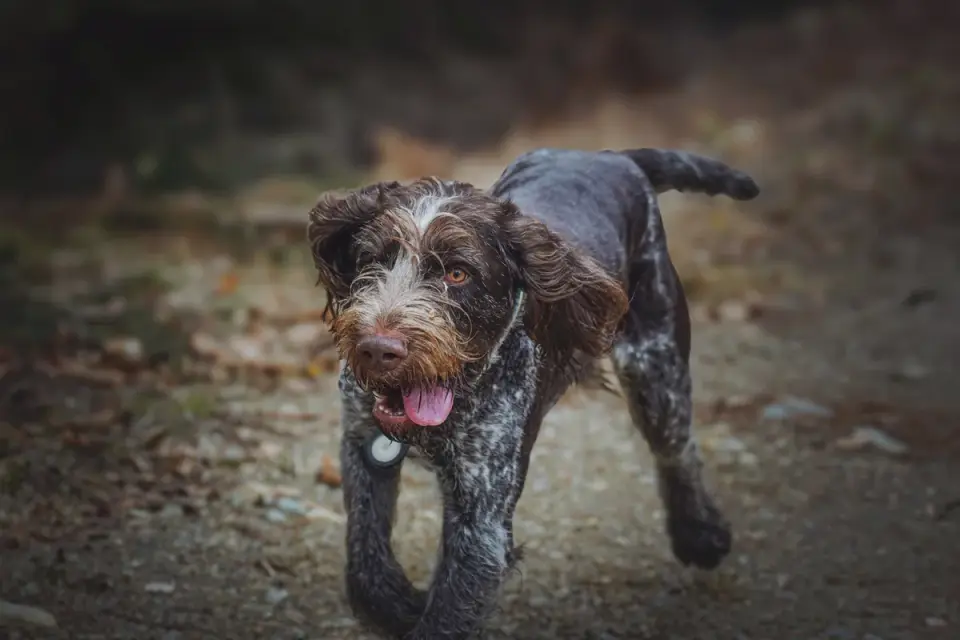
A 7-year-old Labrador Retriever at 88 pounds illustrates the tradeoff I see most. After a cruciate surgery on the opposite leg, his owner did everything right for eight weeks — sling walks, then 10-minute walks four times daily, then gradual hills. At week nine, encouraged by how good he looked, they added two off-leash fetch sessions with 20 hard throws each plus stairs. By night 3 he was toe-touching on the Achilles side, with thickening above the hock and pain on stretch. We had to cut volume by half, return to leash work, and rebuild over another six weeks. The failed approach was not rest; it was adding speed, volume, and elastic recoil all at once.
That case is why I separate load types. Tendon strain rises less with steady trotting and more with deceleration, jumping, and sharp turns. A dog that can walk 2 miles comfortably is not automatically ready for 30 minutes of ball chasing. For context on swapping formats, compare Fetch vs. Structured Walks: Which Actually Serves a Dog’s Joints Better? and Dog Treadmill vs. Outdoor Walking: What Actually Protects the Joints.
Why Progression Beats Intensity
A workable progression keeps most sessions easy and makes hard days rare. I use a 10–15% rule for total weekly impact minutes, not distance alone, and I keep surfaces and slopes stable while volume climbs.
In practice that looks like:
- Base: daily leash walks at a trot-walk pace, plus weight control
- Add endurance first: extend time before adding speed
- Add strength next: hills, cavaletti, controlled sit-to-stands
- Add elasticity last: short recalls, low jumps, brief play bouts with full rest
Rest is part of dosing. Tendon cells continue remodeling for 24–72 hours after loading, so alternating hard and easy days may help support normal recovery patterns better than stacking hard days. Puppies, seniors, and overweight dogs need longer holds at each step, as outlined in Best Low-Impact Activities for Overweight Dogs and How to Rebuild Muscle in a Senior Dog.
A 9-month-old standard poodle puppy shows where the usual advice has to bend. She had open growth plates, 53 days until a beginner agility class, and an owner worried about doing too little. Instead of road mileage or repetitive jumps, we prescribed three 12-minute sniff walks per day on grass, twice-weekly cavaletti with poles on the ground, and core work on a non-slip surface. We skipped elevated jumps, long Frisbee sets, and back-to-back hard days entirely. When she started pulling on leash for a full half-mile without forging or sitting, we added time — not obstacles.
Where Nutrition and Supplements Fit — And Where They Do Not
Complete, balanced nutrition, lean body condition, and adequate protein support the substrate for all connective tissue. Beyond that, I am cautious. Glucosamine and chondroitin are among the most studied joint support ingredients for comfort and cartilage biology, but direct evidence that they change tendon collagen adaptation in pet dogs is thin or mixed. That distinction matters, and I do not let a mobility label stand in for a training plan.
The strongest levers remain mechanical: warm up 5–10 minutes, cool down, monitor next-morning stiffness, and track surface, sleep, and soreness. If a supplement is used, view it as background support for diet, mobility, and recovery alongside rehab, not as protection that lets you double fetch volume.
Signs You Are Loading Well Versus Overreaching
Well-dosed dogs move freely at the start, warm out of early stiffness within minutes, and are willing the next day. Overreaching looks like lagging on walks, shortened stride after rest, heat or swelling along a tendon, or a reluctance to jump, climb, or play that was easy last week. Back off volume 30–50%, keep easy movement, and seek veterinary assessment for persistent lameness beyond 24–48 hours, sudden non-weight-bearing, or visible tendon thickening.
Tendon adaptation rewards patience. Build the base, progress one variable, and let recovery do its quiet work.
Frequently asked questions
How long does it take for a dog's tendons to adapt to training?
Muscle often responds in weeks, while tendon remodeling typically takes months of consistent, graded loading with recovery days built in.
Does swimming strengthen tendons?
Swimming builds fitness with low impact, but tendons need controlled weight-bearing and gradual tensile load to adapt for running and jumping.
Should I stop exercise if my dog is stiff after training?
Mild warm-up stiffness that resolves in minutes is common; persistent lameness, swelling, or next-day reluctance to move warrants reduced load and veterinary evaluation.
Sources
- Mechanobiology of tendon — Journal of Biomechanics