Why a Dog Hides Under the Bed in a Hotel and How to Help
A veterinarian explains why dogs hide under hotel beds — fear, noise, and loss of safe territory — and how to help them settle without forcing them out.
When your dog hides under a hotel bed, fear is talking — here's how to help them settle safely.

On this page
You check in late, roll your suitcase across strange carpet, and your dog goes straight under the hotel bed and will not come out. I counsel owners to expect this on the first night in a new place, especially with sensitive or older dogs, because hiding is a normal distance-seeking behavior, not disobedience. My position is simple: let the hiding spot work for you for 20 to 30 minutes while you make the room predictable, then invite the dog out rather than dragging them out. I would change that advice only if controlled evidence showed forced removal calmed dogs faster without increasing fear signals, and current behavior science points the other way.
A couple arrived after a six-hour drive with their four-year-old, 52-pound shepherd mix for a two-night wedding stay. Check-in was at 8 p.m., elevator ride at 8, and by 9 the dog had wedged herself under the low platform bed, panting with ears back and refusing cheese she normally loved. The owner worried she was being stubborn and wanted to pull her out by the leash to “show her it is safe.” We talked through a different baseline instead: leave the leash loose, dim the lamps, place her mat and a worn T-shirt three feet from the bed, and sit on the floor reading for 25 minutes. At minute 22 she crept out on her belly, sniffed the mat, and lay down with a heavy sigh.
What hiding under the bed is actually doing
Hiding lowers input. Under a bed is dark, enclosed, and pressed against the dog’s back and sides, which reduces visual surprises and dampens sound and airflow from the hallway HVAC, ice machine, elevator chime, and neighboring doors. Physiologically, novelty activates the sympathetic nervous system: heart rate and respiratory rate rise, panting and lip-licking increase, cortisol supports vigilance, and appetite often drops. That is why a dog who takes treats at home refuses them in a hotel.
The American Veterinary Society of Animal Behavior emphasizes humane, low-stress handling based on learning theory, and that framework matters here. Coaxing with food and choice preserves agency. Cornering, flooding with noise, or pulling from under furniture removes choice and can sensitize the dog to the room.
Expectation first: most hotel hiding eases once the dog maps the room’s sounds and learns nothing bad happens there.
The three hotel triggers I see most
First is loss of territory. At home your dog has a bed, a water location, and a predictable path to the door. In a hotel those landmarks vanish. Second is sound without context. Plumbing knocks, key cards beep, luggage wheels rumble, and the dog cannot see the cause. Third is scent overload. Cleaning products, prior pets, and hallway food smells flood the nose at floor level where the dog lives.
Pain and age amplify this. A stiff senior who struggles to jump onto a slick bedspread may choose the floor underneath because it feels stable. Travel fatigue does the same thing in young dogs after a long car day.
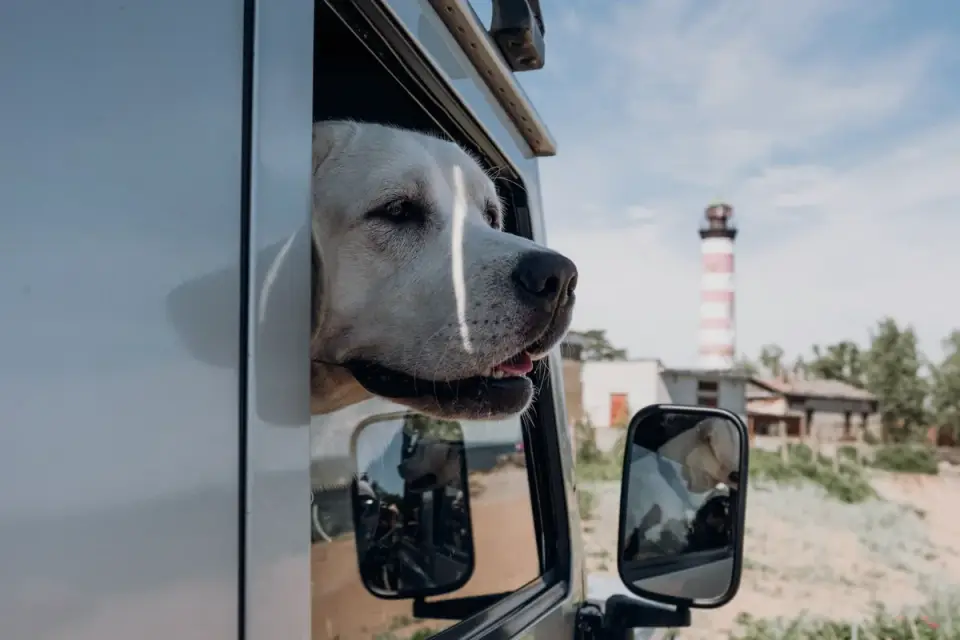
The American Veterinary Medical Association reminds owners that routine, identification, and preventive planning support safer travel, and routine is the lever you still control inside the room.
An owner tried the opposite approach on a business trip with his six-year-old, 18-pound terrier mix after three disrupted walks around a noisy downtown block. Frustrated at midnight, he dragged the crate to the bed, lifted the bed skirt, and tried to lure with repeated high-pitched calling and patting, then reached in to slide the dog out. The dog pancaked harder, whale-eyed, growled once, and stayed under for another hour. The tradeoff was clear: the owner wanted quick reassurance, but pursuit confirmed the dog’s read that the room was unsafe. We reset by giving the dog a covered alternative — crate with the door open and a blanket over three sides placed against the wall — plus white noise from a phone and no direct eye contact. He moved to the crate on his own.
How to help without making it worse
Keep it preventive and boring. Set up one small safe zone and keep your behavior quiet.
Place a familiar mat or open crate near you, not in the bathroom. Offer water and a long-lasting chew, then ignore the hiding for a while. Sit low, read, and let the dog check you. When you see softening — slower breathing, a sigh, a nose peek — toss a treat halfway between the bed and you, not straight at the dog. Let every approach be the dog’s choice.
Avoid crowding the bed, lifting the frame, shining a phone light underneath, or inviting strangers in to greet. Keep departures and returns low-key, which also helps if you are wondering about leaving your dog alone in a hotel room. If you must step out briefly, leave the TV low, leave your scent item, and keep the dog out from under the bed first so housekeeping never encounters a frightened dog trapped there.
Calming supplements and pheromone diffusers may help support relaxation for some dogs, but I do not position them as treatment for fear. Evidence is mixed and individual response varies.
When the usual advice has to bend
A senior rescue on her first vacation with a new family showed why flexibility matters. She was nine years old, about 63 pounds, with mild hind-end stiffness, and she hid under the bed for most of night one in a ground-floor room 40 feet from the parking lot where car doors slammed. The standard “wait her out” plan was not working because she needed to urinate but was too frightened to cross the tile. Instead of waiting, the owner changed the environment: moved to a quieter third-floor room away from stairs, laid a bathmat runner over the slick entryway, carried water to the safe corner, and took a short 5 a.m. potty loop before hallway traffic started. She still slept partly under the bed, but she began eating and solicited petting by morning.
Movement helps the next day. A sniff-heavy walk, predictable meals, and a short practice alone period can reset baseline. Budgeting also lowers pressure to force things; knowing the real cost of pet-friendly stays helps you choose a quieter room type instead of the cheapest available, as outlined in hotel pet fees.
Call your veterinarian promptly for panic that does not ease, escape attempts, vocalizing for hours, drooling, vomiting or diarrhea, refusal to drink, limping, or any bite or growl that worries you. Those signs may reflect severe anxiety, illness, or pain, not simple adjustment.
Fear Free Pets promotes reducing fear, anxiety, and stress through environment and handling, and that is exactly the hotel goal: fewer surprises, more choice, and a predictable human.
What would change my mind? A randomized trial showing that brief, gentle guided removal with high-value reinforcement reduced measurable stress signals faster than voluntary emergence, without rebound avoidance. Until then, I stay with choice-based settling because it fits learning theory and what I see in practice.
Will your dog ever love hotels? Maybe not, and that is okay. Aim for safe and settled.
Frequently asked questions
Should I pull my dog out from under the hotel bed?
No. Let them decompress for 20 to 30 minutes while you keep the room quiet, then lure with treats toward a mat or open crate and let them choose to come out.
How long does hotel hiding usually last?
Many dogs emerge within an hour once sounds become predictable, but sensitive or senior dogs may take until morning. Seek veterinary advice if panic, escape attempts, vomiting, or refusal to drink continue.
What helps a nervous dog settle in a hotel room?
A familiar mat, your scent item, low lights, low background noise, water nearby, and calm ignoring work better than crowding or repeated calling. A short sniff walk before bedtime also helps.
Sources
- Position Statements — American Veterinary Society of Animal Behavior
- Dog Care — American Veterinary Medical Association
- Fear Free Pets — Fear Free Pets