Why a Dog Wakes Up Early in a New Place and How to Help
A veterinarian explains why dogs wake at 4 a.m. in hotels and rentals — light, sound, anxiety, and stiff joints — and how to reset the night without creating a new habit.
In my exam room, the early-morning hotel wake-up is almost never a training failure — it is a tired dog reacting to strange sounds, strange light, and a bed that makes stiff joints ache.
On this page
Expect to be woken once on the first night somewhere new, and expect night two to be better if you keep your response boring. That is how I counsel clients before a trip, because a new bedroom stacks three triggers at once: the dog hears more, sees light earlier, and sleeps lighter on an unfamiliar surface.
I saw this last spring with a seven-year-old, 48-pound cattle-dog mix who had never missed a night at home but barked and paced at 4 a.m. on night one in a ground-floor rental. The owner counted two hallway footsteps, one door slam, and then whining at the window where a streetlight cut straight across the air mattress the dog was given. She took him out for a quiet pee, gave water, then resettled him on her worn fleece blanket with a white-noise app on low. He slept until 6 a.m. on night two, which told us this was vigilance plus discomfort, not a bladder problem.
The early wake-up is vigilance, not defiance
Dogs sleep in short cycles and wake briefly between them. At home they learn which sounds to ignore. In a hotel, rental, or relative’s house, every sound is new, so they fully wake instead of resettling.
Light matters more than owners expect. Thin curtains, hallway light under the door, a sunrise-facing window — all signal morning earlier than the dog’s usual baseline. Add travel fatigue, a late dinner, less daytime sniffing and movement, and you get a dog who is tired but cannot stay asleep.
My recommendation is boring on purpose: protect sleep pressure and joint comfort first, then train nothing at 4 a.m. That means same bedtime, same last potty time, familiar bedding, and a dark, buffered sleeping spot. The evidence for routine and familiar scent reducing stress behaviors during travel is strong enough to act on, while evidence for calming supplements for one noisy night is thinner and mixed. The American Kennel Club travel guidance makes the same practical point about keeping feeding, exercise, and bedding as close to home as possible.
That focus will be wrong if your dog is truly panicked — trembling, drooling, trying to escape, unable to settle for an hour. Then comfort alone is not enough, and you need a different plan that day, not that night.
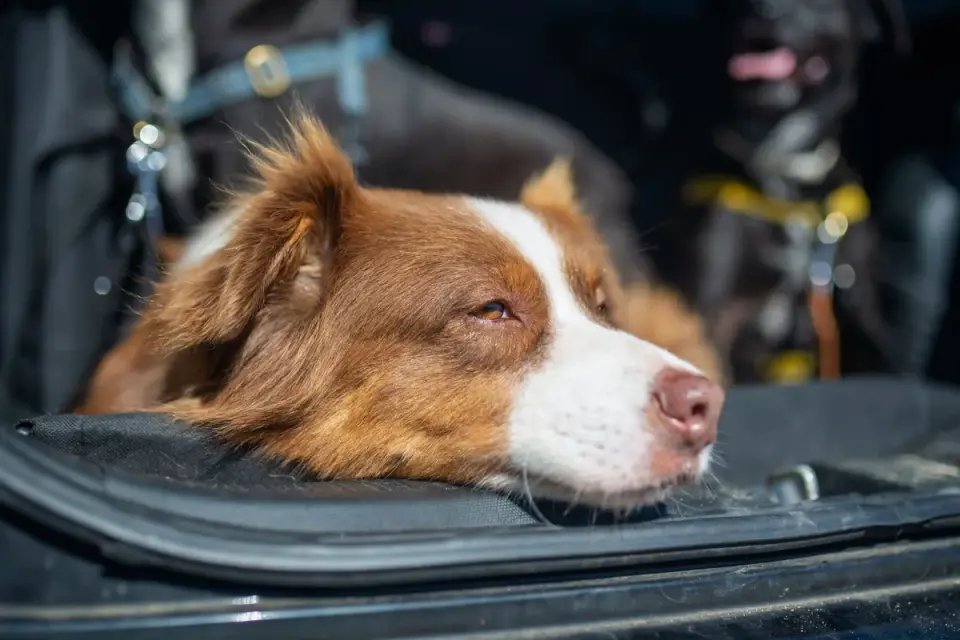
Stiff joints feel worse on a strange bed
This is where I spend the most time with middle-aged and senior dogs. Cold floors, thin hotel blankets, high beds they should not jump from, or a slippery rental floor can turn normal overnight stiffness into a 5 a.m. wake-up.
Arthritic dogs often lie still, get achy, shift, then get up because lying down hurts. Owners describe circling, sighing, licking a wrist or knee, then asking to go out when they really just needed a softer, warmer, non-slip spot. VCA Hospitals notes that stiffness after rest, difficulty rising, and reluctance on certain surfaces are classic arthritis patterns, and travel makes all three more visible. Pain itself also disrupts sleep, which the Merck Veterinary Manual describes as a change in behavior, restlessness, and altered posture rather than always vocalizing.
A client with a nine-year-old, 72-pound Labrador taught me how easy it is to misread this. They drove 380 miles for a long weekend, walked the lake trail twice on arrival, then gave him the tile entryway as a bed because he was panting. He was up at 3, 4, and 5 a.m., panting and repositioning, and they assumed he needed more potty trips. On night two they moved his orthopedic pad away from the drafty door, added a non-slip yoga mat underneath, kept the room at 68 degrees, and skipped the second long walk. He woke once at 5 a.m. for a quick out, then went straight back to sleep.
If you travel with a stiff dog, bring the pad they actually use at home, not a new travel bed they have never slept on. Place it in a corner away from the door, block light with a towel over a crate or a blackout liner, and run low white noise. For car legs of the trip, a familiar setup from a guide like Best Dog Car Travel Gear: A Brand-Neutral Buyer’s Guide may help support calmer arrivals, which pays off at bedtime.
What to do at 4 a.m. without creating a 4 a.m. habit
Keep it quiet, dim, and brief.
Take the dog out on leash for a boring potty break. No play, no phone light in the face, no big meal. Offer a sip of water, then return to the same sleeping spot with the same blanket and cue you use at home.
Do not start breakfast, do not go for a walk to tire them out, and do not turn on every light. If they whine after returning, wait two to three minutes before calmly resettling with a hand on the chest and a quiet cue. Most travel wake-ups resolve in under ten minutes if you do not accidentally reward them with a party.
One short paragraph owners remember: you are not ignoring a need, you are refusing to move morning earlier.
If the dog cannot resettle after 20 minutes, paces, pants, vomits, has diarrhea, limps badly, or seems painful when rising, treat it as information. Let them rest on a better surface, offer water, and call your veterinarian in the morning rather than pushing through another hard night. The American Veterinary Medical Association travel resources remind owners to travel with records, medications, and a plan for local care, and early-morning restlessness in a new place is exactly when that preparation matters.
Good daytime travel mechanics also help nights. Dogs arriving overtired and under-exercised sleep worse. Plan potty stops, secure restraint in the car, and relief breaks using ideas from Best Crash-Tested Dog Car Harnesses: What the Evidence Actually Shows and Airport Pet Relief Areas: How They Work so arrival stress does not carry into bedtime.
Set up the room before you need sleep
I had to bend my own boring-night rule with an anxious three-year-old terrier mix who screamed in a crate at a cabin at 11 p.m. and again at 4 a.m. for three nights in a row. At home the crate was safety. In that pine-paneled room with mice in the walls, the crate became a trap. On night four the owner left the crate door open, put the familiar pad right against her own air mattress at floor level, draped a sweatshirt she had worn for two days over it, and slept with a hand near the dog. The dog woke once at 5 a.m., touched her nose to the owner’s hand, sighed, and went back down until 6 a.m.
Do the setup once, right at check-in. Choose the darkest corner, away from elevators, ice machines, and street windows. Lay down the home blanket unwashed. Add a non-slip layer underneath. Set white noise before bed, not after the first bark. Keep dinner and last call within 30 minutes of home time.
Supplements may help support normal relaxation or joint comfort over time, but they do not fix a bright, loud, uncomfortable room that night. Keep expectations preventive: structure and surface first, realistic timelines second.
Your next step is simple. Tonight, make the sleeping spot darker, softer, and closer to you than you think it needs to be, and keep the 4 a.m. outing dull. If night two is not at least 45 minutes better, look harder at pain, anxiety, or a medical trigger and call your clinic.
Frequently asked questions
Should I feed my dog when he wakes up early on vacation?
No. Keep a brief, dim potty break boring and delay breakfast until the normal time, otherwise you teach an earlier morning.
Is it normal for a senior dog to wake earlier in hotels?
Yes, and joint stiffness is a common reason. An unfamiliar, thin, cold, or slippery bed can make it harder to stay settled through the night.
When should I call a vet about early waking on a trip?
Call if there is limping, vomiting, diarrhea, heavy panting, pacing for more than 20 minutes, inability to rise, or panic that does not resolve with resettling.
Sources
- Arthritis in Dogs — VCA Hospitals
- Traveling with Your Pet — American Veterinary Medical Association