What to Pack in a Dog Travel First-Aid Kit
A veterinarian's practical, evidence-grounded guide to building a dog travel first-aid kit — what belongs in it, what to skip, and why the phone numbers matter as much as the gauze.
A dog travel first-aid kit is only useful if it's built around the emergencies that actually happen on the road.
On this page
A ten-year-old cattle dog named Scout sliced a pad open on a jetty rock two hours from the nearest open clinic. I know this because I got the phone call — not as the treating vet, but as the person the owner trusted to talk her through it while she drove. She had gauze. She didn’t have anything to hold it in place, so she was using a hair tie, and the bleeding kept soaking through. We got her to a wrap that worked using a spare t-shirt and the vet tape she’d tossed in at the last minute, almost as an afterthought. That kit worked because of three items, not thirty.
My take, up front: a travel first-aid kit earns its keep on wound control, GI upset, and having the right phone numbers ready — not on stocking every product a pet-supply aisle sells. Most kits fail not because they’re missing something exotic, but because they’re missing the boring stuff owners assume they’ll never need.
What I actually pack, in order of how often I use it:
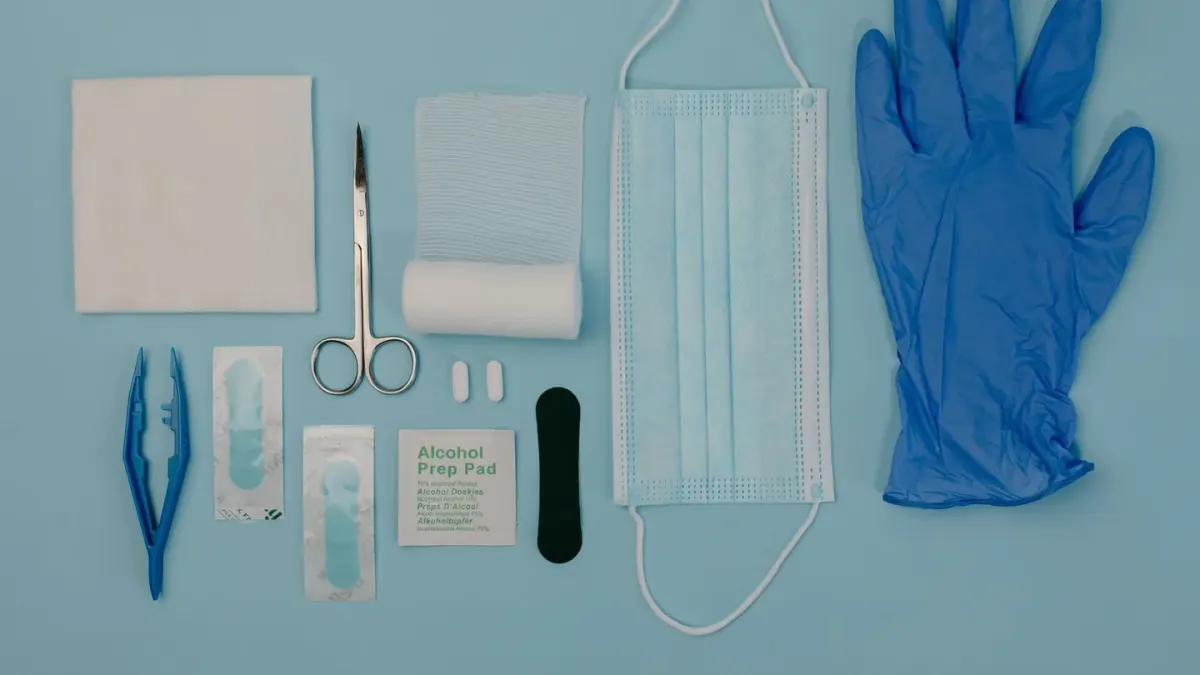
- Non-stick gauze pads and a self-adhering wrap (vet tape) — the two items that stop most bleeding you’ll see on a trip
- Blunt-tip scissors and tweezers, for trimming fur around a wound or pulling a splinter or foxtail
- A digital thermometer — rectal temperature is still the most useful data point you can give a vet over the phone
- Antibiotic ointment for minor scrapes, not deep wounds
- Disposable gloves
- A muzzle or soft wrap, even for a dog that’s never bitten anyone — pain changes behavior
- 3% hydrogen peroxide, used only on direct veterinary instruction, never as a default
- A copy of vaccination records and any current medications, with dosages written out
- Saved phone numbers: your regular vet, the nearest 24-hour emergency clinic at your destination, and ASPCA Animal Poison Control
What I leave out on purpose: general-purpose human pain relievers, activated charcoal, and anything marketed as an all-in-one “pet emergency spray.” None of those belong in a kit an owner is using without direct veterinary guidance in the moment.
The two items that do most of the work
If I had to defend a kit down to five items, gauze and self-adhering wrap would survive the cut. Most travel injuries I hear about — a torn nail, a cut pad, a scrape from an off-leash scuffle — are wound-control problems, not poisoning emergencies. A clean pressure wrap buys you time to get to a clinic; it doesn’t require guessing a dose or reading a label in bad light. The mistake I see most is owners packing an ointment for every possible skin issue and nothing to actually hold a dressing in place.
Scissors and tweezers matter more than they get credit for. A foxtail lodged between toe pads, a fishhook, a bee stinger — these are common enough on a road trip that I’d rank them above almost anything in a pre-packaged kit you’d buy off a shelf.
Hydrogen peroxide is the one item that needs a warning label
This is where I get the most pushback from owners who read an old blog post. Hydrogen peroxide can induce vomiting in a dog that’s eaten something toxic, and that’s why it’s a standard recommendation from groups like the AVMA. It is not a tool to reach for reflexively. According to PetMD, it’s rarely safe to use without guidance, it should never be given to a dog that’s unconscious, seizing, or struggling to breathe, and it shouldn’t be used if the dog swallowed something sharp, caustic, or petroleum-based — inducing vomiting in those cases can cause more damage on the way back up than it prevents. Timing matters too: past roughly one to two hours after ingestion, it’s often no longer doing what owners think it’s doing, because the substance has already moved into the intestines.
I still tell clients to carry it. I just tell them to call first, every time, no exceptions — a vet or poison control line on the phone, not a memory of a dosage chart from a website.
The phone numbers matter more than most of the supplies
I’ve had this conversation dozens of times with clients heading out for a week at a lake house or a cross-country move: the kit itself is the easy part. What trips people up is not knowing who to call once they’re three states from their regular vet. Before a trip, I have owners save three numbers, not one — their usual clinic, the nearest 24-hour emergency hospital at the destination, and ASPCA Animal Poison Control. A wrap you improvised from a t-shirt gets a dog through the next twenty minutes. The right number on the phone is what gets a dog through the next two hours.
This is also where I tell owners to slow down on planning the rest of the trip. If you’re flying, the questions worth asking are covered well in our guide on airline pet policies — cabin restrictions and health certificate timing cause more last-minute scrambles than any injury does. If this is a first big trip with a young dog, our piece on traveling with a puppy for the first time covers the behavioral side that a first-aid kit can’t fix.
One of the dogs I worked with, a seven-year-old Lab mix named Bear, got heat-stressed on a beach walk during a family trip to the coast — mid-afternoon, no shade, and an owner who assumed a dog that swims constantly couldn’t overheat. He was panting hard, drooling more than usual, and slower to get up after lying down, which is what actually got his owner’s attention. She had water and a towel in the car, which was enough to cool him on the drive to an urgent care vet. The kit didn’t need a thermometer to catch that one — it needed an owner who knew what to watch for. That’s the piece a checklist alone can’t teach, and it’s a big part of why I cover heat and etiquette risk separately in our guide to beach trips with your dog.
Building the kit around your dog, not a generic list
A generic list is a starting point, not a finished kit. A senior dog with arthritis needs a towel or sling sized to actually lift him, not just a first-aid pouch. A dog on a daily medication needs an extra week’s supply packed separately from the pill bottle you use at home, in case a bag gets left behind. A dog prone to motor-sickness needs the anti-nausea plan discussed with your vet before the trip, not improvised at a gas station. None of that shows up on a stock checklist, and it’s usually the difference between a kit that works and one that just looks complete.

Where I land
Pack fewer items and know them cold, rather than packing everything and understanding none of it. Gauze, wrap, a thermometer, and the right phone numbers will get a dog through the vast majority of what happens on a trip. Hydrogen peroxide stays in the bag, but it comes with a phone call attached, not a guess. Beyond that, the kit should be built around the specific dog riding in the car — their age, their meds, their known risks — not a list copied from somewhere else.
What would your kit look like if you built it around the last close call you actually had, instead of the one you’re afraid of?
Frequently asked questions
Is hydrogen peroxide always safe to give a dog that ate something toxic?
No. It should only be used on direct veterinary instruction, and it's contraindicated if the dog is unconscious, struggling to breathe, seizing, or ingested something sharp, caustic, or petroleum-based, per guidance summarized by PetMD.
What's the single most useful item in a dog travel first-aid kit?
Self-adhering wrap paired with non-stick gauze — most travel injuries owners encounter are wound-control situations, not poisonings.
Who should I call first in a travel emergency?
Your regular vet if reachable, otherwise the nearest 24-hour emergency clinic at your destination or ASPCA Animal Poison Control.
Sources
- Pets and Disasters — AVMA
- ASPCA Poison Control — ASPCA
- Making Dogs Throw Up — PetMD