Why Does My Dog Get Car Sick?
A vet explains the vestibular mechanism behind canine car sickness, how to tell it from anxiety, and what actually helps — from seating position to maropitant.
Most dogs get car sick because a young or overstimulated inner ear is sending the brain signals that don't match what the eyes see.
On this page
Start here: if your dog drools heavily, yawns repeatedly, or goes quiet and rigid in the first ten minutes of a drive, then vomits, that’s motion sickness, and it’s usually fixable. Don’t wait for the vomiting to confirm it. Watch for the early signs, change what you can control in the car, and loop in your vet if it doesn’t improve.
In my practice, the case that stuck with me was a nine-month-old Vizsla named Penny. Her owners drove her to the clinic every other week for allergy follow-ups, and every single trip, she’d start drooling in the driveway before the car even left the curb. By the time they hit the highway on-ramp two minutes later, she’d vomited into the footwell. They’d tried a towel, they’d tried the window cracked, they’d tried feeding her a big breakfast first — which, it turned out, made it worse. What fixed it wasn’t a single trick. It was moving her crate to the center of the back seat instead of the far side window, skipping food for two hours before the drive, and eventually a maropitant tablet before longer trips. By month three, she rode the twenty-minute drive without a single drool spot on the seat.
The inner ear is doing most of the damage
The principal driver of car sickness in dogs is stimulation of the vestibular apparatus — the balance organ in the inner ear — which connects directly to the vomiting center in the brainstem. When a dog rides in a moving vehicle, the inner ear registers acceleration and turns that the eyes and body don’t fully corroborate, especially if the dog is looking sideways out a window or lying down and can’t see the horizon. That sensory mismatch is what the Merck Veterinary Manual describes as the core mechanism of motion sickness in animals: signs referable to stimulation of the vestibular and autonomic nervous systems, with affected dogs yawning, whining, or showing uneasiness before progressing to vomiting or diarrhea.
Puppies are disproportionately affected because their vestibular apparatus is still maturing. Their inner ear components aren’t yet fully developed, so the imbalance signal is stronger and less filtered — which is a major reason young dogs like Penny outgrow it. Many dogs age out of true motion sickness by around one year old as the inner ear finishes developing, though not all do, and adult-onset car sickness is a different problem.
Anxiety is a real second cause — and it needs a different fix
Here’s the distinction I make with every client: is this the inner ear, or is this fear? They can look almost identical from the front seat, but they don’t respond to the same treatment. Per the Merck Veterinary Manual on Motion Sickness in Dogs, fear of the vehicle can be a contributing factor on its own, and signs may appear even in a car that isn’t moving if a dog has been conditioned to associate travel with getting sick. A dog whose only car rides have ended at the vet clinic or the groomer often develops anticipatory drooling and pacing before the engine even starts — that’s learned anxiety layered on top of, or instead of, a vestibular problem.
The practical tell: true motion sickness tends to ease once the dog settles into steady motion on the highway, while anxiety-driven signs often stay constant or worsen with every stop-and-go turn, regardless of speed. Anti-nausea medication addresses the vestibular piece; it does very little for a dog who’s simply afraid of the car. Those dogs need desensitization — short, positive trips to nowhere in particular, treats in the parked car, working up gradually — not just a pill.
What actually changes the ride
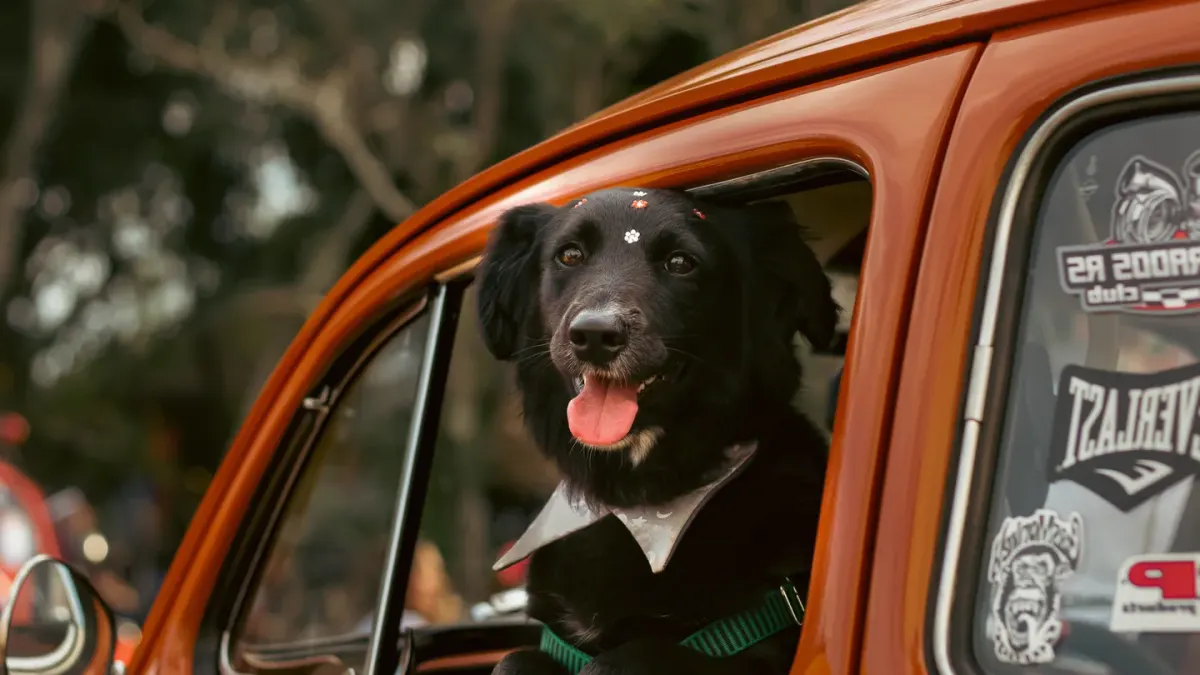
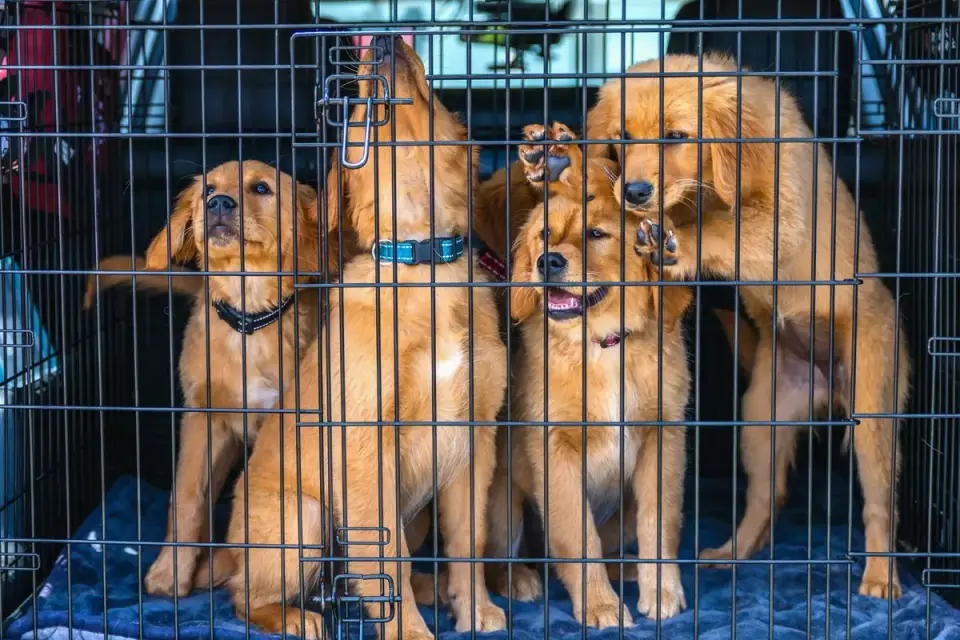
Position matters more than most owners expect. A dog who can see out the windshield toward the horizon, rather than sideways out a side window, gets vestibular and visual input that agree with each other more often, which reduces the mismatch driving the nausea. Securing the dog in the center of the back seat, facing forward, in a crash-tested harness or a well-anchored crate does double duty: it’s the safer restraint choice regardless of car sickness, and it tends to be the position that settles a queasy stomach fastest. Our guide to dog car seat belts, crates, and barriers goes through which restraint category actually holds up in a crash, which is worth reading before you buy anything.
Feeding timing is the other lever owners control directly. Withholding food for roughly two hours before a drive, but not so long that the dog is traveling on an empty, acid-heavy stomach, tends to reduce the odds of vomiting. Cool, circulated air also helps some dogs; a stuffy, warm cabin makes nausea worse for the same reason it does in people.
For dogs where positioning and fasting aren’t enough, maropitant citrate — the branded product Cerenia — is the medication of choice. It’s an NK-1 receptor antagonist that blocks substance P, the neurotransmitter that drives the vomiting reflex, and it’s the first medication FDA-approved specifically for vomiting due to motion sickness in dogs, according to the AKC’s overview of Cerenia. The tablet form works best given about two hours before travel. This is a prescription decision, not a supplement aisle one — talk to your vet before dosing, especially for puppies or dogs on other medications.
What I tell owners in the exam room
I don’t hedge on this one: if your dog is drooling and rigid before you’ve even left the driveway, don’t power through it hoping they’ll relax. Repeated bad trips are how a purely physical, outgrow-able problem turns into a learned fear that outlasts the inner ear issue by years. I’ve seen adult dogs who no longer have any vestibular basis for nausea still shake and drool at the sight of a leash and a car door, purely from conditioning stacked up during puppyhood. That’s a much longer fix — sometimes months of counter-conditioning — than the few weeks it usually takes to manage a young dog’s motion sickness directly.
The counterargument I hear most is that any car sickness will just resolve on its own with enough exposure, so intervention is unnecessary. There’s truth in it for the subset of puppies whose nausea is purely vestibular immaturity — many really do grow out of it. But betting on that alone ignores the dogs whose sickness is anxiety-driven or persists past a year, and every vomiting trip in the meantime reinforces the fear response you’re trying to avoid. I’d rather manage the ride now — positioning, fasting, medication where warranted — than assume time alone will fix a dog who’s also learning to dread the car.
If you’re planning longer trips, our guides on flying with a dog and traveling with a puppy for the first time cover the broader logistics, including how motion sickness intersects with sedation questions for air travel.
Where the evidence is strong, and where it’s thin
The vestibular mechanism and maropitant’s efficacy are well established: in one referenced trial, 93% of motion-sickness-prone dogs given Cerenia tablets did not vomit during travel, versus 48% on placebo, and a separate study of 122 dogs found only 7% vomited on maropitant compared with 55% on placebo. What’s thinner is the evidence on non-drug interventions like forward-facing positioning and ginger — these are widely recommended and physiologically plausible, but they haven’t been tested with the same rigor as maropitant, so treat them as reasonable first steps rather than guaranteed fixes.
For feeding and travel-gear logistics beyond the car itself, our piece on collapsible bowls and feeding gear for traveling dogs covers what’s worth packing for rest stops.
Frequently asked questions
Can puppies outgrow car sickness?
Often, yes. Motion sickness tied to an immature vestibular system commonly resolves as the inner ear finishes developing, typically by around a year old, though anxiety-based car sickness can persist independently.
Does Dramamine work for dogs?
Antihistamines are sometimes used off-label, but maropitant (Cerenia) is the FDA-approved option specifically for motion-sickness vomiting in dogs. Talk to your vet before giving any medication, including over-the-counter human products.
How do I tell motion sickness from car anxiety?
True motion sickness tends to ease as the car settles into steady highway speed. Anxiety-driven signs often start before the car moves at all and stay constant through the drive regardless of speed.
Sources
- Motion Sickness in Dogs — Merck Veterinary Manual
- Motion Sickness in Animals — Merck Veterinary Manual
- Cerenia (Maropitant) for Dogs: Uses, Side Effects, and Alternatives — AKC